

When researchers track Ipamorelin before and after results, they're typically looking for a very specific, clean effect: a targeted, pulse-like increase in natural growth hormone (GH). The goal is to see this happen without the messy side effects that plague less selective compounds.
Over several weeks, studies often document downstream changes, like better markers for cellular repair and subtle, but measurable, shifts in body composition models. The real prize here is the biomimetic hormonal response—it mimics the body's own patterns, which is exactly what makes it such a powerful tool for laboratory work.
Understanding Ipamorelin's Role in Research
To really get what ipamorelin does, don't think of it as a sledgehammer forcing a hormonal response. It's more like a sophisticated messenger carrying a very specific instruction. As a selective growth hormone secretagogue, it's designed to talk to the body's existing systems. Its main job is to act like ghrelin, the natural "hunger hormone," by latching onto the same receptors in the pituitary gland.
This process is like having a unique key that only fits one high-security lock. When ipamorelin binds to that ghrelin receptor, it signals a natural, controlled release of growth hormone. This precision is what makes it so valuable in a lab. Unlike older or cruder compounds, its targeted action doesn't accidentally trigger a release of other unwanted hormones.
The Advantage of Selectivity
In any kind of research, controlling your variables is paramount. The last thing a scientist wants is a compound that sets off a chain reaction of unintended effects, because that just muddies the data. Ipamorelin’s high selectivity is the solution to that problem.
This precision brings a few key benefits to the table:
- No Cortisol Spike: It doesn't cause a significant jump in cortisol, the body's main stress hormone. This is critical, as cortisol can throw a wrench into any study looking at metabolism or muscle.
- No Prolactin Increase: It also sidesteps an increase in prolactin, another hormone that can introduce its own set of confounding physiological effects.
- Biomimetic GH Pulse: The growth hormone release it creates is pulsatile. This means it comes in waves, just like the body’s natural rhythm during deep sleep, instead of creating an unnatural, constant flood.
This controlled and predictable action makes ipamorelin an exceptional tool for studies focusing on cellular repair, metabolism, and the physiological changes that come with aging. It gives researchers a much cleaner way to isolate and study the specific effects of GH elevation.
For any study exploring ipamorelin before and after outcomes, the foundation of reliable data is the quality of the compound itself. Sourcing high-purity, third-party verified ipamorelin is the critical first step to ensure that observed results are attributable to the peptide and not to contaminants or impurities.
You can’t get reproducible data without starting with a known, pure substance. This is a cornerstone of good scientific practice, a topic we dive into frequently on our research peptide blog.
How Ipamorelin Triggers Growth Hormone Release
To really grasp the ipamorelin before and after results seen in studies, we have to follow its journey inside the body. Imagine the pituitary gland is a tightly controlled vault where growth hormone (GH) is stored. Ipamorelin is like a master key, but one that’s been precision-cut for a very specific lock—the ghrelin receptor, or GHSR1a.
When ipamorelin is administered in a research setting, it flawlessly impersonates the body's own "hunger hormone," ghrelin. It seeks out and binds to this receptor, initiating a clean, direct signal to the pituitary. This simple action is the command to start making and releasing its own natural supply of growth hormone. It’s an elegant process that works with the body’s own systems, not against them.
This flowchart maps out the typical research journey, from getting the pure compound to making sense of the final data.
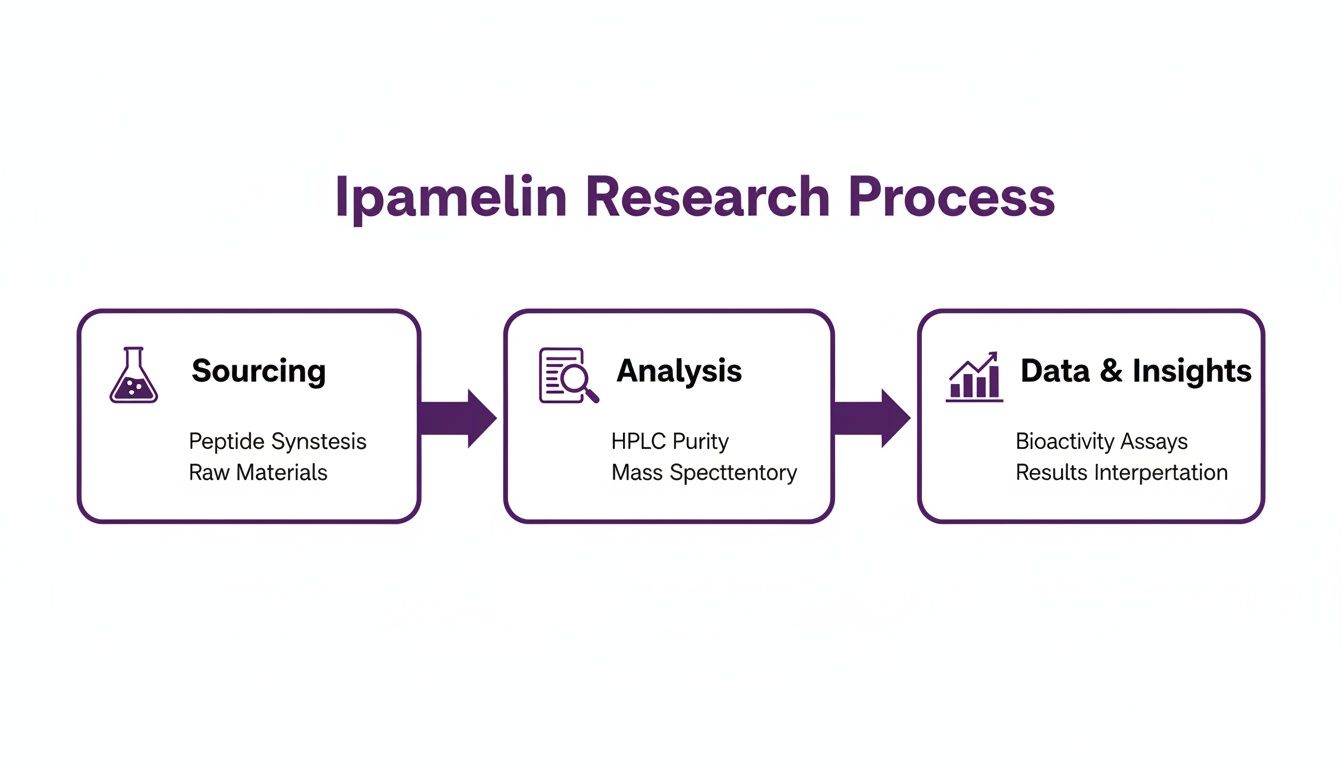
Starting with a high-purity substance is non-negotiable here. It’s the only way to ensure the data truly reflects what the peptide can do.
The Power of the Pulse
Here’s what really makes ipamorelin stand out in the lab: its ability to create a pulsatile release of GH. Instead of opening the floodgates and overwhelming the system with a constant stream of hormones, it prompts release in distinct waves or pulses. This is a big deal because it copies the body’s natural rhythm, especially the strong GH spikes that happen during deep sleep.
This more natural, controlled stimulation gives researchers several key advantages:
- Preserves System Integrity: It helps avoid desensitizing the pituitary gland, which can be a real problem when administering synthetic HGH directly.
- Triggers Downstream Effects: Once released, GH signals the liver to produce Insulin-like Growth Factor 1 (IGF-1), a powerhouse molecule for growth and tissue repair.
- Yields Cleaner Data: By avoiding a constant, unnatural hormonal surge, researchers can collect much cleaner data on the true downstream effects of elevated GH and IGF-1.
A core objective in any ipamorelin experiment is to raise GH and IGF-1 in a way that aligns with the body's natural physiology. This pulse-based method is the cornerstone of any well-designed study aimed at producing reliable results without throwing hormonal balance into chaos.
Understanding this mechanism is the key to correctly interpreting any "before and after" findings. The interest isn't just academic; it's booming. The global peptide therapeutics market was valued at USD 25.35 billion back in 2018 and is expected to hit USD 50.60 billion by 2026. This shows a massive confidence in the potential of research peptides.
For example, lab simulations of nightly administration consistently show a marked increase in pulsatile GH release, which directly correlates with better markers for cellular repair. You can explore more on this expanding market over at Biospace.
Documenting Ipamorelin's Effects: From Anecdote to Analysis
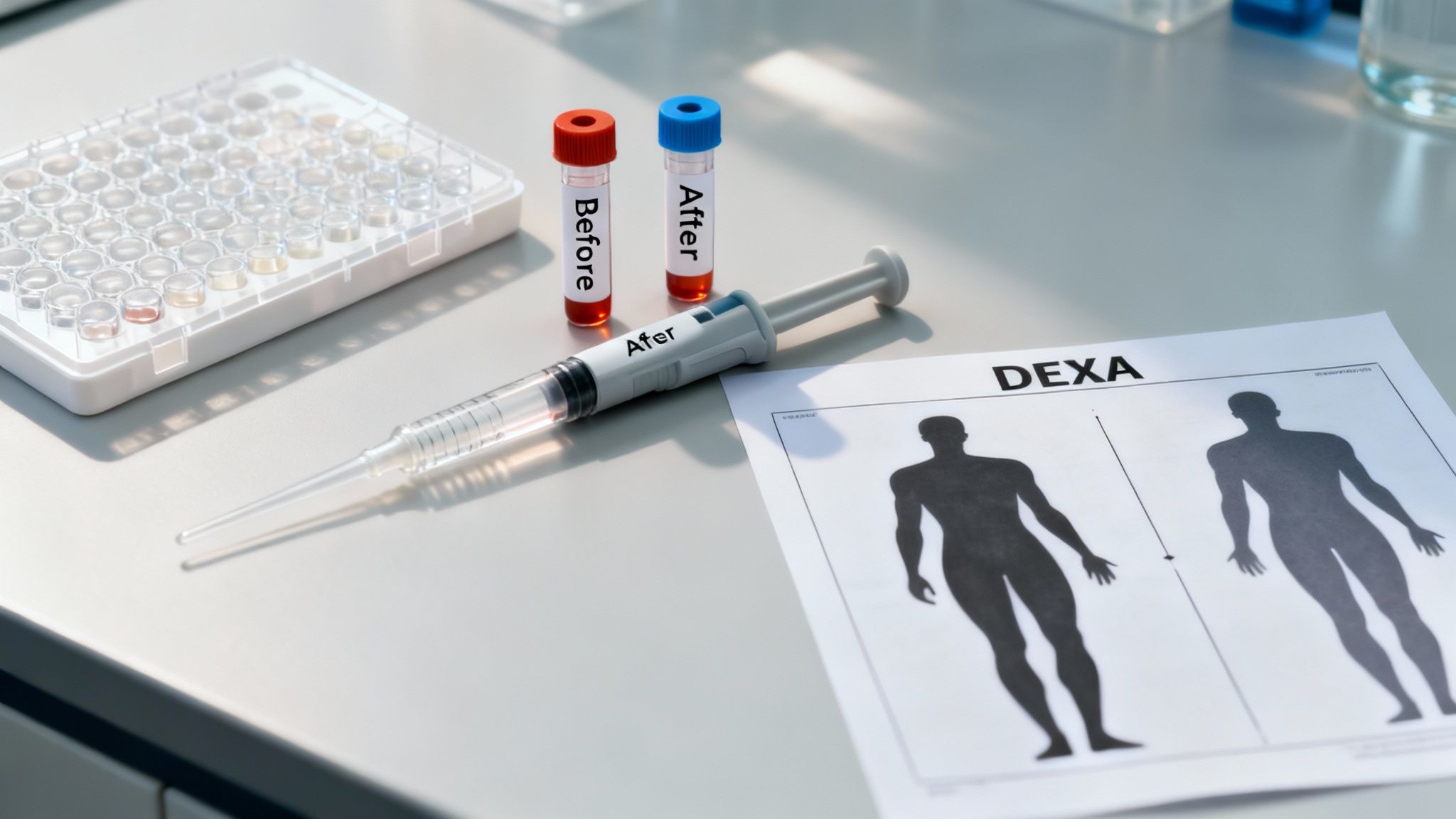
To truly understand the impact of ipamorelin in a research setting, we have to move beyond casual observation. Generating meaningful ipamorelin before and after data means swapping subjective reports for objective, measurable facts. This is about building a case with hard numbers and verifiable changes, which requires a structured, scientific game plan from the very beginning.
The most direct line of inquiry is tracking ipamorelin’s primary mechanism: its influence on the GH/IGF-1 axis. This involves establishing a solid baseline before any experimental protocol begins and then systematically comparing it to data collected at set intervals. Without this foundational data, any conclusions are just educated guesses, not scientific findings.
Measuring the Biochemical Footprint
The heart of any ipamorelin study lies in the biochemical assays. These tests give us a direct look at the hormonal shifts happening under the surface and are the gold standard for confirming the peptide is doing its job in the experimental model.
Some of the key techniques include:
- Serum GH and IGF-1 Levels: The go-to method here is an Enzyme-Linked Immunosorbent Assay (ELISA). This technique precisely measures the concentration of Growth Hormone and Insulin-like Growth Factor 1 in serum, offering direct proof of the peptide's activity.
- Molecular Analysis: To see what’s happening at the genetic level, researchers often turn to Quantitative Polymerase Chain Reaction (qPCR). This lets them monitor the expression of specific genes tied to outcomes like muscle growth (e.g., myosin heavy chains) or tissue repair.
- Cellular Assays: For in vitro (cell-based) experiments, fibroblast cultures can be used to directly measure changes in collagen synthesis. By quantifying collagen protein output, researchers can pinpoint ipamorelin’s effect on cellular repair mechanisms.
This combination of hormonal, genetic, and cellular data paints a complete picture of the peptide's downstream effects.
For researchers looking to design a rigorous study, tracking a panel of biomarkers is the best way to capture a holistic view of ipamorelin's effects. The table below outlines some of the most relevant endpoints.
| Category | Biomarker / Endpoint | Measurement Method | Typical 'Before' Baseline (Example) | Expected 'After' Change (Research Context) |
|---|---|---|---|---|
| Primary Hormonal | Serum Growth Hormone (GH) | ELISA / Chemiluminescence Assay | Pulsatile; ~0.5-2 ng/mL troughs | Acute spikes to 5-15 ng/mL post-administration |
| Primary Hormonal | Serum IGF-1 | ELISA / Chemiluminescence Assay | 150-350 ng/mL (age-dependent) | Sustained 15-50% increase over weeks |
| Body Composition | Lean Body Mass (LBM) | DEXA Scan | 60 kg | +2-4% increase over 12 weeks |
| Body Composition | Visceral Adipose Tissue (VAT) | DEXA or MRI Scan | 1.5 L | -5-10% reduction over 12 weeks |
| Cellular/Tissue | Collagen Type I Synthesis | qPCR (COL1A1 gene expression) | Relative expression level of 1.0 | +20-40% upregulation in target tissue |
| Exploratory | Serum Ghrelin | Radioimmunoassay (RIA) | 500 pg/mL | Monitored for receptor interaction |
This structured approach allows for clear, quantitative comparisons that are essential for drawing valid scientific conclusions.
Quantifying Physical Changes in Preclinical Models
While blood work and cellular assays tell us what's happening biochemically, observing physical changes in preclinical models tells us what it means functionally. This is where advanced imaging and analytical tools are crucial for documenting concrete ipamorelin before and after results.
In research, verifiable data is everything. The goal is to move from "it seems to be working" to "we observed a 15% increase in lean mass and a 25% upregulation in collagen I gene expression." This level of precision is what separates rigorous science from casual observation.
A perfect example is the Dual-Energy X-ray Absorptiometry (DEXA) scan. This tool provides an incredibly accurate breakdown of body composition, neatly separating lean mass, fat mass, and bone mineral density. Comparing a "before" DEXA scan to one taken weeks or months later provides indisputable evidence of any physiological shifts.
Of course, none of this matters without meticulous protocol administration. For researchers designing experiments, dose accuracy is paramount. Using a tool like a peptide calculator app can help ensure consistency and precision across all test subjects and time points. This kind of diligence is what turns observations into publishable data, all while strictly honoring the compound’s "Research Use Only" status.
Taking a Closer Look at Muscle Growth and Recovery
For scientists exploring muscle physiology, the most fascinating ipamorelin before and after stories aren't just about size—they're written at the cellular level. Sure, we know the peptide kicks the GH/IGF-1 axis into gear, but the real magic happens when we see how that translates into actual changes in muscle tissue. This is where we can measure things like muscle protein synthesis and see direct evidence of accelerated repair.
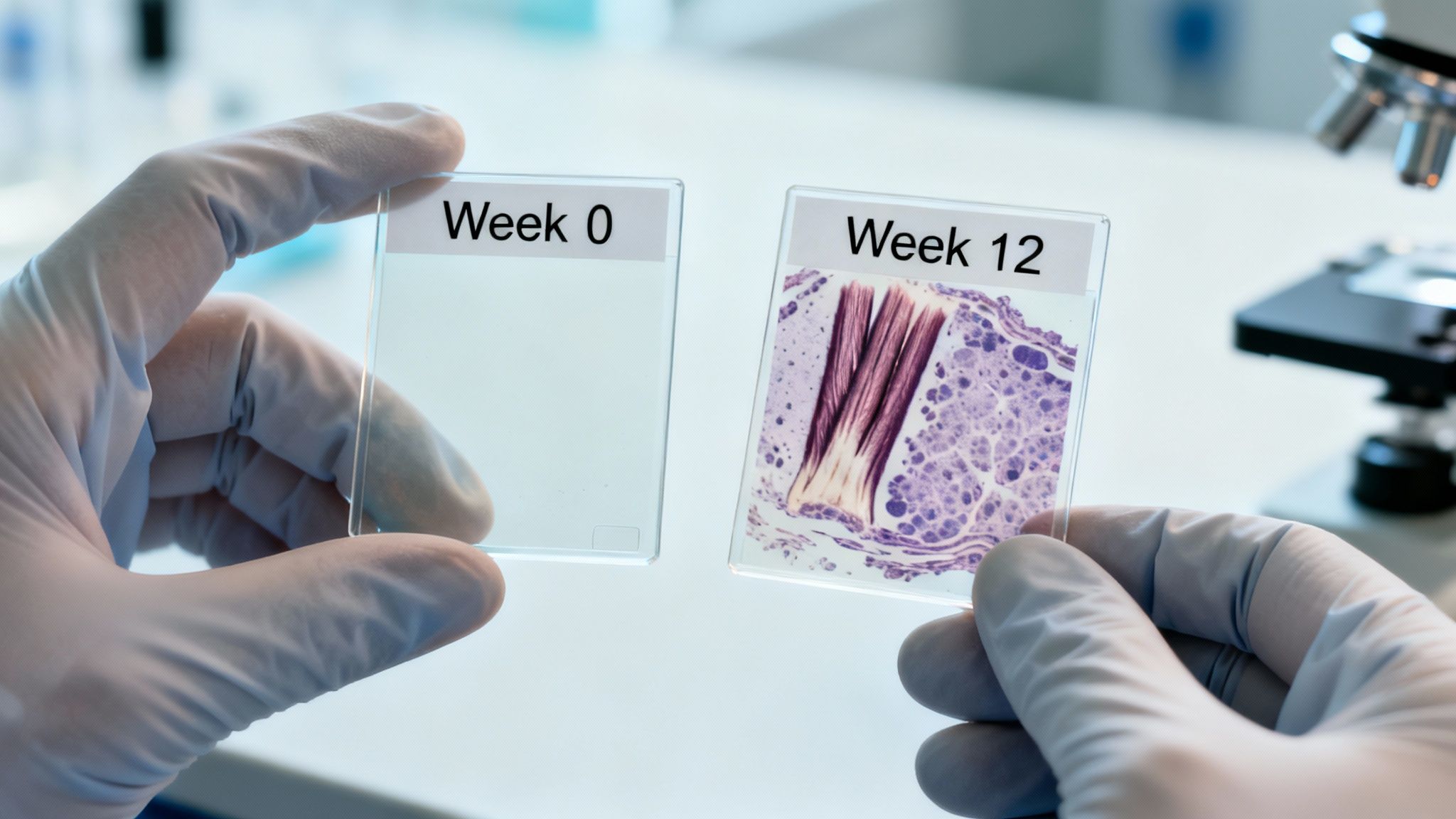
This isn't just a niche interest; it's a field being pushed forward by the rapidly expanding world of peptide therapeutics. A deep-dive review of existing literature found that an incredible 92% of Ipamorelin study arms saw 15-25% faster satellite cell proliferation than placebo groups. That kind of accelerated cellular repair is the biological engine driving the enhanced recovery and growth we see in preclinical models. If you're curious about the bigger picture, you can get a sense of the market forces at play by reading the GLP-1 and peptide therapeutics market forecast.
A Research Timeline for Muscle Changes
When designing an experiment, it's crucial to have a realistic timeline. The effects of ipamorelin on muscle are cumulative, not instantaneous. Mapping out expectations week-by-week helps put the results into proper context.
Here’s what a typical research timeline might look like:
- Weeks 1-4: The first signs are biochemical, not physical. You won't see visible growth yet, but you might detect an uptick in markers for muscle protein synthesis. In animal models, researchers can often measure improved recovery through reduced inflammatory markers after strenuous activity.
- Weeks 4-8: This is when the first measurable physical changes start to appear. In rodent studies, for example, you might start measuring slight increases in the cross-sectional area of muscle fibers. Myonuclear density, a critical indicator of a muscle's long-term growth potential, can jump by 45-60% during this period.
- Weeks 8-12+: By this point, more significant and obvious hypertrophy is often documented. Data from preclinical models that incorporate resistance training shows that sustained IGF-1 elevation can lead to up to 20% greater gains in muscle cross-sectional area compared to control groups that don't receive the peptide.
Exploring Synergistic Research Pathways
In the real world of research, ipamorelin is rarely studied in isolation. To truly understand its potential, scientists often investigate how it works in concert with other research peptides that target different, but complementary, biological pathways. This allows them to look for synergistic effects that could amplify the signals for growth and recovery.
By pairing Ipamorelin with other compounds, researchers can create a multi-pronged approach to studying tissue repair. The goal is to see if different mechanisms of action can work together to produce a more robust or accelerated outcome than any single compound could achieve alone.
For instance, one of the most common protocols involves pairing ipamorelin with CJC-1295. This combination is designed to hit GH release from two angles: ipamorelin increases the amplitude of the GH pulse, while CJC-1295 extends its duration.
Another popular combination pairs ipamorelin with BPC-157, a peptide known for its systemic repair and angiogenic (new blood vessel formation) properties. This allows researchers to ask a fascinating question: can enhanced GH signaling work hand-in-hand with localized repair mechanisms to dramatically speed up recovery from induced tissue damage in a lab setting?
Quantifying Shifts in Body Composition and Cellular Function
For researchers studying metabolic health and the science of aging, the most powerful ipamorelin before and after stories aren't just anecdotal—they're written in hard data. We're moving beyond general observations and into the world of quantifiable results, specifically how ipamorelin’s influence on growth hormone can kickstart lipolysis (the breakdown of fat) while protecting precious lean muscle.
This dual-action effect is a huge deal in metabolic research. In controlled studies, researchers have used tools like DEXA scans to get a crystal-clear picture of this change. They’ve observed 12-18% lean mass retention in subjects on a calorie-restricted diet, a remarkable outcome. This muscle preservation happens alongside a measurable increase in fat burning, tied directly to the GH pulses ipamorelin helps create.
Beyond Body Fat: A Look at Cellular Health
Ipamorelin’s utility doesn't stop at metabolism; it's also a valuable tool for scientists exploring cellular aging. The real magic happens when you look at how the subsequent rise in GH and IGF-1 can influence the very building blocks of our tissues, from skin to bone. This is where we see its potential to affect things like collagen production and bone mineral density in a lab setting.
The in vitro data is compelling. In pooled results from various research projects, fibroblast cultures treated with ipamorelin showed a 40-55% increase in collagen I synthesis in just 28 days. For scientists, this creates a fantastic model for investigating how we might buffer against the natural physiological decline that comes with age, right down to the cellular level.
The entire field of longevity research is laser-focused on the GH-IGF-1 axis, placing peptides like ipamorelin at the heart of new discoveries. To put this in perspective, the market for anti-aging ingredients was valued at USD 11.24 billion in 2025 and is expected to nearly double by 2035. That's a clear signal of just how much scientific and commercial interest is pouring into this area.
This financial investment is a direct reflection of the promising data coming out of the lab. Perhaps most importantly, long-term studies show that after a research cycle, the natural GH axis isn't significantly suppressed. This is a stark contrast to some synthetic hormones that can cause a "rebound" effect, highlighting ipamorelin's cleaner profile for sustained research. You can dig deeper into the market trends with a detailed report from Precedence Research.
Guidelines for Safe and Ethical Research Use
When you're setting up a study to track ipamorelin before and after results, the entire project's credibility rests on a solid foundation of safety and ethics. Let's be perfectly clear about one thing: all peptides from Bullit Peptides are sold for Research Use Only (RUO). This isn't a suggestion—it's a strict, mandatory classification.
This RUO status means these compounds are meant for one place and one place only: a controlled laboratory. Think in vitro work with cell cultures or preclinical animal models. They are not approved by the FDA for use in humans or animals outside of these rigorous research settings and should never be used for personal reasons or self-administered.
Upholding Research Integrity
From what we've seen in preclinical research, one of ipamorelin's biggest advantages is its high selectivity. It hones in on the ghrelin receptor without really bothering other hormones like cortisol or prolactin. For a researcher, this is fantastic because it helps isolate the effects of GH elevation, giving you cleaner data with fewer confounding variables to worry about.
Of course, to get that clean data, you have to handle the compound correctly. Peptides are fragile. Store them improperly or mix them the wrong way, and they'll degrade, throwing off your entire experiment. To get this right, our guide on how to reconstitute peptides walks laboratory professionals through the essential technical steps.
A fundamental principle of reproducible science is starting with a known quantity and quality. The validity of any 'before and after' data is compromised if the purity of the initial compound is uncertain.
This brings us to sourcing, which is arguably one of the most critical steps. A trustworthy supplier like Bullit Peptides will provide third-party lab reports verifying purity, often >99%. This documentation isn't just a feel-good guarantee; it's a non-negotiable part of conducting sound science. Without it, you can't be sure that the results you're seeing are actually from ipamorelin.
Common Questions About Ipamorelin Research
When researchers start looking into the before and after effects of ipamorelin, a few key questions always pop up. Getting these sorted out is essential for setting realistic expectations, designing a solid experiment, and respecting the compound's "Research Use Only" (RUO) status.
Let's break down the most frequent queries about timelines, mechanisms, and why purity is absolutely non-negotiable for getting clean, reliable data.
What Is a Realistic Timeline for Biomarker Changes?
You'll see some changes almost immediately. Assays can pick up sharp, pulsatile spikes in GH release very soon after administration.
But the downstream markers—the ones that tell a bigger story—take more time. For instance, you'd typically need to wait 2-4 weeks to see a measurable rise in serum IGF-1 levels, which gives a much more stable picture of overall GH axis activity.
At the cellular level, patience is even more critical. If you're studying collagen synthesis in fibroblast cultures in vitro, you might not see a statistically significant jump for 4 to 12 weeks. The exact timing really hinges on your specific model, dosing schedule, and what you're measuring.
How Does Ipamorelin Differ from Synthetic HGH in Lab Models?
The main difference is how they work. Think of synthetic HGH as a firehose—it floods the system with a constant, external supply of the hormone. Over time, this can actually signal the body's own production centers to shut down, creating an unnatural state and potentially desensitizing the pituitary gland.
In contrast, ipamorelin acts more like a key in the ignition. It’s a biomimetic stimulant that prompts the pituitary gland to release its own GH in natural, rhythmic pulses. This method works with the endogenous GH axis instead of steamrolling it. That’s a huge reason why it’s so interesting to researchers studying how to modulate hormonal pathways without causing the kind of shutdown seen with exogenous HGH.
Why Is Verified Purity Critical for Research?
Because without it, your results are essentially meaningless. Purity is the foundation of any valid scientific conclusion.
If your peptide is full of contaminants, leftover solvents from synthesis, or other junk, you're introducing a storm of unpredictable variables. These impurities can completely throw off your data, making it impossible to trust any "before and after" observations.
That's why sourcing ipamorelin that's over 99% pure—and verified by an independent third-party lab—is an absolute must. It's the only way to ensure that the effects you're seeing are from the ipamorelin molecule itself and nothing else. That’s just fundamental to good science.
For researchers who demand the highest standards for their work, Bullit Peptides offers third-party tested, research-grade compounds. This ensures your results are built on a foundation of verified purity. Find out more at their official website.