Picture your body having a tiny, dedicated repair crew on standby, one that could be dispatched to the site of an injury to kickstart the rebuilding process almost instantly. That’s the essential idea behind the BPC 157 peptide, a synthetic compound that has become a fascinating subject for researchers in the field of recovery and regeneration. Although it's strictly for lab use and not approved for humans, its potential has sparked tremendous scientific curiosity.
What Exactly Is The BPC 157 Peptide?
BPC 157, which is short for Body Protection Compound, is a specific chain of 15 amino acids created in a lab. Its origin story is quite interesting—it was first derived from a protective protein that naturally exists in our own gastric juices. It’s helpful to think of it less as some foreign chemical and more like a biological signal, a "first responder" designed to get the body's repair mechanisms to work at the cellular level.
This peptide really started turning heads in the scientific community because of the effects observed in preclinical research. Its unique 15-amino-acid structure seems to allow it to interact with a whole host of biological pathways, influencing everything from taming inflammation to promoting the growth of new blood vessels (a process called angiogenesis).
For researchers, it represents a powerful tool for asking a fundamental question: how can the body be prompted to heal itself more efficiently?
BPC 157's Role in Research
Lately, the BPC 157 peptide has become a hot topic in biohacking and athletic research communities. Scientists are digging into its potential to support the regeneration of a wide range of tissues, with most studies focusing on a few key areas:
- Tendon and Ligament Repair: A major focus is examining its ability to speed up the healing of connective tissues, which are famously slow and difficult to recover from.
- Muscle Regeneration: Researchers are also investigating how it might affect recovery from muscle tears and strains in controlled experimental models.
- Gut Health and Protection: Another promising avenue is its cytoprotective (cell-protecting) properties, especially for the lining of the gastrointestinal tract.
First identified back in the 1990s, this lab-made peptide has shown incredible promise in animal studies for healing everything from tendons to muscles. In fact, one comprehensive review looked at dozens of studies and found that in rat models with Achilles tendon injuries, BPC-157 accelerated repair by up to 50% faster than the control groups.
To give you a clearer snapshot of its key attributes, here's a quick summary of the primary research findings.
BPC 157 at a Glance: Key Research Highlights
| Attribute | Description |
|---|---|
| Full Name | Body Protection Compound 157 |
| Structure | Synthetic Pentadecapeptide (15 amino acids) |
| Origin | Derived from a protein found in human gastric juice. |
| Primary Research Focus | Tissue regeneration, anti-inflammatory effects, cytoprotection. |
| Key Preclinical Findings | Accelerated healing in tendon, ligament, muscle, and gut tissues. |
| Observed Mechanism | Appears to upregulate growth factors like VEGF, promoting angiogenesis. |
| Status | For research use only; not approved by the FDA for human consumption. |
This table provides a high-level overview, but as you can see, the data from preclinical studies is what continues to drive interest in its potential applications.
Important Disclaimer: It is absolutely critical to understand that BPC 157 is sold for in vitro laboratory research purposes only. It is not a dietary supplement, a medication, or a drug approved by the FDA for human or veterinary use.
With this foundation, we're ready to take a closer look at the science behind how this peptide actually works in a lab setting. We'll explore its proposed mechanisms of action, always keeping in mind its status as a compound intended exclusively for research. And for those curious about other innovative peptides, you can also learn more about Glow Peptide in our detailed guide.
How The BPC 157 Peptide Works
To really get what all the scientific buzz is about with the BPC 157 peptide, we need to look under the hood at how it actually works. Let’s use an analogy: think of a serious injury as a construction site hit by a disaster, grinding everything to a halt. In this scenario, researchers view BPC 157 as the expert project manager who shows up, cuts through the chaos, and gets the rebuilding process back on track—fast. Its influence seems to touch several key biological systems at once, making it a powerful orchestrator of repair.
This concept map helps visualize the connection between BPC 157's origins, its chemical structure as a peptide, and its core function in tissue repair studies.
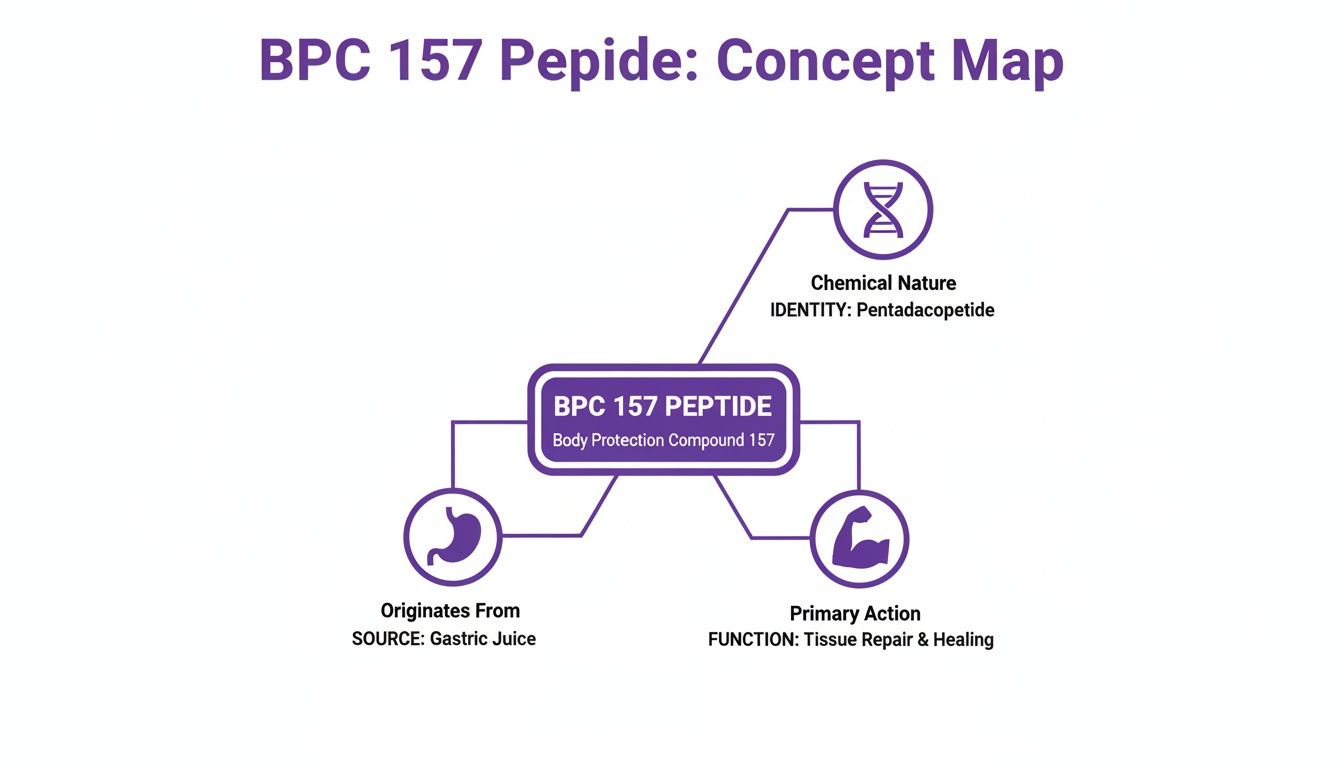
As you can see, the peptide comes from a protein found in the stomach, and its unique 15-amino acid chain is what gives it the reported ability to kickstart tissue regeneration in lab settings.
Promoting New Blood Vessel Growth
One of the most talked-about effects seen in preclinical research is BPC 157's powerful influence on angiogenesis—the body's process for creating new blood vessels from old ones.
Let's go back to that construction site. Before you can rebuild, you have to lay down new roads to bring in materials like oxygen, nutrients, and the cellular "work crews." Without good blood flow, healing just doesn't happen.
BPC 157 seems to be a major catalyst for building these crucial supply lines. Studies suggest it ramps up the expression of key growth factors, particularly Vascular Endothelial Growth Factor (VEGF). By signaling for more VEGF and its receptor, VEGFR2, the peptide basically tells the body to start laying down a new vascular network. This surge in blood supply is a game-changer for regenerating everything from torn muscle fibers to damaged tendons.
Activating Key Healing Pathways
BPC 157 doesn't just build roads; it also seems to activate the cellular machinery that does the actual repairing. A lot of attention has been focused on its interaction with the Focal Adhesion Kinase (FAK)–paxillin pathway. This system is absolutely vital for getting cells to stick, move, and survive—all non-negotiable parts of healing.
When an injury happens, cells need to get to the damaged area, survive in a pretty hostile environment, and start laying down new tissue. By activating the FAK pathway, BPC 157 is like a green light for these repair cells, telling them to get moving and start working. This pro-migration and pro-survival effect helps ensure the body's repair crews are not only on-site but are also equipped to do their job right.
In short, BPC 157 doesn’t just call for repairs. It seems to guide the repair cells to the right spot and helps them survive the mission, making the entire healing process far more efficient at a cellular level.
This targeted action is a big reason why it’s a major focus in studies on tendon and ligament injuries, where natural cell migration is notoriously slow.
Modulating The Nitric Oxide System
Another fascinating piece of the puzzle is BPC 157's relationship with the nitric oxide (NO) system. Nitric oxide is a critical signaling molecule that handles everything from widening blood vessels (vasodilation) to managing inflammation. When the NO system is out of whack, you get poor blood flow and stalled healing.
What’s interesting is that BPC 157 appears to help regulate and normalize the NO system. This brings a double-whammy of benefits:
- Enhanced Blood Flow: By supporting healthy NO levels, it promotes better circulation, which perfectly complements its angiogenic effects.
- Cytoprotection: It helps shield cells from damage caused by toxins or stress, a quality known as cytoprotection.
This role as a modulator makes the BPC 157 peptide a versatile subject for research. It doesn’t act like a sledgehammer; it’s more like a fine-tuning dial, adjusting the body’s internal environment to make it more favorable for healing. By orchestrating all these different pathways, BPC 157 offers a compelling model for exploring how to accelerate tissue regeneration.
A Look at the Preclinical Evidence
Okay, let's move from the how to the what. The real buzz around the BPC 157 peptide isn't just theory; it's rooted in a massive body of preclinical evidence. The lion's share of what we know comes from in vitro (cell culture) and in vivo (animal) research. It's absolutely critical to state this upfront: these are laboratory findings, and they don't translate directly to human outcomes.
Still, this research paints a fascinating picture of a peptide with a knack for tissue regeneration and cellular defense. The data from these controlled experiments is precisely why scientists keep putting BPC 157 under the microscope, hoping to unlock new secrets to recovery and repair.
Accelerated Tendon and Ligament Healing
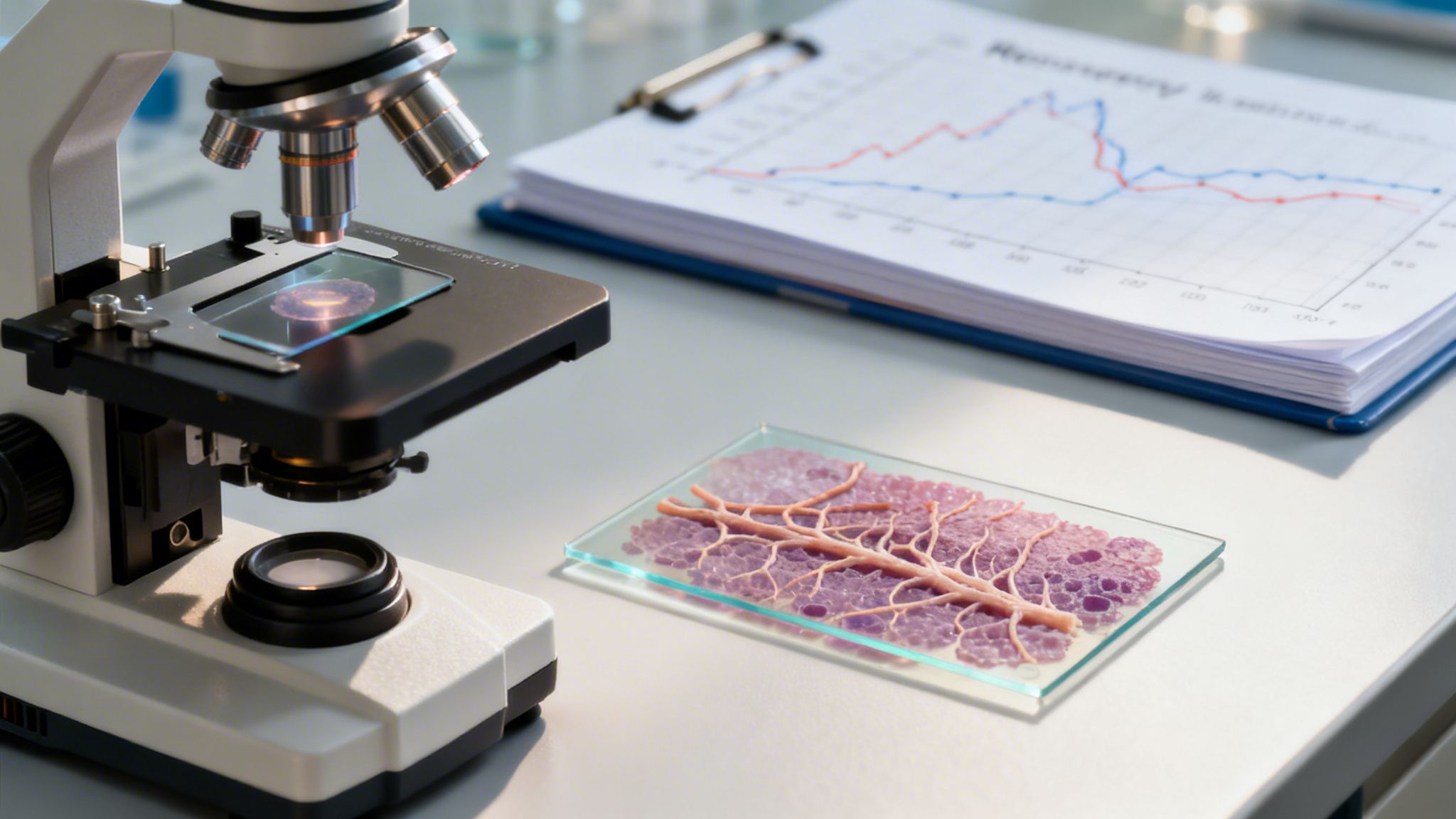
Some of the most eye-opening preclinical data surrounds BPC 157's effects on connective tissues. Tendons and ligaments are notoriously stubborn healers, mostly because they don't get much blood flow. But in numerous animal models, researchers have watched BPC 157 work its magic.
Take the studies on rats with severed Achilles tendons. The results were stunning. The rats receiving BPC 157 didn't just heal faster; the quality of the repair was structurally superior. The new collagen fibers were more organized and aligned, looking a lot more like healthy tissue than the usual scar-like patch-up job seen in the control groups.
This suggests that the BPC 157 peptide isn't just slapping a bandage on the injury. It appears to be actively guiding a more regenerative, organized healing process at a microscopic level, leading to stronger, more functional tissue in these lab models.
Scientists believe this is largely due to the peptide's ability to promote angiogenesis (the growth of new blood vessels), which effectively opens up supply lines to bring nutrients and repair cells straight to the injury site.
Muscle Regeneration and Repair Studies
It’s not just about connective tissues. BPC 157 has also been put through its paces in models of muscle injury, from simple bruises (contusions) to full-on cuts (transections).
The key takeaways from these animal studies are pretty consistent:
- Tamed Inflammation: BPC 157 seems to dial back the inflammatory response, keeping it from going overboard and actually slowing down recovery.
- Faster Fiber Rebuild: The peptide was observed to speed up the regeneration of damaged muscle fibers.
- Quicker Functional Return: Animals treated with BPC 157 tended to get back to using the injured muscle much sooner.
These results are why the BPC 157 peptide is a hot topic in sports medicine research labs, where scientists are constantly looking for ways to get athletes (in a hypothetical sense) back in the game faster.
Gastrointestinal Protective Effects
Remember, BPC 157 was first discovered in gastric juice. So, it’s no surprise that some of its most profound effects are seen in the gut. The preclinical research here is especially strong, with dozens of studies looking at its impact on conditions that mimic ulcers and inflammatory bowel disease (IBD).
The results are nothing short of remarkable. In animal models, BPC-157 given orally at doses from 10 ng/kg to 10 mcg/kg was shown to heal intestinal ulcers caused by NSAIDs in just 24-48 hours. This led to a 90-100% reduction in lesions, while control groups only saw a 50-60% reduction after a full 72 hours.
In another set of experiments, rats with chemically damaged colons showed an 80% restoration of their mucosal lining within days of treatment. You can dive deeper into these groundbreaking peptide studies to grasp their full implications. This powerful evidence is exactly why BPC 157’s gut-protective properties remain a huge area of scientific focus.
Diving Into Formulations and Stability
If you're a researcher, you know that consistent, reliable results are everything. When it comes to working with peptides like BPC-157, the specific formulation you choose is one of the biggest factors influencing the integrity of your work. Let's be clear: not all BPC-157 is the same, and knowing the difference is fundamental to designing a solid study.
Most peptides arrive at the lab as a lyophilized (freeze-dried) powder. This delicate, white substance is the peptide in its most stable form, protecting the fragile amino acid chain from breaking down during shipping and storage. But to actually use it, you have to reconstitute it into a liquid—and that’s where the real differences show up.
Acetate Salt vs. Arginate Salt: A Tale of Two Stabilities
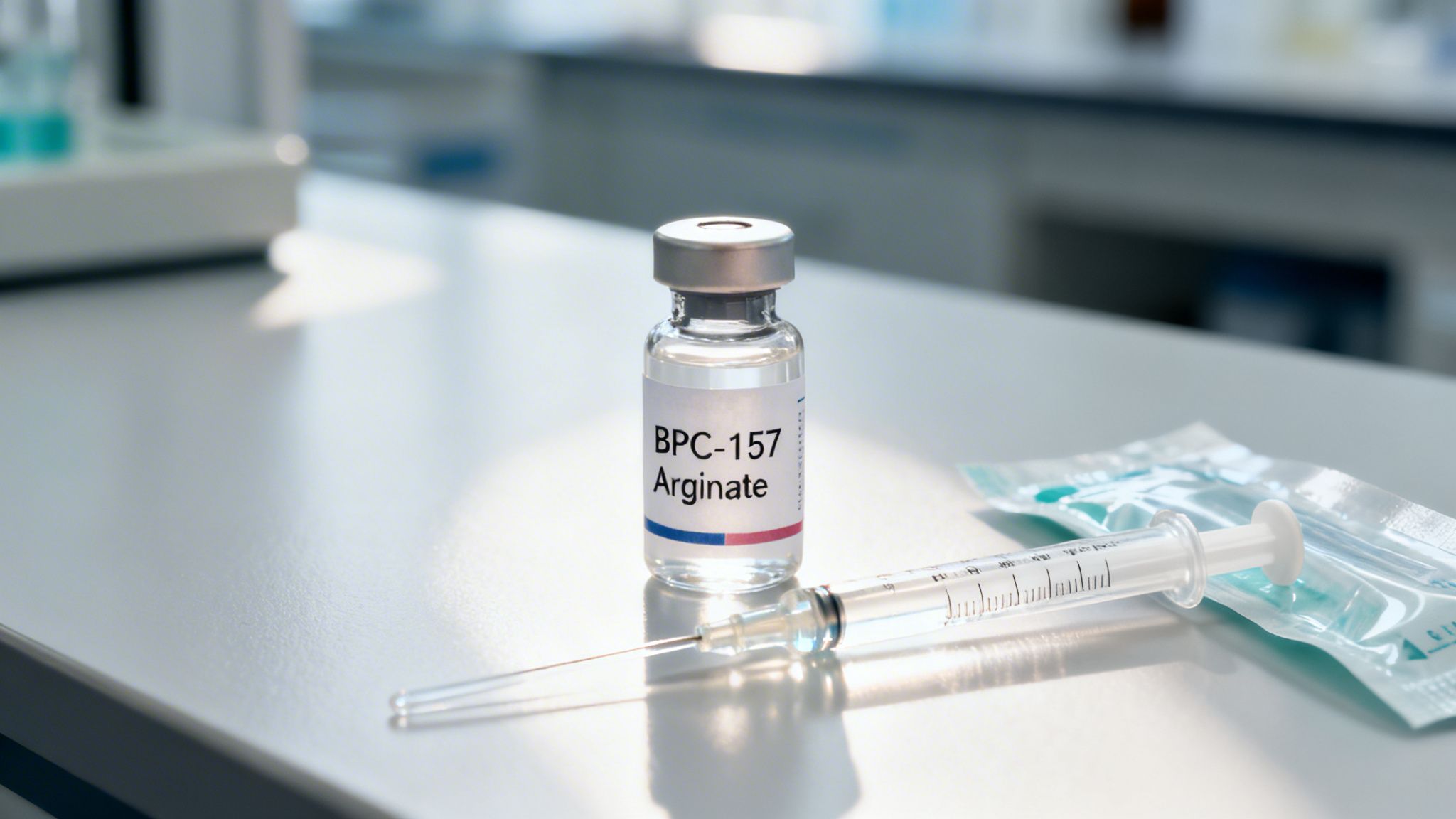
The two main players on the market are the acetate salt and the arginate salt forms of BPC-157. They might look identical in the vial, but their chemical stability couldn't be more different once you add liquid.
Think of the standard acetate version like a regular ice cube—it does the job, but it melts fast. While it’s perfectly stable as a powder, it starts degrading almost immediately after being mixed with bacteriostatic water. Some data suggests its potency plummets within 24 hours at room temperature and doesn't fare much better even in the fridge. For any experiment lasting more than a day, this is a massive headache.
Why BPC-157 Arginate Changed the Game
This is where the BPC-157 Arginate form, often called "stable BPC-157," really shines. Scientists solved the stability problem by adding an arginine salt to the peptide chain. This addition acts like a chemical bodyguard, shielding the core peptide from breaking down in a liquid solution.
To better illustrate the practical differences, here’s a quick comparison of how the two forms stack up in a research setting.
Comparison of BPC 157 Formulations for Research
| Feature | BPC 157 Acetate | BPC 157 Arginate (Stable) |
|---|---|---|
| Stability in Solution | Very low; degrades rapidly (hours to days). | High; remains stable for weeks to months when refrigerated. |
| Experimental Consistency | Poor for multi-day studies due to rapid potency loss. | Excellent; ensures consistent dosing throughout the experiment. |
| Storage (Reconstituted) | Must be used almost immediately for reliable results. | Can be stored in the refrigerator for extended periods. |
| Common Research Use | Short-term experiments where the solution is prepared fresh daily. | Multi-day or multi-week protocols requiring reliable dosing. |
For any serious study that demands precise and repeatable outcomes, the arginate salt is hands-down the superior choice. Its inherent stability removes a major variable, giving you confidence that your results are tied to the compound's action, not its declining potency.
Your Protocol for Reconstitution and Storage
Proper handling is non-negotiable for preserving a peptide’s integrity. Sloppy technique can ruin even the most stable compound before your experiment even begins.
For long-term storage, keep the lyophilized powder in a freezer at around -20°C (-4°F). Before you open a new vial, let it sit out and come to room temperature. This simple step prevents condensation from forming inside and compromising the powder.
When you're ready to reconstitute, be gentle. Slowly inject your bacteriostatic water down the side of the vial—never spray it directly onto the delicate powder. Forget shaking it. Instead, just roll the vial gently between your hands until everything is dissolved. If you want a visual guide, our team put together a detailed walkthrough on how to properly reconstitute peptides.
Once it’s mixed, the solution must be refrigerated at 2-8°C (36-46°F) and kept away from direct light. Stick to these steps, and you’ll ensure you're working with the most reliable preparation for your research.
How to Source High-Purity Peptides
In any serious research setting, the quality of your materials dictates the quality of your results. It's a simple, unavoidable truth. When you're working with a compound like the BPC 157 peptide, sourcing a high-purity product isn't just a good idea—it's the only way to ensure your data is valid and reproducible. A contaminated or low-purity compound can completely derail an experiment, wasting time, money, and effort.
So, how do you navigate the market? It comes down to due diligence and knowing what to look for. You need a supplier who is transparent and can back up their claims with hard evidence. This isn't just about buying a chemical; it's about protecting the integrity of your work.
The Non-Negotiable: Purity Over 99%
Let's be blunt: for any legitimate laboratory work, the purity of your peptide needs to be greater than 99%. There's really no room for negotiation on this point.
A product with 95% purity might sound good on the surface, but think about what that other 5% is. It’s a mix of unknown substances—leftover reagents, incomplete peptide fragments—that can have their own unpredictable biological effects. That's an unacceptable variable in a controlled experiment.
This high standard has become the benchmark for a reason. The global peptide synthesis market, projected to reach USD 1.37 billion by 2031, is dominated by sophisticated methods like solid-phase synthesis. This technique holds a massive 71.62% of the market because it’s one of the few that can reliably achieve the purity levels researchers require. You can dive deeper into the production technologies and market trends to see why this standard is so critical.
Always Demand a Certificate of Analysis
A Certificate of Analysis (COA) is your single most important piece of evidence. It's the lab report that proves a peptide's identity, purity, and concentration. But here's the catch: not all COAs are created equal.
What you need is a third-party COA. This means an independent, unaffiliated lab performed the analysis, giving you an unbiased assessment of the product. While in-house testing is a start, it's third-party verification that provides true quality assurance.
When you get a COA, scan it for these essentials:
- Purity Level: Look for the High-Performance Liquid Chromatography (HPLC) results. It should explicitly state a purity of >99%.
- Identity Confirmation: Mass Spectrometry (MS) data is crucial. It verifies that the peptide's molecular weight is correct, confirming you have the right compound.
- Date of Analysis: Check the date. A COA from a year ago doesn't tell you anything about the quality of the batch being sold today.
A supplier unwilling to provide a current, third-party COA for every batch is a massive red flag. Transparency isn't a premium feature; it's the absolute minimum you should expect when sourcing research compounds.
For instance, you should be able to click and immediately view documents like our published COAs for BPC-157 5mg before you even think about purchasing.
A Quick Checklist for Vetting Suppliers
To make things easier, run every potential supplier through this simple checklist. If they can't tick every box, move on.
- Third-Party Testing: Do they provide up-to-date, batch-specific COAs from an independent lab?
- Purity Guarantee: Do they explicitly guarantee a purity of 99% or higher?
- Proper Labeling: Are their products clearly and correctly labeled "For Research Use Only"?
- Process Transparency: Can they tell you anything about their manufacturing and quality control standards?
- Knowledgeable Support: If you have a technical question, can their team actually answer it?
Sticking to these standards will help you confidently source high-purity BPC 157 peptide for your work. Your research deserves a foundation built on precision and quality, and that starts with the materials in your vial.
Navigating The Legal and Safety Landscape
Getting to grips with the science behind the BPC 157 peptide is only half the battle. Just as important is having a crystal-clear understanding of where it stands legally and why certain safety warnings are non-negotiable for anyone in the research community.
Let's be blunt: this isn't a gray area. The rules are explicit, and they're in place for a good reason—to protect researchers, the public, and the integrity of the scientific process itself.
The single most critical piece of information is this: BPC 157 is not approved by the Food and Drug Administration (FDA) for human use. It isn’t a medicine, a drug, or a dietary supplement. Its sale is strictly confined to laboratory research applications, period. This classification shapes the entire legal and ethical framework for handling the compound.
The "Research Use Only" Mandate
Walk into any legitimate lab that works with BPC 157, and you'll see a clear label on every vial: "For Research Use Only" (RUO) or "For Laboratory Use Only." This isn't a polite suggestion; it's a hard-and-fast legal and ethical line in the sand.
This label means the compound is intended only for in vitro work (think petri dishes and test tubes) or for preclinical studies in animals under tightly controlled laboratory conditions.
There are solid reasons for this strict designation:
- No Human Safety Data: We simply don't have the large-scale, controlled human clinical trials needed to understand its effects. Without that data, the long-term risks and potential side effects in people are a complete unknown.
- Staying on the Right Side of the Law: The RUO status ensures that everyone involved—from suppliers to scientists—is operating within the legal framework established by agencies like the FDA.
- Upholding Ethical Standards: It prevents anyone from jumping the gun and using an experimental compound on humans before it has been properly vetted in a structured research setting where risks can be managed.
Bypassing this mandate doesn't just damage scientific credibility; it comes with serious legal heat.
In late 2023, the FDA made its position even clearer by adding BPC 157 to a list of substances that pose "significant safety risks" when used in compounding pharmacies. This move highlights just how seriously regulators view its unproven safety profile for any purpose outside of dedicated research.
Regulatory Actions and What They Mean
This isn't just talk. Government bodies have actively cracked down on those who ignore the rules. The Department of Justice, for instance, has prosecuted companies for illegally marketing and distributing unapproved new drugs like BPC 157 for people to use. These cases are a stark warning that the "research use only" label isn't some loophole to be exploited.
On top of that, the World Anti-Doping Agency (WADA) has placed BPC 157 on its Prohibited List. It falls under the S0 category of "Unapproved Substances," making it a clear violation for any athlete to use. This decision from the top authority in sports reflects the global consensus: this is an experimental compound that has no business in human performance or competition.
For any serious researcher, this all boils down to one thing: the absolute necessity of sourcing from a reputable supplier. A compliant vendor will never even hint at human or veterinary applications. They will have clear labeling, require you to acknowledge the research-only status, and operate with total transparency. That commitment to doing things by the book is what allows for responsible scientific exploration while keeping safety as the top priority.
Answering Your Top Questions About BPC-157
After digging into the science, it's natural to have a few more practical questions. Let's tackle some of the most common things researchers ask when they're working with the BPC-157 peptide.
Think of this as a quick reference to clear up any lingering confusion about handling, testing, and classifying this compound for your lab work.
What Does "In Vitro Research" Actually Mean for BPC-157?
You’ll see the term "in vitro" everywhere. It's just Latin for "in the glass," and it means any experiment that takes place outside of a living organism. We're talking about a test tube, a petri dish, or any other controlled lab setting. This is the direct opposite of "in vivo," which means inside a living thing.
When it comes to the BPC-157 peptide, in vitro studies are all about isolating its effects on specific cells or tissues. A classic example would be adding BPC-157 to a culture of tendon cells and observing if it sparks growth or migration. This is the fundamental, and only legitimate, use for research peptides sold by reputable suppliers.
Why Is Everyone So Obsessed with Third-Party Testing?
Honestly, it's because it's the only way to guarantee you're working with the real thing. Third-party testing is an objective, independent analysis that confirms a peptide's identity and, just as importantly, its purity.
For any serious researcher, this isn't just a "nice-to-have"—it's an absolute must. Without it, you have no way of knowing if your results are due to BPC-157 or some random contaminant.
This verification process is the bedrock of good science. It ensures your data is both valid and reproducible. Always demand a current Certificate of Analysis (COA) from any supplier before you even think about purchasing.
How Is BPC-157 Different From a Recovery Supplement?
This is a crucial distinction, both scientifically and legally. BPC-157 is a synthetic peptide intended strictly for laboratory research to investigate cellular repair mechanisms. It is not a dietary supplement, and the FDA has not approved it for any human use.
Recovery supplements, on the other hand, are things like protein powder, creatine, or BCAAs. These are nutritional products designed to be consumed by people to support muscle health and metabolism. The legal framework, intended use, and regulatory oversight are completely different. BPC-157 belongs in a controlled lab, period.
At Bullit Peptides, our entire focus is on equipping researchers with the highest-purity compounds, all backed by transparent, third-party verification. When your work demands integrity, explore our catalog of research-grade peptides.