
When it comes to investigating muscle growth, the most promising peptides fall into two main camps: Growth Hormone Releasing Hormones (GHRH) and Growth Hormone Secretagogues (GHS). Researchers are looking closely at compounds like CJC-1295, Tesamorelin, and Ipamorelin, as each one presents a unique way to stimulate the body’s own growth hormone pathways.
Decoding Peptides For Advanced Muscle Research
Think of these peptides less like a sledgehammer and more like a master key, specifically designed to unlock the body's latent potential for muscle development. Instead of introducing external hormones, these short chains of amino acids work with incredible precision. They gently turn the lock on the pituitary gland, signaling it to produce and release more of its own growth hormone (GH). This is a far more nuanced approach, and it’s what makes peptide research so compelling.
This guide will break down what the science says about these compounds. We'll get into the nitty-gritty of how they work, compare the scientific evidence backing each one, and cover the essential protocols every researcher needs to know before starting a study.
It's vital to frame this discussion correctly from the start. Everything here is presented for informational and research purposes only.
Crucial Disclaimer: The peptide compounds discussed are strictly for Research Use Only (RUO). They are not approved for human or veterinary use by the FDA and are not intended to diagnose, treat, prevent, or cure any disease. The sole purpose of this content is to support safe and effective scientific investigation.
GHRH vs. GHS: A Simple Analogy
To really get a feel for how these peptides function, let's picture your body’s growth hormone system as a high-performance car engine.
- Growth Hormone Releasing Hormones (GHRH): Peptides like CJC-1295 are the accelerator. They press down, sending a direct signal to the pituitary gland—the engine's control unit—to release a steady, natural pulse of growth hormone.
- Growth Hormone Secretagogues (GHS): Peptides like Ipamorelin act like a finely tuned turbocharger. They don't just step on the gas; they amplify the signal from the GHRH, making the resulting GH release much more powerful and efficient. It's about getting more horsepower without redlining the engine.
This is where things get really interesting for researchers. It's not just about one or the other; it's about how these two signals can work together.
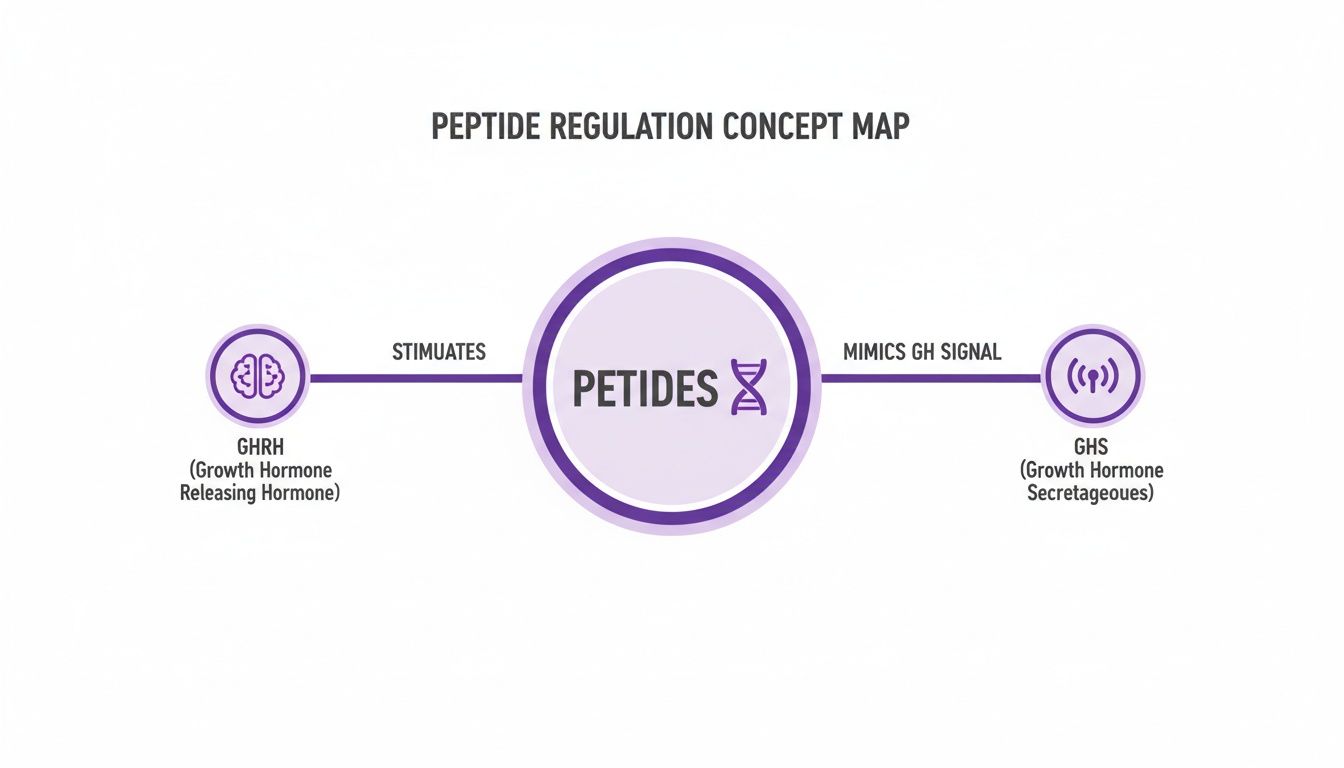
As you can see, the GHRH analogs give the pituitary a direct push, while the GHS compounds mimic the body’s natural ghrelin signal to boost that effect. The synergy between these two pathways is a major focus of advanced hypertrophy studies, as researchers aim to understand how to orchestrate these signals for the greatest downstream impact on muscle tissue.
To get a clearer picture of the key players in this field, we’ve put together a quick overview of the most frequently studied peptides.
Top Research Peptides For Muscle Growth: A Quick Overview
| Peptide Name | Peptide Class | Primary Mechanism of Action | Key Area of Research Interest |
|---|---|---|---|
| CJC-1295 | GHRH | Stimulates a prolonged, steady release of GH from the pituitary gland. | Long-term elevation of GH and IGF-1 levels. |
| Tesamorelin | GHRH | A stabilized GHRH analog that promotes pulsatile GH release. | Effects on body composition, particularly visceral fat. |
| Ipamorelin | GHS | Mimics ghrelin to selectively stimulate a strong GH pulse with minimal side effects. | Targeted GH release without impacting cortisol/prolactin. |
| GHRP-2/6 | GHS | Potent ghrelin mimetics that trigger a significant GH pulse and stimulate appetite. | Maximum GH amplification and its systemic effects. |
| BPC-157 | Peptide | Upregulates growth hormone receptor expression and promotes tissue repair pathways. | Tissue regeneration, recovery, and injury mitigation. |
| TB-500 | Peptide | Promotes cell migration, differentiation, and tissue repair via actin upregulation. | Accelerated healing and recovery post-injury. |
| Tesofensine | Neuromodulator | A reuptake inhibitor that indirectly influences metabolic and hormonal pathways. | Weight management and metabolic regulation. |
This table provides a bird's-eye view, but the real value comes from digging into the specific studies behind each compound. Understanding the nuances of their mechanisms is what allows researchers to design more effective and targeted experiments.
How Peptides Actually Trigger Muscle Growth
To get a real handle on how these peptides work, you need to stop thinking of them as the building blocks of muscle. They aren't. Think of them as highly specific messengers—or better yet, as a set of secret instructions delivered straight to the body’s hormonal command center, the pituitary gland.
They don't magically create new muscle tissue. Instead, they give the pituitary precise orders to kickstart the body's own natural muscle-building and repair machinery. It's a remarkably elegant and powerful system.
The One-Two Punch of Peptide Signaling
The most compelling research into peptides for muscle growth almost always comes down to a dual-action strategy. It’s not about sending one signal; it's about hitting two complementary pathways at once for a synergistic effect.
-
The 'Go' Signal (GHRH Analogs): This is the main command. Peptides like CJC-1295 are what we call Growth Hormone Releasing Hormone (GHRH) analogs. They essentially mimic the body’s own GHRH, sending a direct message to the pituitary gland: "Time to release a pulse of Growth Hormone." This is the foundation, creating a natural, rhythmic release that works with the body’s physiological patterns, not against them.
-
The 'Go Harder' Signal (GHS Peptides): This is the amplifier. Peptides such as Ipamorelin are Growth Hormone Secretagogues (GHS). They work by mimicking a different hormone, ghrelin, which targets a separate set of receptors in the pituitary. Their message is simple but potent: "Whatever GHRH is telling you to do, do a lot more of it!" This amplifies the initial signal, making the resulting GH pulse much stronger and more impactful.
You can think of it like a conductor leading an orchestra. The GHRH analog sets the tempo, and the GHS turns up the volume. Together, they create a powerful hormonal symphony that one signal alone just can't match.
From GH Pulse to Actual Muscle Hypertrophy
Once that amplified pulse of Growth Hormone hits the bloodstream, it makes a beeline for the liver. There, it signals the production of another crucial anabolic hormone: Insulin-like Growth Factor 1 (IGF-1). And this is where the real work of muscle growth begins.
IGF-1 is the primary driver of muscle cell growth, or hypertrophy. It acts directly on muscle cells, telling them to ramp up protein synthesis. This is the core process of repairing the micro-tears from exercise and building new muscle fibers, making them bigger and stronger.
The real beauty of this process is the chain of command: from the peptide to the pituitary, from GH to the liver, and finally from IGF-1 to the muscle cells. It’s a cascade that uses the body’s own sophisticated machinery instead of trying to crude-force it with outside hormones.
Put simply, the peptide doesn’t build the muscle. It just gives the body an incredibly clear and powerful command to build it itself.
Why the "Pulse" is So Important
A critical feature of this peptide-driven approach is its pulsatile nature—the release of GH comes in waves, not a steady, constant stream. This mimics the body's own natural rhythm and is widely believed to be the key to maintaining receptor sensitivity and achieving long-term effectiveness.
- Keeps the Pituitary Healthy: Stimulating the body's own production keeps the pituitary gland active, avoiding the negative feedback loops that can shut it down when using synthetic HGH directly.
- Prevents Receptor Burnout: Pulsatile release helps prevent the body's GH receptors from getting overwhelmed and becoming less responsive over time.
- Optimizes Anabolic Signaling: The natural peaks and troughs of GH and IGF-1 seem to create a more dynamic and effective environment for muscle protein synthesis and recovery.
By understanding this intricate signaling process, researchers can design smarter studies to explore the true potential of these compounds—moving beyond simple cause-and-effect to a more nuanced understanding of biological communication.
A Deep Dive Into Top GHRH Analogs
When it comes to Growth Hormone Releasing Hormone (GHRH) analogs, researchers quickly learn they aren't interchangeable. Each compound has a distinct personality and profile, making it a specialized tool for specific research goals. Think of it like a mechanic choosing a wrench—the success of the job depends entirely on picking the right tool for that particular bolt.
Let's start with a compound well-known in research circles for its incredible staying power: CJC-1295 with Drug Affinity Complex (DAC). This peptide is a true heavyweight, and its main claim to fame is a dramatically extended half-life that can last for several days.

It’s this long-lasting action that makes it so fascinating. Instead of causing a sharp, short-lived spike in growth hormone, it creates a slow, steady rise in both GH and its downstream partner, IGF-1. This effect, often called a "GH bleed," makes it a powerful candidate for studies looking at long-term protein synthesis and sustained anabolic signaling.
Understanding CJC-1295 with DAC
So, how does it last so long? The secret is in the DAC component. This small addition acts like a molecular anchor, allowing the peptide to bind to albumin, a common protein in the bloodstream. This effectively shields it from being broken down quickly, which is the key to its unique research applications.
Here's what that means for researchers:
- Sustained GH Elevation: It creates a stable, long-lasting increase in both GH and IGF-1.
- Reduced Dosing Frequency: The long half-life simplifies study protocols, requiring less frequent administration than other GHRH analogs.
- Focus on Chronic Effects: It's perfect for experiments designed to unpack the cumulative impact of elevated GH on muscle growth over time.
While CJC-1295 with DAC is the marathon runner of the group, another GHRH analog, Tesamorelin, is more like a sprinter who also dominates the hurdles. It’s known for its powerful, dual-action capabilities.
Tesamorelin is in a class of its own. It doesn't just stimulate GH release to support lean mass; it has a remarkable, almost surgical ability to target visceral adipose tissue (VAT)—the dangerous fat wrapped around our internal organs. This makes it an incredibly compelling subject for body recomposition studies.
This dual focus on both building muscle and incinerating a specific, harmful type of fat is why it gets so much attention. To see how it can be combined with other peptides, check out our detailed guide on the CJC-1295 and Ipamorelin blend.
The Unique Profile of Tesamorelin
Tesamorelin is a synthetic GHRH analog that was structurally tweaked for greater stability. Its ability to selectively target visceral fat while promoting lean mass is what truly sets it apart. It doesn’t just cause general fat loss; it goes after the most metabolically damaging kind.
Originally approved by the FDA in 2010 to treat a specific type of fat accumulation in HIV patients, its mechanisms have sparked immense interest for broader metabolic research. In clinical trials, Tesamorelin was shown to slash abdominal fat by 15-18% over 26 weeks, all while boosting IGF-1 levels by 20-30%—a direct signal that supports the creation of new muscle cells. You can explore more about the growing U.S. peptide industry on djholtlaw.com.
This points to an enhanced nutrient partitioning effect, where the body is encouraged to shuttle nutrients toward muscle for growth and away from fat storage. When a research goal involves simultaneous fat loss and hypertrophy, Tesamorelin is one of the best tools for the job.
Here’s a quick breakdown to help frame these two GHRH analogs as distinct research tools:
| Research Parameter | CJC-1295 with DAC | Tesamorelin |
|---|---|---|
| Primary Mechanism | Long-acting GHRH analog with extended half-life | Stabilized GHRH analog with a standard half-life |
| GH Release Pattern | Sustained, low-level "bleed" effect | More natural, pulsatile release |
| Main Research Focus | Long-term protein synthesis and sustained anabolism | Body recomposition, lean mass gain, and visceral fat reduction |
| Key Advantage | Infrequent administration schedule | Targeted effect on visceral adipose tissue |
Ultimately, choosing between these compounds comes down to the research question. If the goal is to study pure, long-term hypertrophy, CJC-1295 with DAC offers that constant anabolic signal. But for an investigation into advanced body recomposition and metabolic health, Tesamorelin brings a more targeted, dual-action approach to the table.
Unlocking Synergy: Combining Peptides For Maximum Effect
While individual peptides offer specific pathways for investigation, this is where research gets truly exciting. The real power move in advanced studies is combining different classes of peptides—a strategy often called "stacking"—to create an effect far greater than the sum of its parts. It's a classic case of 1 + 1 = 3.
Think of it like building a high-performance engine. A GHRH analog like CJC-1295 is like pressing the accelerator, telling the pituitary gland to release a steady, powerful pulse of growth hormone. But when you add a Growth Hormone Releasing Peptide (GHRP) like Ipamorelin, it acts as a supercharger.
The Ipamorelin doesn't just push the accelerator harder; it forces more fuel into the engine, amplifying the GHRH's signal and making the resulting GH pulse exponentially more potent. This coordinated attack on two different receptor pathways is the key to unlocking a truly maximized hormonal response in a research context.
The CJC-1295 and Ipamorelin Stack
The combination of CJC-1295 and Ipamorelin is arguably the most popular stack in muscle growth research, and for good reason. It represents a perfectly balanced approach to stimulating the GH axis, offering a powerful effect with remarkable precision. This duo is studied for its ability to create a strong, clean GH pulse without many of the side effects associated with other secretagogues.
Here’s why this pairing is so effective from a research standpoint:
- Dual-Mechanism Action: CJC-1295 provides the foundational "release" signal, while Ipamorelin provides the "amplify" signal.
- Synergistic GH Release: Together, they can trigger a significantly larger GH pulse than either could achieve alone.
- Maintained Natural Patterns: This combination still works by stimulating the body's own pituitary, preserving the natural, pulsatile release rhythm that is crucial for avoiding receptor desensitization.
This precise synergy is what makes the stack a go-to for researchers aiming to study the full anabolic potential of the GH axis. For those interested in the real-world observations tied to this peptide, you can explore more about Ipamorelin before and after results in our detailed guide.
The goal of a well-designed peptide stack isn't just brute force; it's about creating a sophisticated, multi-pronged signal that mimics and amplifies the body's natural processes. The CJC-1295 and Ipamorelin combination is a prime example of this elegant biological strategy.
Scientific inquiries from the early 2000s showed that even a single administration of CJC-1295 could increase mean plasma GH levels by 2- to 10-fold for 6 days. Even more impressively, it boosted IGF-1 levels by 1.5- to 3-fold for 9-11 days in healthy adults. This sustained elevation is precisely what researchers look for when studying protein synthesis and recovery, making it a cornerstone compound in the field.
Research Protocol Comparison: Single Vs. Stacked Peptides
To truly appreciate the value of stacking, it helps to compare the theoretical research protocols side-by-side. A study using a single peptide will yield valuable data, but a stacked protocol opens the door to investigating more dynamic and powerful biological responses.
The table below illustrates how these approaches might differ in a hypothetical research setting focused on maximizing GH and IGF-1 for hypertrophy studies.
| Research Parameter | Single Peptide Protocol (e.g., CJC-1295 only) | Stacked Protocol (e.g., CJC-1295 + Ipamorelin) |
|---|---|---|
| Primary Signal | GHRH pathway stimulation | GHRH and Ghrelin pathway stimulation |
| Expected GH Pulse | Moderate and sustained | Large, sharp, and amplified |
| IGF-1 Response | Gradual increase over several days | More rapid and pronounced increase |
| Research Focus | Studying the effects of a steady GH bleed | Investigating the impact of maximal, pulsatile GH release |
| Potential Outcome | Moderate anabolic signaling | Potentially maximized anabolic and lipolytic signaling |
This comparison clarifies why stacking has become such a common practice in advanced research. It allows scientists to move beyond asking, "What does this one peptide do?" to a more sophisticated question: "What is the maximum potential of the entire hormonal axis when we optimally stimulate it?"
By combining compounds, researchers can design experiments that truly push the boundaries of biological signaling and uncover what's possible.
Ensuring The Integrity Of Your Research
Even the most brilliant research protocol will fall flat if your compounds are bunk. Let's be blunt: identifying the best peptides for muscle growth is only half the job. The other half—and arguably the more critical part—is making sure the vials you're working with contain exactly what they claim to.
Starting an experiment with questionable peptides is like trying to build a skyscraper on a foundation of sand. The entire structure is compromised from the very beginning, and your results will be meaningless. This is where we shift from theoretical science to the practical, essential skill of verifying compound quality.
When a supplier advertises >99% purity, they're claiming the vial contains an extremely high concentration of the target peptide with virtually no contaminants. For anyone serious about generating reliable, repeatable data, anything less than that is a non-starter.
Demystifying Quality Verification Reports
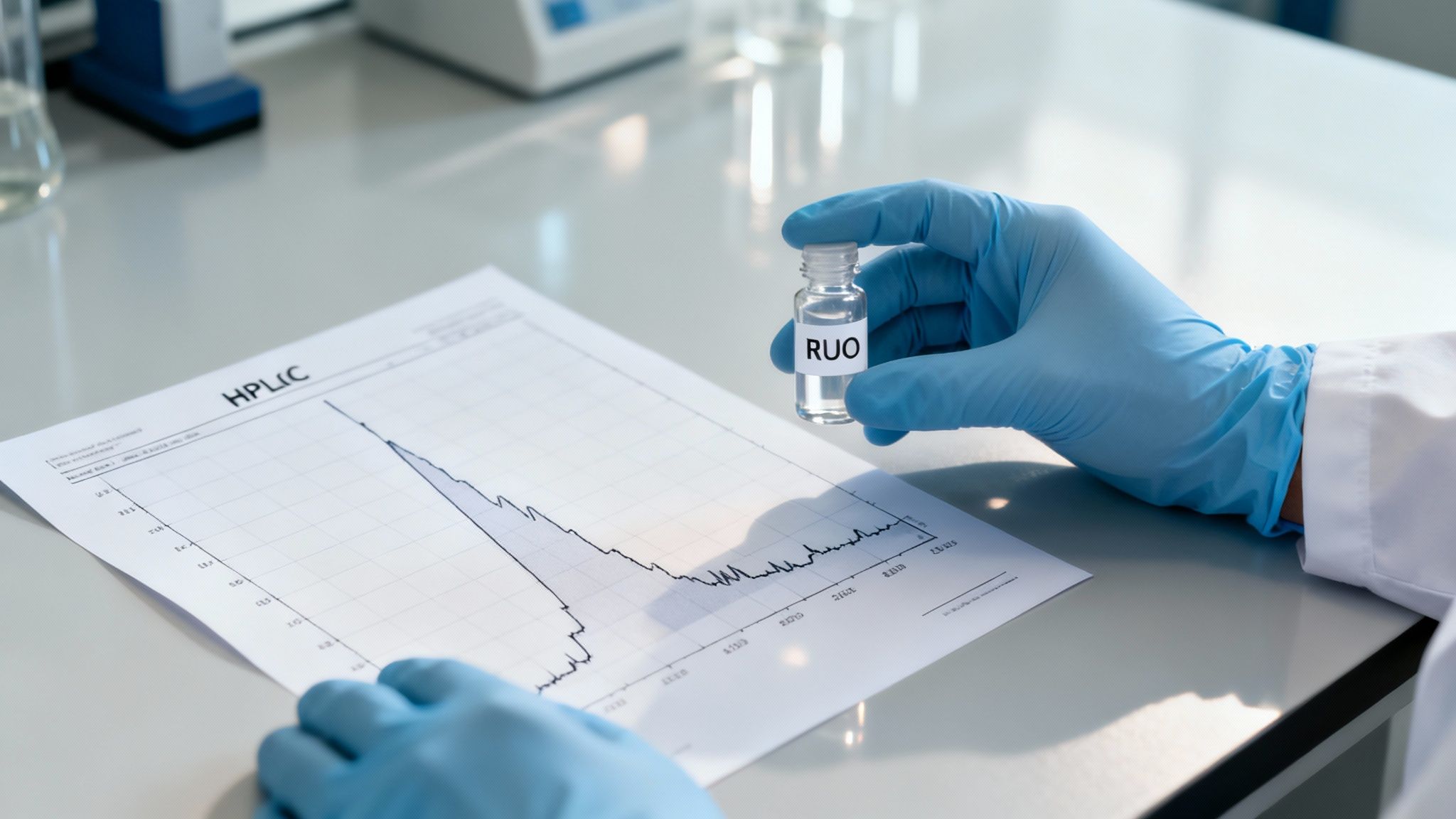
Any reputable supplier worth their salt will back up their claims with third-party analytical reports. Learning to read these documents is a core competency for a researcher. The two big ones you need to know are HPLC and Mass Spectrometry.
-
High-Performance Liquid Chromatography (HPLC): Think of this as the ultimate purity test. A sample gets dissolved and pushed through a column that separates every little component. What you get is a graph with a huge, dominant peak for your target peptide and maybe some tiny blips for any impurities. A massive primary peak is exactly what you want to see.
-
Mass Spectrometry (MS): This one is all about identity. MS measures the precise molecular weight of the compound in the vial. If the weight it measures matches the known, documented molecular weight of the peptide you ordered, you've confirmed you have the right stuff.
A legitimate Certificate of Analysis (COA) isn't complete without both HPLC and MS data. One without the other is a red flag. Purity (HPLC) without identity confirmation (MS) just means you could have a very pure vial of the completely wrong compound.
Practical Steps For Ensuring Compound Integrity
Sourcing high-quality materials comes down to good old-fashioned due diligence. Before you even think about buying, you need to vet your supplier against a few key criteria.
First off, every single product should be clearly and explicitly labeled "For Research Use Only" (RUO). This isn't just jargon; it’s a critical sign that the supplier operates within the correct regulatory framework. It tells you their products are intended for laboratory investigation, not for any kind of human or animal use.
Next, demand easy access to third-party lab results for every batch. A trustworthy supplier will have these COAs front and center, letting you independently verify purity and identity before you spend a dime. This level of transparency is the absolute bedrock of credible research.
Finally, remember that your job isn't done once the package arrives. Peptides are fragile. They need to be stored and handled correctly to stay stable. After sourcing, the next crucial skill to master is knowing how to reconstitute peptides for your experiments. Nail these verification and handling steps, and you’ll build a solid foundation for data you can actually trust.
Frequently Asked Questions About Peptides For Muscle Growth
When you start digging into peptide research, the questions start piling up fast. Moving from the textbook definitions to actually designing an experiment brings a host of practical hurdles to light. Let's tackle some of the most common questions that pop up, clearing the air on the differences between peptide types and why the rules of the road for research are so critical.
What Is The Difference Between A GHRH And A GHRP In Research?
Think of your pituitary gland as an engine. A GHRH (Growth Hormone Releasing Hormone) analog, like CJC-1295, is what turns the key in the ignition. It tells the pituitary to start releasing growth hormone, setting a foundational baseline for the whole process.
A GHRP (Growth Hormone Releasing Peptide), like Ipamorelin or GHRP-2, is the foot on the gas pedal. It doesn't start the engine, but it tells it how hard to rev. It dramatically amplifies the signal that the GHRH already initiated.
This is precisely why they are so often studied together. The GHRH provides a steady, naturalistic pulse, while the GHRP kicks that pulse into overdrive. This synergy allows researchers to explore the full capacity of the GH axis in a way that studying either compound alone never could, making it a cornerstone of studies on the best peptides for muscle growth.
Why Is The Research Use Only Label So Important?
That "Research Use Only" (RUO) label you see on vials isn't just fine print; it's a non-negotiable standard that separates legitimate science from everything else. It’s a bright line indicating that a compound is meant for lab research only—in vitro or in animal models—and is not produced or cleared for human use.
This label does a few crucial things:
- Keeps Things Legal: It defines the compound's place in the world, ensuring it stays within proper scientific channels and doesn't get mistaken for a medicine.
- Acts as a Safety Guardrail: It confirms the product hasn't gone through the exhaustive, multi-year clinical trials needed for therapeutic drugs. It should never be used for diagnosis or treatment.
- Preserves Scientific Integrity: For any researcher, sourcing RUO-labeled peptides is ground zero for ethical work. It ensures your study is compliant and your results are built on a solid, respectable foundation.
The RUO label is the firewall between responsible scientific investigation and the misuse of powerful biological agents. Sticking to it protects you, your institution, and the integrity of the entire research process.
How Should I View Anecdotal Reports About Peptides Online?
Online forums and social media posts about peptides are everywhere. While they can be fascinating to read, you have to treat them as what they are: stories, not data. They can spark ideas for a hypothesis, but they absolutely cannot be used as evidence.
Think about it this way: you wouldn't try to prove a new fuel formulation works based on a single, anonymous blog post. You have no idea what kind of car they drove, the road conditions, how they measured their mileage, or what else they'd done to their engine. The information is so full of holes it's practically useless for drawing a real conclusion.
Good science stands on verifiable, repeatable data. That requires:
- Controlled Variables: Making sure the peptide is the only thing you're changing.
- Standardized Measurements: Using precise, calibrated tools to measure outcomes.
- Peer Review: Letting other experts kick the tires on your methods and conclusions.
Anecdotes fail on all three counts. For serious research, these stories have to be left at the door in favor of data from properly controlled, peer-reviewed studies. The goal is objective truth, not subjective experience.
Why Does Peptide Half-Life Matter In A Research Setting?
A peptide's half-life—how long it takes for half of it to be cleared from a system—is a game-changing variable in study design. It fundamentally dictates the nature of the hormonal signal you're investigating. Getting this right is everything.
A short half-life, which you see with compounds like standard GHRH or Ipamorelin, delivers a sharp, intense, but very brief GH pulse. This is perfect if you want to study acute cellular reactions, like how muscle cells light up their signaling pathways right after stimulation.
On the flip side, a long half-life, like the one from CJC-1295 with DAC, doesn't create a pulse at all. It generates a sustained, low-level elevation of GH and IGF-1 that can hang around for days. This "GH bleed" is the ideal tool for researching the chronic effects of constantly elevated GH, such as its impact on long-term protein synthesis or gradual changes in body composition.
Ultimately, your choice of half-life frames the entire research question. Are you studying a sprint or a marathon? The answer tells you which tool to pull from the toolbox.
For researchers dedicated to sourcing the highest purity compounds for their studies, Bullit Peptides offers a comprehensive catalog of third-party tested materials. Every product is guaranteed to exceed 99% purity, ensuring your results are built on a foundation of verifiable quality. Explore our range of RUO peptides and build your next experiment with confidence at https://bullitpeptides.com.