The core difference between BPC-157 and TB-500 really boils down to their scope. BPC-157 is like a laser-guided missile for repair, zeroing in on a specific, localized injury. On the other hand, TB-500 acts more like a system-wide software update, reducing inflammation and promoting healing across the entire body. Deciding which one to study depends entirely on whether you need a targeted fix or a broad-spectrum approach.
Comparing BPC 157 and TB500 for Research
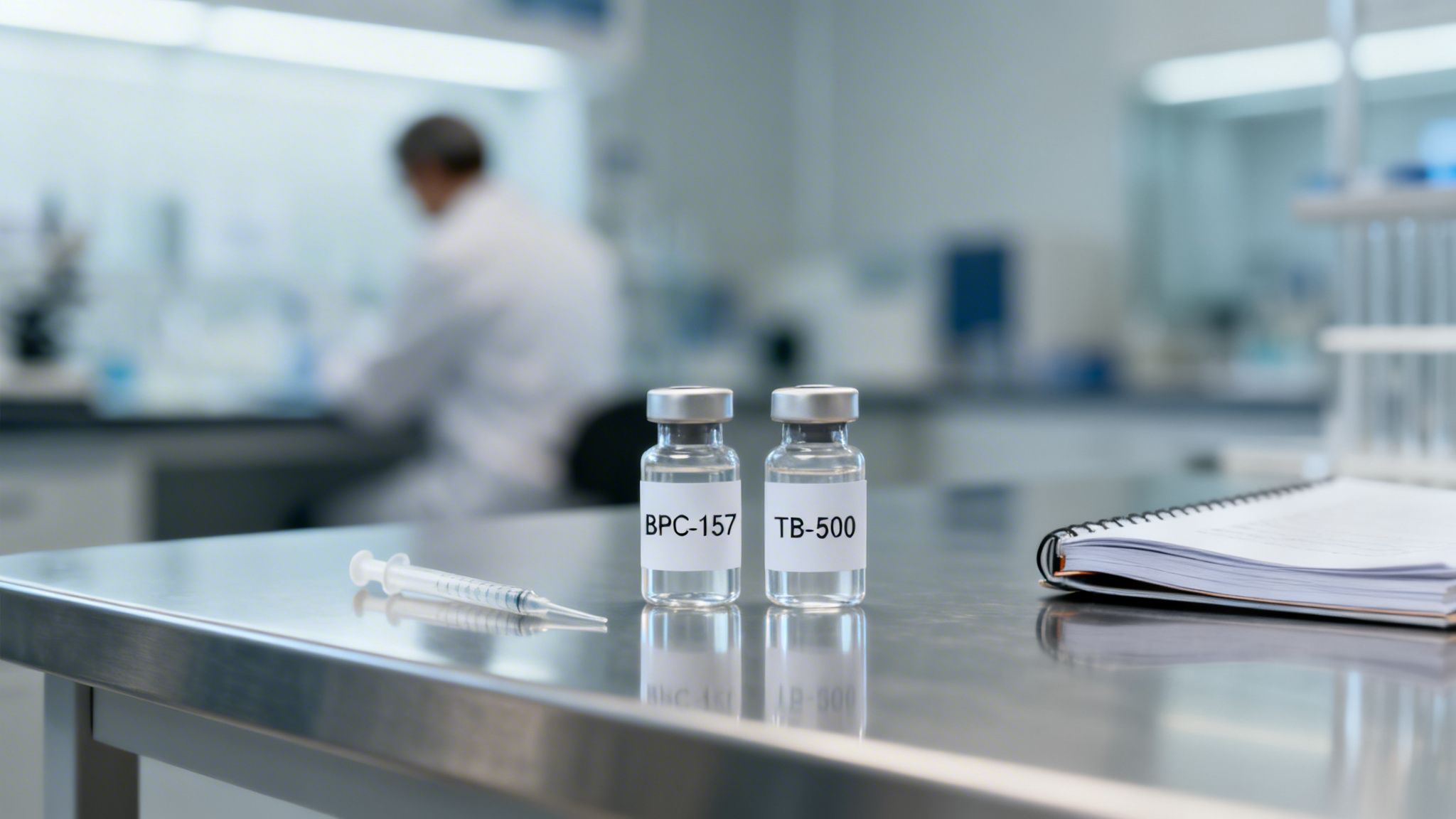
It’s no secret that peptides are a hot topic. The market was valued at an incredible $45.5 billion in 2023, and leading the charge are BPC-157 and TB-500. For serious biohackers and strength athletes pushing their physical limits, these two compounds are frequently at the top of the list for their potential in tissue repair and recovery.
While they're often discussed together, they operate through distinct and complementary pathways. Getting a handle on these differences is the first, most critical step for anyone designing an experimental protocol.
BPC-157 is a synthetic peptide, a small piece of a protein naturally found in the stomach. Its claim to fame is its powerful, localized healing effect, largely driven by promoting angiogenesis—the creation of new blood vessels. This makes it a fascinating compound for studying injuries in tissues that are notoriously hard to heal due to poor blood flow, like tendons and ligaments.
Then you have TB-500, a synthetic version of a naturally occurring protein called Thymosin Beta-4. This one is a systemic player. Its main job is to upregulate actin, a protein absolutely essential for cell structure and movement. By doing this, it helps cells get to injury sites faster and dials down inflammation all over the body.
BPC-157 vs. TB-500 At a Glance
To quickly see how they stack up, here’s a high-level comparison. This table strips it down to the essentials, giving you a fast reference for their core differences.
| Attribute | BPC-157 | TB-500 (Thymosin Beta-4) |
|---|---|---|
| Primary Action | Highly localized; promotes angiogenesis | Systemic; enhances cell migration & anti-inflammatory |
| Best For | Tendons, ligaments, gut health, specific injury sites | Muscle repair, overall recovery, systemic inflammation |
| Origin | Synthetic fragment of a gastric protein | Synthetic version of a naturally occurring protein |
| Key Mechanism | Stimulates new blood vessel growth (VEGF pathway) | Upregulates actin protein for cellular mobility |
This table gives you the basics, but the real value comes from understanding the why behind these differences.
Key Takeaway: Think of BPC-157 as the specialist you call for a specific, acute problem—like a torn tendon. TB-500 is more like the general practitioner managing the body’s overall wellness and response to widespread stress and inflammation.
Now that we've covered the high-level view, we'll dive deeper. This guide will break down the nuanced mechanisms, the evidence from research, and the practical side of working with BPC-157 and TB-500. Whether you’re looking at them individually or exploring how they might work together, knowing when and why to use each is crucial for getting solid, repeatable results.
How They Actually Work: A Look Under the Hood

To really get why the BPC-157 and TB-500 stack is so effective, you have to understand that they aren't just two versions of the same thing. They are fundamentally different tools, each with its own biological blueprint. Getting this difference is the secret to designing research protocols that actually work.
Think of it like fixing a house. BPC-157 is your specialized crew—the plumber who comes to fix a single, critical leak under the sink. TB-500 is the general contractor, overseeing the entire project, managing logistics, and making sure all the different workers can get where they need to go.
One is a hyper-focused specialist; the other is a system-wide coordinator. Let's dig into exactly how each one gets the job done.
BPC-157: The Localized Repair Specialist
BPC-157, a peptide derived from a protein found in the stomach, has built its reputation on its incredible ability to work right where you need it. Its secret weapon is promoting angiogenesis—the creation of new blood vessels. This is absolutely critical for tissues that are notoriously stubborn healers.
Tissues like tendons and ligaments have a terrible blood supply. When they get injured, this lack of blood flow means nutrients and oxygen can't get in, and waste can't get out. Healing grinds to a halt.
BPC-157 cuts right through this bottleneck. It works by ramping up key growth factors, especially Vascular Endothelial Growth Factor (VEGF), telling the body to start building a new network of tiny blood vessels directly at the injury site.
This targeted boost in blood flow creates a cascade of benefits:
- A direct supply line: New vessels act like a highway, rushing repair materials straight to damaged cells.
- Efficient cleanup: Metabolic junk and cellular debris that slow down healing are cleared out much faster.
- Recruiting the workforce: This new vascular network gives fibroblasts and other crucial repair cells a path to get to the injury.
BPC-157’s genius is its ability to turn a biologically barren area into a thriving construction zone. It doesn’t just patch a hole; it builds the roads and supply lines the body needs to fix itself properly.
On top of that, preclinical research shows BPC-157 interacts with the nitric oxide (NO) system and encourages the growth of tendon fibroblasts. These are the very cells that produce the collagen needed to rebuild strong, functional connective tissue. For a much deeper dive, you can learn more about the versatile applications of the BPC-157 peptide in our comprehensive guide.
TB-500: The System-Wide Healing Coordinator
While BPC-157 is doing its precision work, TB-500 (Thymosin Beta-4) is taking a bird's-eye view. It acts as a master regulator for the entire body, influencing cell movement and inflammation on a global scale.
The core of TB-500's mechanism is its relationship with actin, a protein that's absolutely fundamental to the structure and movement of every cell. Actin is like the internal scaffolding and railway system inside our cells.
TB-500 encourages the body to produce more actin. This has huge implications for healing:
- Supercharged cell migration: With more actin "highways," essential repair cells like stem cells and endothelial cells can travel quickly to any site of damage in the body.
- Better cell flexibility: Actin gives cells the structural pliability they need to squeeze through tissues, a key part of wound closure and regeneration.
This system-wide boost to mobility is why TB-500 is so often linked to muscle repair and overall recovery. It’s not just patching one spot; it’s upgrading the body's entire emergency response network.
But that's not all. TB-500 is also a powerful anti-inflammatory. It helps manage the body's cytokine response, dialing down the pro-inflammatory signals that cause pain and swelling while promoting the pathways that resolve inflammation.
This one-two punch—improving cellular repair while calming systemic inflammation—makes it an incredible tool for managing the fallout from intense physical stress or widespread injury. By coordinating these processes across the whole body, TB-500 creates the perfect environment for a fast, efficient recovery.
Comparative Analysis for Research Applications
When you're designing a study, the choice between BPC-157 and TB-500 isn't about which one is "better." It's about picking the right tool for the job. Their mechanisms are so different that they excel in completely separate research scenarios. A direct, side-by-side comparison really highlights where each one shines, helping you match the peptide to your specific experimental goals.
We'll move past the surface-level stuff and dig into three key areas: their affinity for different tissues, their scope of action, and the primary research they're best suited for. Getting these nuances right is the foundation of a solid experimental design when working with BPC-157 and TB-500.
Target Tissue Affinity and Specificity
The first big difference is where these peptides do their best work. BPC-157 has a fascinating attraction to connective tissues, which is why it's a hot topic for very specific injury models.
Its primary strategy involves kickstarting angiogenesis—the formation of new blood vessels—right at the site of administration. This is a game-changer for tissues that don't have a great blood supply to begin with. Think about:
- Tendons and Ligaments: These are notoriously slow to heal precisely because they lack good blood flow. BPC-157’s localized boost to vascular growth is a major reason it’s studied for tendinopathy.
- Gastrointestinal Tract: Since it was first derived from a stomach protein, it's no surprise that BPC-157 shows powerful protective and healing properties in the gut lining in preclinical models.
- Bone and Joint Structures: Researchers are also looking into its ability to speed up bone-to-tendon healing and shore up the integrity of joint capsules.
TB-500, on the other hand, is much less specialized. Its main job is to upregulate actin, which is a fundamental building block for cell structure and movement. This gives a foundational boost to cells across a huge range of tissue types.
You're not targeting one specific spot; you're providing a broad, system-wide enhancement. This includes muscle tissue, skin, and even cardiac and neural cells, where actin is absolutely critical for function and repair. It doesn't just zero in on the injury—it upgrades the healing potential of the entire systemic environment.
Crucial Differentiator: If your research involves a clean, localized injury to connective tissue like a tendon tear, BPC-157 is your go-to. If the goal is to observe systemic recovery, widespread muscle regeneration, or the repair of soft tissues that already have decent blood flow, TB-500 is the logical choice.
Scope of Action: Localized Precision vs. Systemic Reach
Building on tissue affinity, their scope of action is probably the most practical differentiator for any researcher. BPC-157 is the quintessential local agent. It works exactly where you put it, making it perfect for experiments that need a targeted intervention without a lot of off-target effects muddying the waters.
Think of it as a specialized surgical tool. Its impact is most powerful in the immediate area of application, where it gets to work building new blood vessels and calling in repair cells. This kind of precision is invaluable when you want to study the direct healing process of a single, isolated injury without introducing systemic variables that could confuse your results.
TB-500 plays by a completely different set of rules. It’s a systemic agent, plain and simple. Once it’s in the system, it circulates everywhere, lending a hand wherever cellular repair and inflammation control are needed.
This makes TB-500 an excellent variable for studies looking at overall recovery, widespread inflammation, or the healing of multiple small injuries at once. Its ability to improve cell migration basically equips the body's entire "emergency response" team to work more efficiently, rather than pouring all its resources into one single spot.
The U.S. peptide therapeutics retail market has exploded to $103.66 billion and is forecast to nearly triple to $336.12 billion by 2033, a clear signal of the intense research interest in these compounds. BPC-157, originally discovered in gastric juice, has shown incredible promise in animal trials for healing everything from bone fractures to GI issues. Even more exciting, studies combining it with TB-500 have demonstrated up to 50% faster muscle repair in certain models. You can dive into the market projections and research trends for a deeper look at the growth of peptide therapeutics.
Primary Research Areas and Use Cases
These differences in how and where they work lead to very distinct research applications for BPC-157 and TB-500.
BPC-157 Research Focus
- Tendon and Ligament Repair: This is its bread and butter, focusing on accelerating healing in those tough, avascular connective tissues.
- Gut Health and IBD Models: A major area of study is its protective and restorative effects on the gastrointestinal lining.
- Nerve Regeneration: New and exciting research is exploring its potential to help repair damaged peripheral nerves.
TB-500 Research Focus
- Muscle Regeneration and Recovery: Its primary use case is studying how it speeds up muscle repair after intense physical stress or injury.
- Systemic Inflammation Control: It's often used in models of chronic inflammation or widespread tissue damage where a body-wide effect is needed.
- Wound Healing: Because it boosts cell migration, it’s a strong candidate for studies on skin and soft tissue wound closure.
- Cardioprotective Effects: Researchers are also investigating its potential to help the heart recover after an injury.
To make this crystal clear, let's break down how these peptides stack up against specific research parameters.
Comparative Analysis of Research Parameters
This table lays out the core differences to help you decide which peptide best fits your experimental design.
| Parameter | BPC-157 | TB-500 | Key Takeaway for Researchers |
|---|---|---|---|
| Experimental Goal | Heal a specific, localized injury (e.g., Achilles tendon). | Promote broad, systemic recovery (e.g., after intense training). | Match the peptide's scope to the nature of the injury model. |
| Target Tissue | Connective tissues (tendons, ligaments, gut). | Muscle, skin, organs, and systemic circulation. | BPC-157 is specialized; TB-500 is a generalist. |
| Primary Mechanism | Localized angiogenesis and growth factor stimulation. | Systemic actin upregulation and cell migration. | The "how" dictates the "where" and "why" of its use. |
| Inflammation Focus | Manages local inflammation at the injury site. | Reduces systemic, body-wide inflammation. | Choose based on whether inflammation is a local or global problem. |
Ultimately, understanding these distinctions is the key. BPC-157 is your precision tool for targeted repairs, while TB-500 is your systemic workhorse for broad recovery and regeneration. Aligning your choice with your research question is the first step toward a successful study.
Unlocking Synergy: Why Two Peptides Are Better Than One
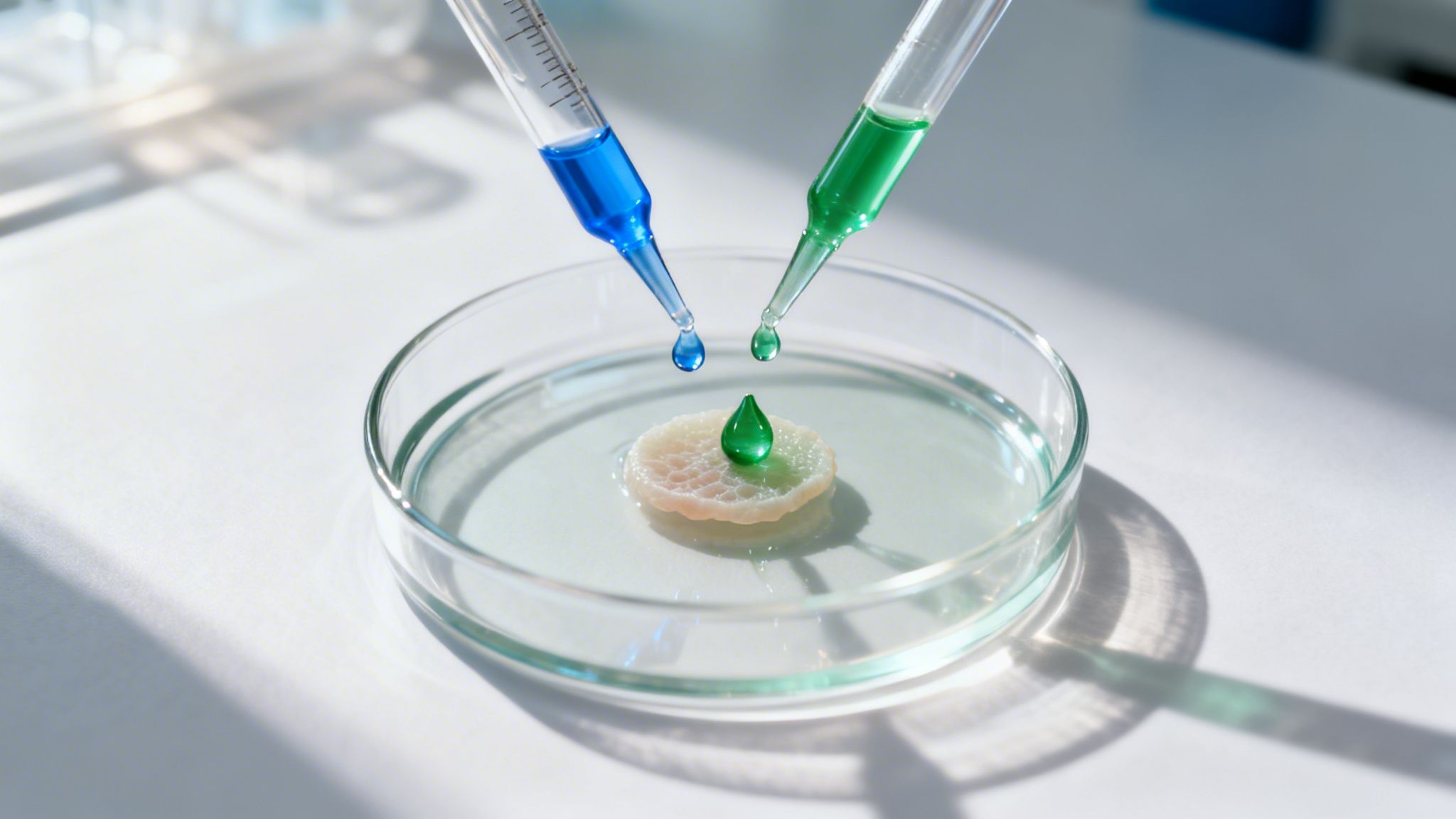
While BPC-157 and TB-500 are each impressive in their own right, the real magic happens when you explore their combined potential. The logic behind using BPC 157 and TB500 together isn't just about throwing more at a problem; it's about a strategic, two-pronged attack. They don't overlap—they complement each other perfectly.
Think about a nasty injury, like a torn muscle that also damages the tendon it's attached to. You're not just dealing with one tissue type; you have a complex mess involving muscle fibers, connective tissue, and a whole lot of inflammation. This is precisely where a dual-peptide protocol can shine.
The Architect and The General Contractor
I find the best way to explain the synergy between BPC 157 and TB500 is with a construction analogy.
Think of BPC-157 as the expert architect, working hands-on right at the injury site. Its job is highly specific: rebuilding the damaged structures, brick by brick.
TB-500, on the other hand, is the general contractor managing the entire project. It’s not laying the bricks, but it's making sure the supply routes are clear (improving blood flow), keeping city-wide problems in check (reducing systemic inflammation), and ensuring the specialized workers (repair cells) can get to the site efficiently.
This dynamic creates a powerful hypothesis for researchers: what if BPC-157's focused repair work could be supercharged by TB-500's ability to prep the entire body for healing? By hitting the problem from both a local and a systemic angle, you create a far more comprehensive approach.
A Layered Approach to Tissue Repair
When you use them in tandem, these two peptides initiate a powerful, layered healing cascade. Here’s a breakdown of how this could play out in a research model focused on a complex injury:
Putting Out the Fire (TB-500): Right after the injury, TB-500 goes to work systemically to get the initial, runaway inflammation under control. This calms everything down, creating a stable "worksite" for actual repairs to begin.
Laying the Foundation (BPC-157): At the same time, BPC-157 gets down to business directly at the point of injury. It starts promoting angiogenesis to get blood flowing again and signals local fibroblasts to start producing new collagen.
Calling in the Cavalry (TB-500): As BPC-157 rebuilds the local framework, TB-500's systemic action on actin makes regenerative cells more mobile. This makes it much easier for these crucial repair crews to navigate the bloodstream and arrive at the construction zone BPC-157 has prepared.
Key Insight: This isn't just an additive effect; it's multiplicative. TB-500 preps the body for repair, BPC-157 executes the local work, and then TB-500 helps deliver the cellular workforce that BPC-157 needs to finish the job.
This one-two punch directly addresses one of the biggest bottlenecks in the body's natural healing process, where local repair efforts get bogged down by systemic inflammation or a sluggish cellular response.
Designing a Combined Research Protocol
When setting up an experiment with both BPC 157 and TB500, the goal is to play to their individual strengths. A common and effective model involves administering BPC-157 locally, right at the injury site, to maximize its targeted action. Meanwhile, TB-500 is given systemically, allowing it to manage the body-wide response.
This strategy lets each peptide do what it does best. It's an approach that aims not just to patch the damage but to optimize the entire biological environment for a faster, more thorough recovery.
While this combination has become a go-to for advanced tissue repair studies, the world of peptides is always expanding. Researchers are now exploring novel peptides for entirely different goals, like aesthetics and skin health. For instance, you can learn more about the Glow Peptide to see how peptide research is branching out. Even so, the BPC-157 and TB-500 stack remains a cornerstone for anyone serious about investigating the frontiers of healing and recovery.
Navigating Peptide Sourcing and Research Compliance
The success of any experiment with BPC-157 and TB-500 ultimately comes down to one thing: the quality of the peptides you're working with. Sourcing these compounds isn't a step you can afford to rush. The integrity of your entire project, from start to finish, depends entirely on the purity and stability of your raw materials.
When you start looking for a supplier, you need to be sharp. This isn't just about finding the best price; it's about partnering with a company that’s transparent, understands the regulatory landscape, and is serious about providing legitimate, research-grade compounds. If you cut corners here, you risk invalidating your results before you even get started.
What Quality Actually Looks Like
You’ll see phrases like "99%+ purity" and "third-party tested" thrown around a lot. These aren't just marketing fluff—they're critical benchmarks for any serious research. Here's what you should actually be looking for.
Purity and Synthesis: The gold standard for producing clean, reliable peptides like BPC-157 and TB-500 is solid-phase peptide synthesis. This is the method behind high-purity production. Any supplier worth their salt will provide a Certificate of Analysis (CoA) to back up their purity claims, and you shouldn't settle for anything less than 99%.
Third-Party Lab Testing: An in-house CoA is a start, but independent verification is what really counts. The best vendors send their batches to an outside lab for a completely unbiased analysis. This third-party report is your proof that the peptide is what it says it is, without contaminants and at the correct concentration.
Lyophilization: Peptides are delicate molecules. Lyophilization, or freeze-drying, is the essential process that removes water and turns the peptide into a stable powder. This protects its structure, ensures a long shelf life, and is the only acceptable way for research peptides to be shipped.
The manufacturing process itself is incredibly complex. Solid-phase peptide synthesis dominates the industry, accounting for 71.62% of the market, and it's what allows top-tier suppliers to hit that crucial 99%+ purity mark. With regulatory bodies like the FDA and EMA watching closely, manufacturers often dedicate 15-20% of their entire budget just to stay compliant—a standard that serious suppliers like Bullit Peptides uphold with strict RUO labeling and quality guarantees.
Understanding "Research Use Only" Compliance
The "Research Use Only" (RUO) label isn't a suggestion; it's a hard legal and ethical line. It means these compounds are strictly for laboratory research, like in vitro studies or animal models. They are not drugs, they are not for human consumption, and they certainly aren't approved by the FDA for any therapeutic use.
Sticking to this is non-negotiable for both you and the supplier. A company that’s casual about this distinction is a massive red flag.
The Litmus Test for Compliance: A legitimate supplier will be crystal clear that their products are for RUO. They’ll make you acknowledge these terms before you can even make a purchase, showing they're committed to operating within the law.
This is what separates a real scientific supplier from a shady, gray-market operation. Working with a company that takes compliance seriously ensures you're getting materials that are not only high-quality but also legally and ethically sound for your research. After all, the very first step in any good experiment is making sure your materials are prepared correctly. For a walkthrough on that process, check out our guide on how to reconstitute peptides.
A Quick Checklist for Vetting Suppliers
To protect your research and your investment, run every potential supplier through this simple checklist:
- Transparent Third-Party Testing: Can you easily find recent, batch-specific lab reports (CoAs) from an independent lab?
- Explicit RUO Designation: Is the "Research Use Only" warning impossible to miss on their site and during checkout?
- Proper Packaging: Are the peptides shipped as lyophilized (freeze-dried) powder in sealed vials to guarantee stability?
- Knowledgeable Support: If you have technical questions about their testing or products, can you get a clear, informed answer?
- Solid Reputation: What are other researchers saying? Check out forums and communities to see what the word is on their reliability and product quality.
Picking the Right Peptide for Your Research
When you get down to it, choosing between BPC-157 and TB-500 isn't about which one is "better." It's about picking the right tool for the job. Forget a simple pros and cons list; you need to think about what you're actually trying to achieve in your experiment.
The whole decision really comes down to this: are you investigating a specific, nagging injury in one spot, or are you looking at a more widespread, systemic recovery process? Answering that one question will almost always point you in the right direction and make your research far more effective.
Scenario 1: Zeroing in on Connective Tissues
If your work focuses on those tough, slow-to-heal tissues that don't get much blood flow, BPC-157 is your go-to. Its real power lies in its localized, targeted action right where you need it most.
Think about these kinds of studies:
- Tendon and Ligament Models: When you're researching something like a nagging tendinopathy or a partial ligament tear, BPC-157's knack for kickstarting blood vessel growth (angiogenesis) at the site is exactly what you want to observe.
- Gut Repair Investigations: Since it was originally isolated from gastric juices, BPC-157 is uniquely suited for experiments on gut lining damage or models of inflammatory bowel conditions. It goes right to the source.
- Bone-to-Tendon Healing: In more complex orthopedic research, its ability to speed up the healing process where a tendon reattaches to bone is a huge area of interest.
In these situations, BPC-157’s precision lets you study the localized repair mechanism without muddying the waters with system-wide effects.
Scenario 2: System-Wide Recovery and Muscle Repair
On the flip side, if your research is all about broad recovery and bouncing back from major physical stress, TB-500 is the logical choice. It works systemically, influencing the entire body to promote healing.
This makes it the perfect candidate for research into:
- Post-Workout Muscle Recovery: In models that simulate intense physical training, TB-500’s influence on actin production and its ability to lower inflammation body-wide give you a powerful way to study accelerated muscle repair.
- Widespread Soft Tissue Damage: For any experiment involving multiple injury sites or diffuse inflammation, TB-500’s talent for promoting cell migration throughout the body is the key mechanism you'd want to investigate.
When the goal is systemic recovery from intense physical stress, TB-500 is the clear choice. It preps the entire biological landscape for a more efficient healing response, rather than just focusing on one spot.
Scenario 3: The Combined Approach for Complex Injuries
Sometimes, an injury isn't simple. For the most demanding and multi-faceted research models, using BPC-157 and TB-500 together isn't just throwing everything at the wall—it's a truly synergistic strategy. You're playing to the unique strengths of each compound to cover all your bases.
This combined protocol is ideal when you're studying a severe injury that hits both muscle and connective tissue hard, like a complete muscle rupture that also damages the attached tendon.
In a model like that, you could use BPC-157 to provide that targeted, laser-focused repair for the tendon while TB-500 gets to work managing the body-wide inflammation and speeding up the healing of the surrounding muscle. This dual-action protocol allows you to investigate a much more complete and realistic healing process from top to bottom.
Frequently Asked Questions About BPC-157 and TB-500
When you're deep in the research, you're bound to have some questions. Getting the details right on BPC-157 and TB-500 is crucial, especially when it comes to handling them properly and understanding exactly what you're working with. Let's clear up a few of the most common ones.
What's the Real Difference Between TB-500 and Thymosin Beta-4?
This is a great question that often trips people up. Think of TB-500 as the most powerful, active piece of the much larger, naturally occurring protein called Thymosin Beta-4 (TB4).
Essentially, researchers isolated the key fragment of TB4—the part responsible for binding to actin and driving most of its healing and regenerative effects—and synthesized it. The result is TB-500. For research purposes, this makes it a more direct and potent tool for studying cellular migration and tissue repair.
How Do I Properly Reconstitute These Peptides?
Both BPC-157 and TB-500 arrive as a delicate, lyophilized (freeze-dried) powder. To prepare them for any experiment, you'll need to reconstitute them with bacteriostatic water.
The key here is to be gentle. Angle the vial and let the water run slowly down the inside wall of the glass. This prevents you from directly blasting the powder, which can damage the fragile peptide chains. Once the water is in, don't shake it! Just give the vial a gentle swirl or roll it between your fingers until everything is completely dissolved.
To help you decide which peptide best fits your experimental model, here's a simple decision tree.
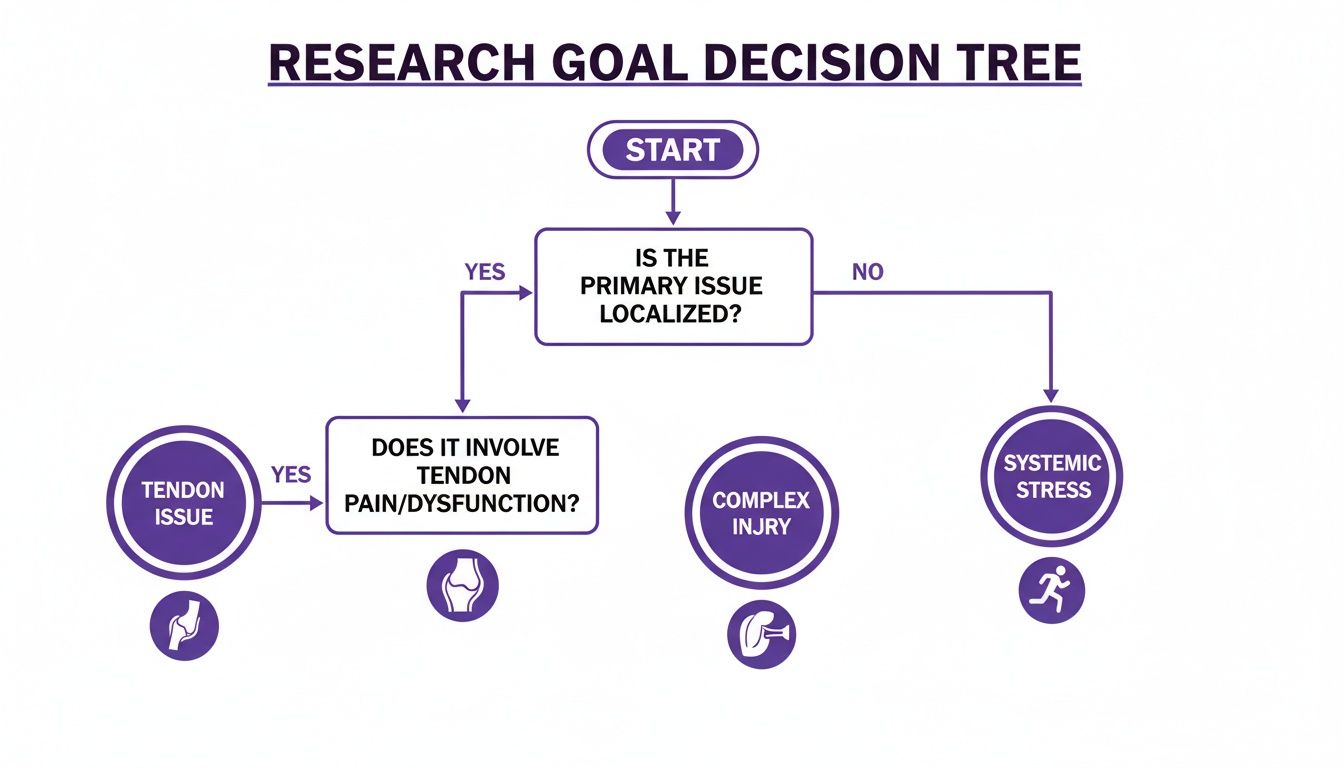
As you can see, if your research is focused on a specific, localized tendon or ligament issue, BPC-157 is the logical starting point. But if you're looking at broader systemic stress or more complex, multi-tissue injuries, the wide-ranging action of TB-500 makes it a better fit.
To ensure your research is built on a solid foundation, Bullit Peptides offers high-purity, third-party tested compounds you can trust. Head over to our site to explore our full catalog of research-grade peptides and get your next project started with confidence.