When CJC 1295 and Ipamorelin are combined, they create a powerful one-two punch for researchers studying growth hormone (GH) signaling. It’s best to think of them as a sophisticated, two-stage launch system for GH release. CJC 1295 provides the sustained, foundational lift, while Ipamorelin triggers a precise, targeted pulse. It's this synergistic action that has made the blend a cornerstone in advanced physiological studies.
Decoding the Powerful Peptide Synergy
In peptide research, finding true synergy is like striking gold. You want an effect that's far greater than what each component could achieve alone. The CJC 1295 and Ipamorelin blend accomplishes this masterfully by targeting the body's growth hormone axis from two distinct, yet perfectly complementary, angles. This isn't just about flooding a system; it’s about carefully orchestrating a response that mirrors natural physiological rhythms, but with amplified power and duration.
Think of it like building a campfire. Ipamorelin is the equivalent of tossing a bit of kindling and lighter fluid on the embers—you get a brilliant, intense, but brief flare-up. That's your acute, powerful pulse of GH.
Now, CJC 1295 is like adding slow-burning logs to that fire. It doesn't create a dramatic, instant flame, but it ensures the fire burns steadily and strongly for hours, raising the baseline heat.
A Two-Pronged Approach to GH Release
The real magic happens when these two mechanisms work together. The steady, elevated foundation laid by CJC 1295 means that when Ipamorelin initiates its pulse, the resulting peak is dramatically higher than it would ever be on its own. This dynamic gives researchers a powerful tool to study:
- Pulsatility: How does mimicking the body’s natural, rhythmic GH release affect cellular processes?
- Amplitude: What are the downstream effects of larger-than-normal GH peaks on tissues like muscle and bone?
- Sustained Elevation: How do prolonged increases in baseline GH and subsequent IGF-1 levels influence metabolism and cellular repair?
Let's take a quick look at how these two peptides stack up side-by-side.
CJC 1295 Ipamorelin At A Glance
This table provides a high-level summary of each peptide's core characteristics and function within the blend.
| Peptide | Primary Mechanism | Half-Life | Key Research Application |
|---|---|---|---|
| CJC 1295 | GHRH analogue; increases baseline GH levels and the amplitude of natural pulses. | Up to 8 days | Studying long-term elevation of GH and IGF-1 for metabolic and regenerative effects. |
| Ipamorelin | GHRP/ghrelin mimetic; selectively stimulates a strong, clean pulse of GH. | ~2 hours | Investigating the acute effects of GH spikes without impacting other hormones like cortisol. |
As you can see, their profiles are perfectly complementary for creating a robust and controlled research model.
This pairing creates a true powerhouse for any research setting. CJC-1295’s impressively long half-life of up to 8 days provides a stable foundation of elevated GH. Meanwhile, Ipamorelin comes in with its fast-acting, 2-hour half-life to produce a significant, sharp spike in GH release.
The combined effect is a substantial and lasting increase in IGF-1 levels, which can remain elevated for up to a month with consistent administration in study models. Because they hit different receptors—CJC-1295 on the GHRH pathway and Ipamorelin on the ghrelin receptor—they provide a sophisticated and clean method for GH modulation, making the blend ideal for nuanced, long-term studies.
How Each Peptide Contributes To GH Release
To really wrap your head around the research power of a CJC-1295 Ipamorelin blend, you have to see them as two specialists working in perfect harmony. It’s like a world-class musical duo. One lays down a steady, continuous baseline rhythm, while the other delivers powerful, perfectly timed solos. The result is a synergistic effect far greater than what either could produce on its own.
CJC-1295 is the rhythm section. As a Growth Hormone Releasing Hormone (GHRH) analog, its job is to tell the pituitary gland to ramp up its overall GH production. This creates a higher baseline level of growth hormone and makes each natural pulse bigger—a sustained "lift" in GH levels.
Ipamorelin, on the other hand, is the lead soloist. It's a highly selective Growth Hormone Secretagogue (GHS) that acts like the hormone ghrelin. By binding to the ghrelin receptor, it triggers a sharp, clean, and potent pulse of GH.
The Critical DAC Distinction In CJC-1295
It’s crucial to know that not all CJC-1295 is the same. The key difference comes down to a modification called the Drug Affinity Complex (DAC), which completely changes how it behaves in research settings.
- CJC-1295 with DAC: This version has been modified to bind to albumin, a common protein in the blood. This simple tweak extends its active life from mere minutes to several days, providing a long-lasting, steady elevation of GH.
- CJC-1295 without DAC (Mod GRF 1-29): Lacking this modification, the peptide is cleared out of the system in about 30 minutes. It delivers a short, sharp GH pulse that more closely mimics the body's natural release of GHRH.
For studies looking at the long-term effects of elevated GH and IGF-1, the DAC version is the go-to. For experiments that need to model the impact of short, frequent GH pulses, the non-DAC version is the right tool for the job.
Ipamorelin: The Precision GH Igniter
Ipamorelin has earned its reputation in the research community for being incredibly precise. While other secretagogues can have a "spillover" effect, accidentally stimulating other hormones like cortisol, Ipamorelin is laser-focused on its target.
Ipamorelin triggers a strong GH pulse with almost no impact on cortisol or prolactin. This specificity is a massive advantage for researchers, allowing them to study a "clean" GH spike without confusing the results with other hormonal changes.
This precision makes Ipamorelin an exceptional tool for any controlled experiment where isolating the effects of growth hormone is the main goal. To get a better idea of what this looks like in practice, you can check out our guide on Ipamorelin before and after results in study models.
This diagram helps visualize how CJC-1295 and Ipamorelin work together to create a powerful, synergistic release of GH.
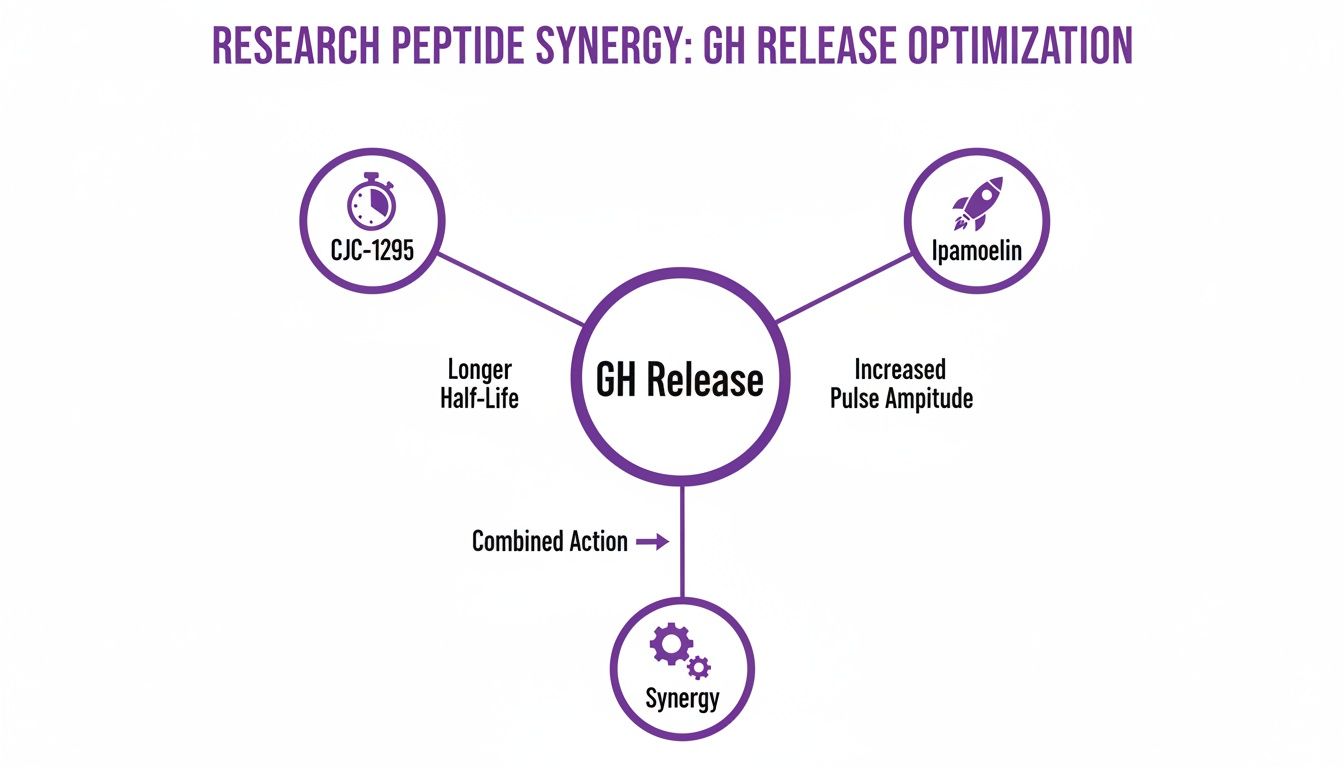
As you can see, each peptide has its own unique mechanism. But it's their combined action that unlocks the blend's true potential for research applications.
Primary Research Applications And Study Designs
Okay, we’ve covered the "how" behind the CJC-1295 and Ipamorelin combo. Now, let's get into the exciting part: what scientists are actually doing with it in the lab. This isn't just about theory; it's about putting these molecules to work to answer some of biology's most interesting questions.
The blend's real power comes from its ability to create a strong, clean pulse of growth hormone that looks a lot like what the body does naturally. This makes it an incredible tool for designing studies that can tell us a lot about how our bodies work, heal, and age. From cell cultures in a petri dish (in vitro) to complex animal models (in vivo), this peptide duo helps researchers connect the dots between pharmacology and real-world results.
Digging into Muscle Growth And Repair
Muscle is where this combination really shines in a research setting. Scientists are constantly trying to pin down the exact signals that kickstart muscle hypertrophy (that's the scientific term for growth) and speed up repair after an injury. The CJC-1295/Ipamorelin blend gives them a way to precisely control one of the most important signals in that process.
A typical lab study might try to answer questions like:
- How does this specific GH pulse affect satellite cells? These are the stem cells hanging out in your muscle tissue, and getting them to wake up and differentiate is absolutely essential for building new muscle fibers.
- Can we see a direct increase in protein synthesis? In a cell culture, researchers can literally measure how quickly myoblasts (young muscle cells) are churning out new proteins, giving a clear, quantifiable look at the anabolic effect.
- Is the response systemic, or is it happening right in the muscle tissue? By measuring local growth factors like IGF-1 within muscle samples, they can figure out if the effect is happening right at the target site.
Most of these studies end with taking tissue samples and running them through a battery of tests to see which genes are turned on and what proteins are being made. It's like getting a molecular snapshot of the entire muscle-building process.
Unpacking Metabolic Control And Body Composition
Growth hormone isn’t just about muscle. It's a master conductor of your entire metabolism. For researchers studying metabolic diseases, having a tool like the CJC-1295/Ipamorelin combo is a game-changer. It lets them isolate the effect of GH pulses on fat tissue and energy use.
By recreating the body's natural pulsatile GH release, researchers can zero in on its direct effect on lipolysis—the process of breaking down stored fat and turning it into fuel. This is one of those critical mechanisms that tends to slow down as we get older or in certain metabolic disorders.
This opens the door to experiments designed to find out:
- What happens to fat cells when they're exposed to a GH pulse? You can actually measure the release of fatty acids from adipose tissue in a lab dish to see lipolysis in action.
- Over the long haul, how does this affect an animal's body composition? By administering the blend over weeks or months, researchers can track changes in the ratio of lean mass to fat mass.
- How does all this interplay with insulin sensitivity? It's a crucial question. Understanding how GH and IGF-1 affect glucose uptake helps untangle the incredibly complex relationship between growth and metabolic health.
Pushing the Envelope in Bone And Connective Tissue Research
The influence of growth hormone signaling doesn't stop at muscle and fat. It’s also vital for our skeletal system and the connective tissues that hold us together, like tendons and ligaments. For scientists in fields like orthopedics and sports medicine, this is a huge area of focus.
The CJC-1295/Ipamorelin blend gives them a reliable model to poke and prod these tissues, which are notoriously slow to heal and hard to study.
Potential Study Endpoints in Tissue Regeneration
| Tissue Type | Primary Research Question | Common Measurement Endpoint |
|---|---|---|
| Bone | How does GH/IGF-1 signaling affect osteoblasts (the cells that build bone)? | Mineral density scans (like micro-CT), blood markers of bone formation. |
| Tendon/Ligament | In an injury model, what happens to collagen synthesis and organization? | Testing the tissue's tensile strength, looking at collagen fiber alignment under a microscope. |
| Cartilage | Can GH pulses encourage chondrocytes (cartilage cells) to multiply and produce more matrix? | Measuring the glycosaminoglycan (GAG) content in tissue samples. |
These kinds of studies are fundamental. They lay the groundwork for developing entirely new strategies to help people recover from musculoskeletal injuries. By offering a consistent way to stimulate the GH/IGF-1 axis, the CJC-1295/Ipamorelin blend is helping scientists explore the very biology of how we heal.
Ensuring Purity And Quality In Research Peptides
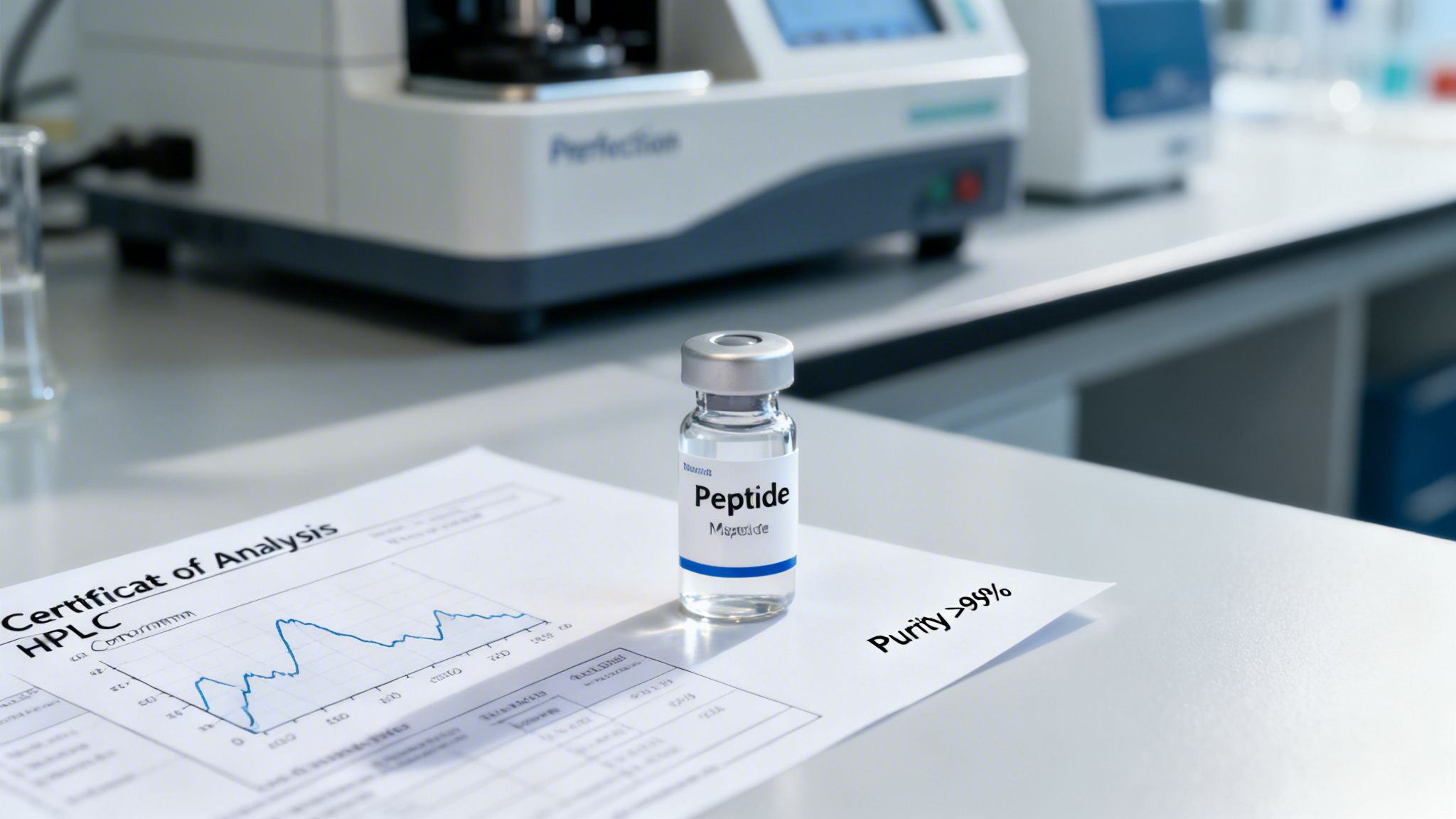
In any scientific endeavor, the quality of your materials dictates the integrity of your results. It's a simple truth. Sourcing a peptide like CJC-1295 Ipamorelin without absolute certainty of its purity is like trying to conduct a delicate experiment with uncalibrated equipment—your data will be unreliable, and your conclusions, fundamentally flawed. This isn't just a "best practice"; it's the very bedrock of credible, reproducible science.
When a peptide is labeled "research-grade," that term must signify a verifiable standard of excellence. It means the compound has passed rigorous testing to confirm its identity and purity. This ensures you're working with the precise molecule you intend to study, not a cocktail of contaminants and synthesis leftovers.
Decoding The Certificate Of Analysis
The gold standard for proving a peptide's quality is the Certificate of Analysis (CoA). If you're buying peptides for serious lab work, this document isn't optional—it's essential. The CoA provides the hard data that validates a supplier's claims.
Think of it as the peptide's passport and quality report combined. A reputable supplier will always provide a recent, batch-specific CoA, preferably from an independent, third-party lab. This outside verification removes any potential for bias and gives you an objective snapshot of the product's quality. If a vendor can't—or won't—provide one, that's a massive red flag.
When you get your hands on a CoA for CJC-1295 Ipamorelin, two specific tests are mission-critical:
- High-Performance Liquid Chromatography (HPLC): This technique separates all the components in the sample, giving you a clear percentage of the target peptide versus any impurities. For serious research, you should never settle for less than >99% purity.
- Mass Spectrometry (MS): This test confirms the peptide's molecular weight. It's the final proof that the amino acid sequence is correct and you've actually got the molecule you paid for.
An HPLC result below 99% or a mass spec reading that doesn't match the peptide's known molecular weight are immediate disqualifiers. These issues point to a substandard product that will introduce confounding variables and could invalidate your entire experiment.
The demand for high-quality research peptides is exploding. The global CJC-1295 peptide market was valued at $412 million in 2024 and is forecast to hit $1.08 billion by 2033, growing at a compound annual rate of 11.2%. This boom, fueled by research into GH pathways, anti-aging, and performance, makes vendor transparency more crucial than ever. You can learn more about the CJC peptide market trends to understand the landscape.
Why Third-Party Testing Is Non-Negotiable
Some suppliers test their products in-house, which is a good first step. But relying only on their own results is a clear conflict of interest.
Independent, third-party lab testing adds an unbiased layer of verification that is absolutely essential for confirming product quality and safety in a research setting. This external validation proves that the supplier's own quality control is effective and that the product you receive actually meets the advertised specifications.
When you're vetting a peptide supplier, look for an ironclad commitment to this level of transparency. The ability to easily find and review recent, third-party CoAs for the specific batch you're buying is the hallmark of a top-tier vendor dedicated to supporting rigorous science.
Choosing the right supplier is just as important as designing the experiment itself. It's a critical decision that impacts every subsequent step. This simple checklist can help you make an informed choice.
Evaluating A Peptide Supplier Checklist
| Quality Checkpoint | What to Look For | Why It Matters |
|---|---|---|
| Third-Party Testing | Publicly available, recent, batch-specific CoAs from a verifiable independent lab. | Removes conflict of interest and provides unbiased proof of purity and identity. |
| HPLC Purity | The CoA should show >99% purity via High-Performance Liquid Chromatography. | Ensures you are not introducing unknown variables or contaminants into your experiment. |
| Mass Spectrometry Data | The CoA must include a mass spec analysis that confirms the correct molecular weight. | Verifies that the peptide's chemical structure is correct and you have the right molecule. |
| Supplier Transparency | The company website should clearly state their quality control process and make CoAs easy to access. | A lack of transparency often signals a lack of quality control. Reputable vendors are proud of their quality. |
| Customer Support | Responsive and knowledgeable support that can answer technical questions about their products and testing. | Shows the company is run by experts who understand the science and are committed to their customers' success. |
Ultimately, safeguarding the integrity of your work comes down to diligence. By demanding high purity confirmed by HPLC and MS, scrutinizing third-party CoAs, and choosing vendors who embrace transparency, you build your experiments on a foundation of quality. And that's how you get results you can actually trust.
Proper Lab Protocols: Handling and Reconstitution
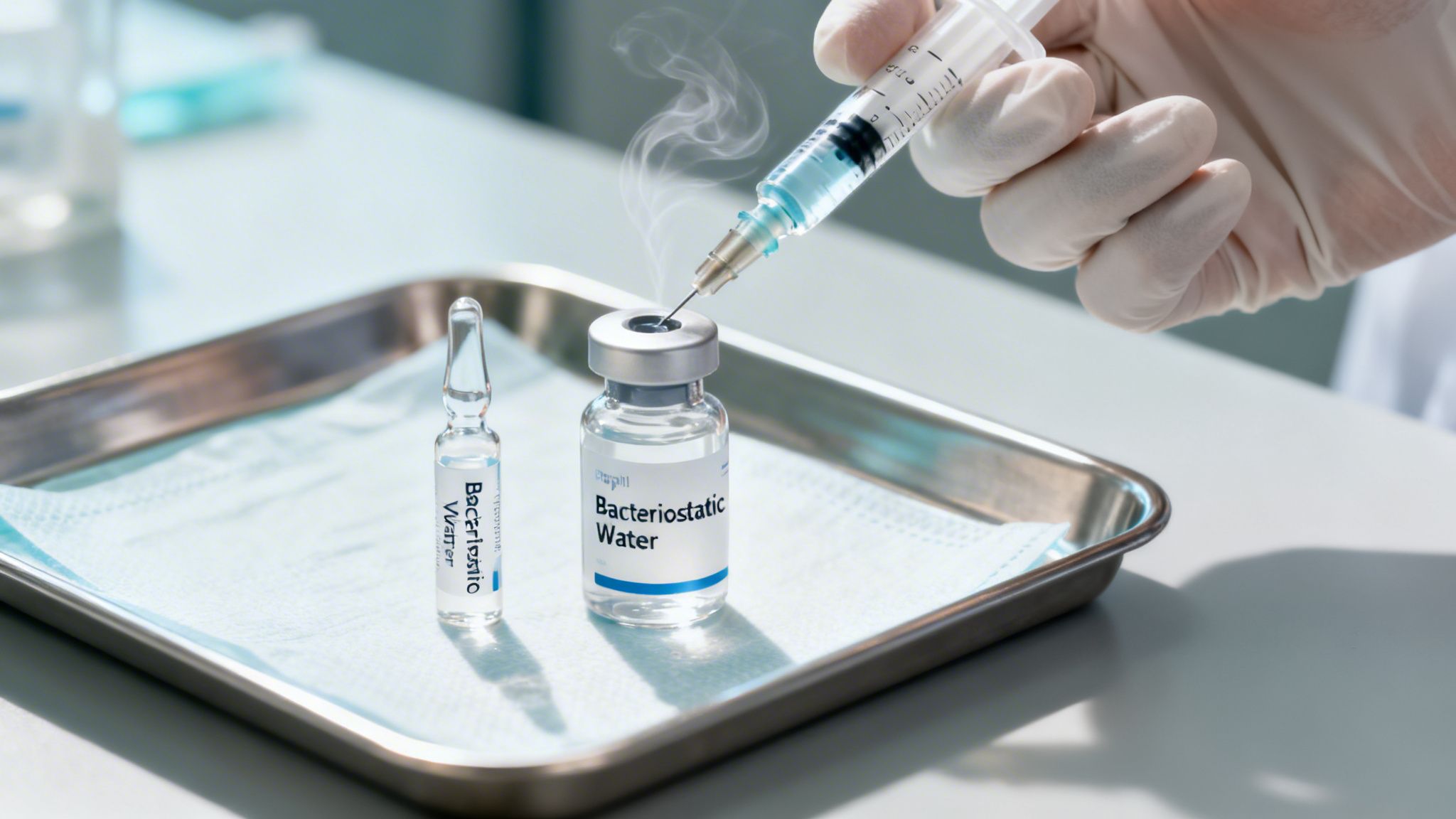
When you're working with delicate compounds like CJC 1295 Ipamorelin, precision is everything. These peptides arrive as a lyophilized (freeze-dried) powder, a form that keeps them stable during shipping and storage. But this state is also incredibly fragile, and one clumsy move can ruin your research materials before you even start.
Think of that lyophilized powder as a delicate, intricate crystal. Shaking it, exposing it to sudden temperature changes, or mixing it too aggressively can shatter that structure. This process, called denaturation, permanently destroys the peptide's biological activity, making meticulous and gentle handling a non-negotiable part of any valid experiment.
The Correct Way to Reconstitute Peptides
Reconstitution is simply the process of dissolving that freeze-dried powder into a liquid solution. It sounds easy, but this is the single most common step where mistakes happen. The entire goal is to get the peptide fully dissolved without damaging its complex, folded shape.
The go-to solvent for this is bacteriostatic water (BAC water). It's sterile water with a tiny amount of benzyl alcohol (0.9%) added, which acts as a preservative to stop bacterial growth and keep the solution sterile, even after you've drawn from the vial multiple times.
Here’s how to do it right every single time:
- Prep Your Station: Let both the peptide vial and your BAC water reach room temperature. This simple step prevents condensation from forming inside the vial when you mix. Then, wipe the rubber stoppers on both vials with a fresh alcohol pad.
- Draw Your Solvent: Using a sterile syringe, slowly pull the exact volume of BAC water you need. You should have this volume figured out beforehand based on your desired final concentration.
- Introduce Gently: This is critical. Insert the needle into the peptide vial and angle it so the BAC water trickles down the inside of the glass vial. Do not squirt the water directly onto the powder clump! The force is enough to damage the peptide molecules.
- Dissolve with Care: Once the water is in, remove the syringe. Gently swirl the vial or roll it slowly between your palms. Never, ever shake it. Shaking causes shearing forces that will literally rip the peptide chains apart. The powder will dissolve into a perfectly clear solution.
Calculating Doses for Your Research
Getting your concentration math right is fundamental. The formula itself isn't complicated, but a small mistake can throw off your entire study.
Let's say you have a 5mg (which is 5000mcg) vial of CJC 1295 Ipamorelin. If you add 2mL of BAC water, your final concentration will be 2500mcg per 1mL.
Always do your math before you start mixing. Double-checking your calculations is the best way to avoid wasting valuable materials and to ensure your in vitro or in vivo models receive the precise, consistent dosing your protocol demands.
For a deeper dive with more examples and even video guides, check out our full tutorial on how to reconstitute peptides for laboratory use.
Storage and Stability: A Guide
Once you've turned that stable powder into a liquid, the clock starts ticking. The stability of CJC 1295 Ipamorelin changes dramatically after reconstitution, so following strict storage rules is the only way to protect its potency.
A Quick Comparison of Storage Needs
| Form | Condition | Recommended Temperature | Estimated Stability |
|---|---|---|---|
| Lyophilized (Powder) | Before Reconstitution | Refrigerated or Frozen | Months to Years |
| Reconstituted (Liquid) | After Reconstitution | Refrigerated | Up to 4 Weeks |
As soon as it’s a liquid, the vial belongs in a refrigerator set between 2°C to 8°C (36°F to 46°F). At this temperature, the solution will remain potent and stable for several weeks.
Leaving the reconstituted liquid at room temperature, even for a short time, will cause it to degrade quickly. If you need to store it for longer than a month, you can aliquot the solution into smaller amounts and freeze them, but try to avoid repeated freeze-thaw cycles as this can also degrade the peptide over time.
Navigating The Legal and Ethical Landscape
Getting your hands on peptides like CJC-1295 Ipamorelin is one thing; understanding the rules of the road is another. This isn't just about ticking boxes—it's a core responsibility for anyone conducting serious research. You'll notice that these compounds are almost always sold with a critical disclaimer: "For Research Use Only" (RUO). That phrase isn't a friendly suggestion. It's a hard legal and ethical line.
So, what does it actually mean? The RUO label designates these peptides as tools for laboratory work and nothing more. We're talking about experiments done in vitro (in a petri dish or test tube) or preclinical studies in animal models. They exist to help scientists probe biological systems, like the growth hormone axis. They are absolutely not approved by the Food and Drug Administration (FDA) for human consumption, veterinary medicine, or any kind of therapeutic or diagnostic use.
What "Research Use Only" Really Means
Think of the RUO classification as a special lane for scientific discovery. It allows researchers to work with new and interesting compounds without first needing to navigate the incredibly long and expensive clinical trial process required for FDA-approved drugs. It draws a clear distinction: on one side, you have tools for exploration in a controlled lab. On the other, you have medicines prescribed to patients.
Staying on the right side of this line is a shared responsibility. A legitimate supplier will be upfront and clear about the RUO status. In turn, the ethical researcher must commit to using the compound strictly for its intended purpose—within a research setting—and never for personal use.
This system is in place for a good reason. It protects the public while also preserving the integrity of scientific work. Anyone trying to pass off a research compound as a consumer good isn't just breaking the rules; they're undermining the very foundation of legitimate science.
Your Obligations as a Researcher
Working with these compounds correctly is about more than just good lab technique. It’s a commitment to ethical conduct from start to finish. When you bring CJC-1295 Ipamorelin into your lab, you're taking on several key responsibilities.
Here's what that looks like in practice:
- Intent: You must have a clear, non-clinical research question you're trying to answer.
- Sourcing: Always buy from suppliers who are transparent about the RUO status and can back up their products with solid third-party testing for purity and identity.
- Record-Keeping: Document everything. Your protocols, your handling procedures, and your results all need to be logged with the rigor expected in any professional lab.
- Compliance: You are responsible for following all rules and regulations set by your institution, as well as any local or federal laws governing research chemicals.
It’s also crucial to remember that for athletes or anyone subject to drug testing, substances that manipulate the growth hormone axis—like GHRH analogs and ghrelin mimetics—are strictly prohibited by organizations like the World Anti-Doping Agency (WADA).
At the end of the day, while the science behind these peptides is exciting, their use must stay firmly within the bounds of controlled, ethical research. It's how we protect ourselves, our suppliers, and the future of scientific inquiry.
Got Questions? Let's Talk Specifics
It's only natural to have questions when you're working with sophisticated research compounds like the CJC-1295 and Ipamorelin blend. Good science is built on asking the right questions. Here are some of the most common ones we hear from fellow researchers, with clear, direct answers to help guide your work.
What's the Real Difference: CJC-1295 With DAC vs. Without?
The single most important distinction comes down to half-life, which completely changes how the peptide behaves in your research model. Think of it as the difference between a quick flash of light and a steady, long-burning lamp.
CJC-1295 with DAC (Drug Affinity Complex) is the long-burning lamp. Thanks to the DAC component, it binds to a protein in the bloodstream called albumin, dramatically extending its active life to as long as 8 days. This creates a prolonged, stable elevation in growth hormone levels.
On the other hand, CJC-1295 without DAC (often called Mod GRF 1-29) is that quick flash of light. It has a very short half-life—around 30 minutes—and produces a sharp, rapid pulse of GH that closely mimics the body's own natural rhythm. The one you choose depends entirely on your research goals: do you need to study the effects of a sustained GH presence, or the impact of powerful, intermittent pulses?
Why Do Researchers Call Ipamorelin "Selective"?
Ipamorelin has earned a stellar reputation in the research community because it's so incredibly precise. It stimulates a powerful, clean release of growth hormone without messing with other hormones, particularly cortisol and prolactin. This clean action is a huge advantage.
Other GH secretagogues can be a bit messy, causing "spillover" effects that elevate these other hormones. That’s a big problem in a lab setting, because it introduces confounding variables that can muddy your data or even ruin an experiment.
Ipamorelin’s ability to generate a pure GH pulse is what makes it such a valuable tool. It lets you isolate and study the effects of GH itself, without the background noise of a stress response (from cortisol) or other hormonal interference. For controlled, repeatable science, that’s exactly what you want.
How Can I Be Sure My Research Peptide Is Pure?
Verifying purity isn't just a good idea—it's absolutely essential for any credible research. Any supplier worth their salt will provide a recent, batch-specific Certificate of Analysis (CoA) from an independent, third-party lab. Don't even consider a product without one.
When you get the CoA for your CJC-1295 Ipamorelin, look for two key results:
- High-Performance Liquid Chromatography (HPLC): This is the test that confirms purity. You should be looking for a result greater than 99%.
- Mass Spectrometry (MS): This analysis confirms the peptide’s identity by verifying its molecular weight. It’s the proof that you have the right molecule.
If you can't get your hands on these reports, don't proceed with your study. Using a peptide with questionable purity means your results will be completely unreliable.
What’s the Right Way to Store Peptides After Reconstituting?
Proper storage is everything. It's what protects the peptide’s structural integrity and biological activity once you’ve mixed it. The moment you add bacteriostatic water to the lyophilized powder, the rules change.
Your reconstituted solution must be refrigerated at 2-8°C (36-46°F) to keep it from breaking down. Kept at this temperature, it should remain stable and potent for up to four weeks. The original lyophilized (freeze-dried) powder is much more durable, but for maximum shelf life, you should still store it in a cool, dark place like a refrigerator or freezer before you mix it.
For researchers who demand the highest standards, Bullit Peptides offers third-party-verified, research-grade compounds like CJC-1295 and Ipamorelin. See our catalog of materials engineered for precise and reproducible laboratory investigations at https://bullitpeptides.com.