When it comes to determining a precise CJC-1295 Ipamorelin dosage for research, there's no single magic number. Laboratory protocols are designed around specific study objectives, so they can vary quite a bit. That said, a common starting point you'll see in the literature is a 1:1 ratio, often around 100 mcg of CJC-1295 (without DAC) paired with 100 mcg of Ipamorelin, administered once or twice daily in test subjects.
Understanding the CJC-1295 and Ipamorelin Stack
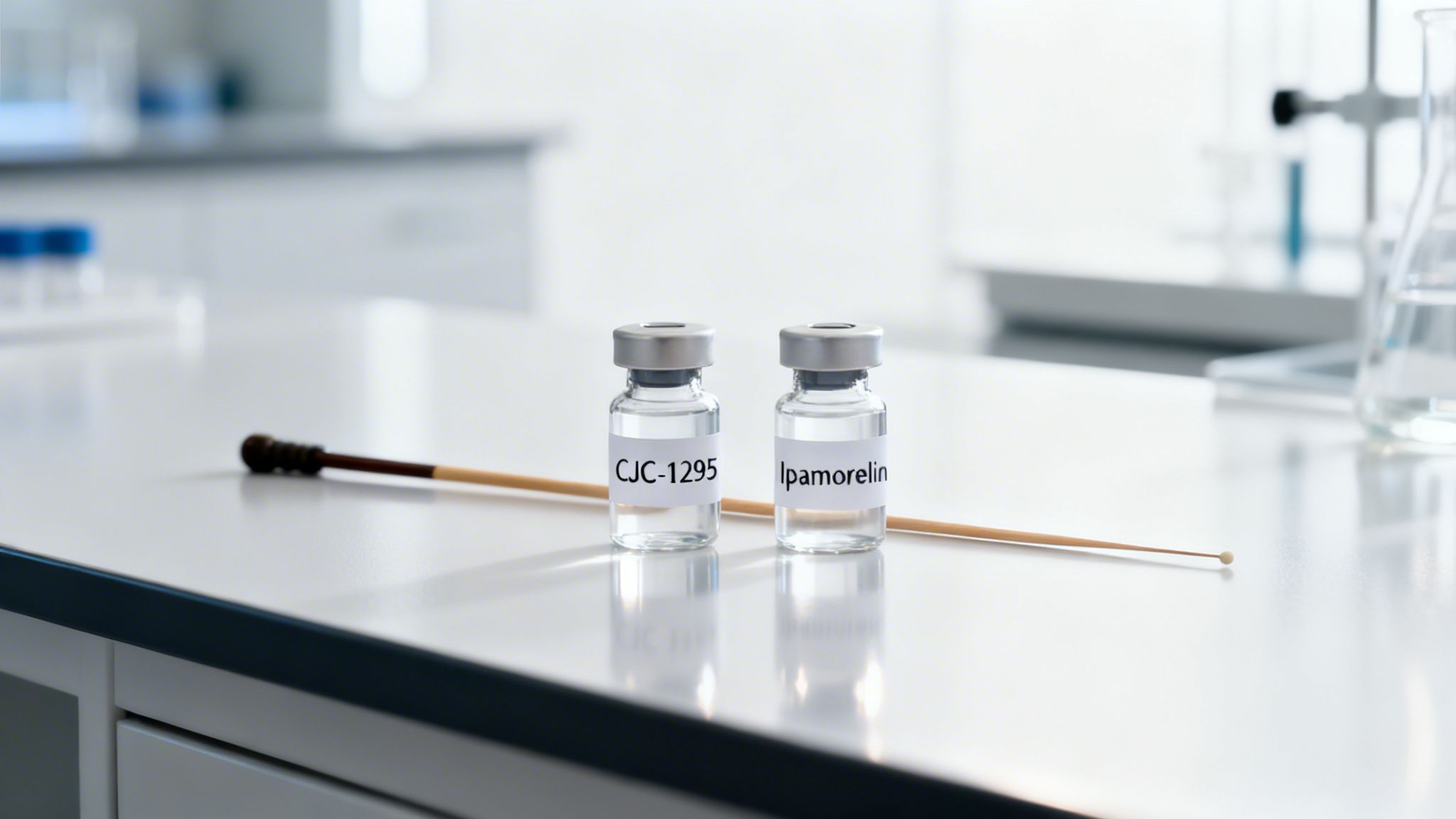
Before we dive into the nitty-gritty of dosing, it’s critical to understand why this particular peptide combination has become such a go-to in modern metabolic research. Think of it less as a simple mixture and more as a finely tuned orchestra for controlling growth hormone (GH) release. Each peptide has a distinct, synergistic role, creating an effect that's far more powerful than what either could achieve on its own.
The Conductor and the Lead Instrument
CJC-1295 is the conductor of this orchestra. As a Growth Hormone-Releasing Hormone (GHRH) analog, its job is to signal the pituitary to produce more GH over a sustained period. This creates a steady, elevated baseline for growth and repair signals throughout the system.
Ipamorelin, on the other hand, is your lead instrument. It’s a highly selective Growth Hormone-Releasing Peptide (GHRP) that triggers sharp, clean, and powerful pulses of GH. It’s the "on" switch, delivering a potent burst without the unwanted "noise" of stimulating other hormones like cortisol or prolactin. This precision is exactly why it's so valued in a controlled research environment.
The beauty of this stack is how the two peptides work together. By combining the sustained elevation from CJC-1295 with the clean, strong pulse from Ipamorelin, researchers can create an amplified yet naturalistic GH release pattern—an ideal environment for studying its downstream effects.
Choosing the Right Research Tool
A pivotal decision in any study design is selecting the correct variant of CJC-1295. The two main forms have drastically different properties, which will fundamentally change your research protocol and, most importantly, your dosing frequency. If you want a more detailed breakdown, you can learn more about what CJC-1295 is and its mechanics.
To make this clearer, let's break down the key players in a simple comparison.
CJC-1295 & Ipamorelin At a Glance
The table below offers a quick-reference guide to help you distinguish between these compounds. This makes it easier to align your peptide selection with your specific experimental goals, whether you're studying short-term metabolic shifts or long-term tissue repair.
| Peptide | Primary Action | Half-Life (Approx.) | Common Research Goal |
|---|---|---|---|
| CJC-1295 (no DAC) | Short-acting GHRH analog | 30 minutes | Mimicking natural GH pulses |
| CJC-1295 (with DAC) | Long-acting GHRH analog | 6-8 days | Sustained, long-term GH/IGF-1 elevation |
| Ipamorelin | Selective GHRP | 2 hours | Inducing strong, clean GH pulses |
Grasping this fundamental synergy—the "why" behind the stack—is the first and most important step toward building an effective dosing protocol. It ensures the CJC-1295 Ipamorelin dosage you select is perfectly matched to your scientific question, ultimately leading to more reliable and reproducible data in your lab.
How CJC-1295 and Ipamorelin Work Together
To get the cjc1295 ipamorelin dosage right in your research, you need to appreciate the elegant science behind the stack. This isn't just about throwing two peptides together; it's a finely tuned partnership designed to dramatically amplify the body's natural growth hormone (GH) signals. The best way to think about it is a "one-two punch" for GH release.
First, CJC-1295 throws the initial jab. As a Growth Hormone-Releasing Hormone (GHRH) analog, its job is to tell the pituitary gland to get ready. It essentially raises the baseline level of GH production and keeps it elevated, priming the system for a big release.
Then comes Ipamorelin with the knockout cross. Ipamorelin is a Growth Hormone-Releasing Peptide (GHRP) and a ghrelin mimetic, which means it delivers a clean, powerful signal that causes the pituitary to release its stored GH. The real beauty of Ipamorelin is its precision—it triggers this GH surge without messing with other hormones like cortisol, ensuring cleaner, more reliable experimental data.
The Power of a Synergistic Pulse
When you combine these two actions, you get something far greater than the sum of its parts. CJC-1295 sets a high foundation for GH production, and Ipamorelin then triggers a massive release from that already-elevated level. The result is a GH pulse that's not only much stronger but also lasts longer than a natural one.
This supercharged effect is exactly what researchers are targeting when investigating key biological processes, such as:
- Cellular Repair: Exploring how boosted GH levels can accelerate the regeneration of damaged tissues.
- Body Composition: Observing the metabolic shift that favors the growth of lean mass while promoting fat oxidation.
- Anti-Aging Models: Studying how optimized GH signaling impacts markers of cellular vitality and longevity.
By acting on two distinct but complementary pathways, the combination creates an incredibly robust response that still honors the body's natural pulsatile rhythm.
This synergy is the secret sauce. It ensures the pituitary gland unleashes a powerful wave of GH but then gets a crucial period to rest and recharge. This rest period is vital for preserving pituitary sensitivity and ensuring consistent results throughout a long-term study.
The Research Backing the Stack
The practice of combining CJC-1295 without DAC and Ipamorelin isn't new; it has become a go-to protocol in research circles since the early 2000s. Most established study designs work with 100-200 mcg per dose for each peptide.
Human trials have shown that this pairing works exceptionally well. CJC-1295 creates a sustained increase in IGF-1, while Ipamorelin provides a sharp, clean GH spike within about an hour, all without the unwanted cortisol response. You can find more detail on these peptide therapy findings on tucsonwellnessmd.com.
This proven mechanism is why the CJC-1295 and Ipamorelin stack is so common in research aiming to optimize biological function. When you truly grasp how they work together, the cjc1295 ipamorelin dosage stops being just a number on a lab sheet. It becomes a strategic variable you can adjust to achieve very specific outcomes in your experiment.
Designing Your CJC-1295 and Ipamorelin Research Protocol
When it comes to peptide research, getting the dosage protocol right is everything. This isn't about chasing a "one-size-fits-all" number. Instead, it’s about strategically designing an administration plan that directly addresses your study's specific questions. The entire approach hinges on one crucial choice: which version of CJC-1295 you're working with.
Think of CJC-1295 as the primary signal and Ipamorelin as the amplifier. When they work together, they create a synergistic effect on growth hormone release that is far more powerful than either could achieve alone. This is the core principle behind stacking them in a research setting.
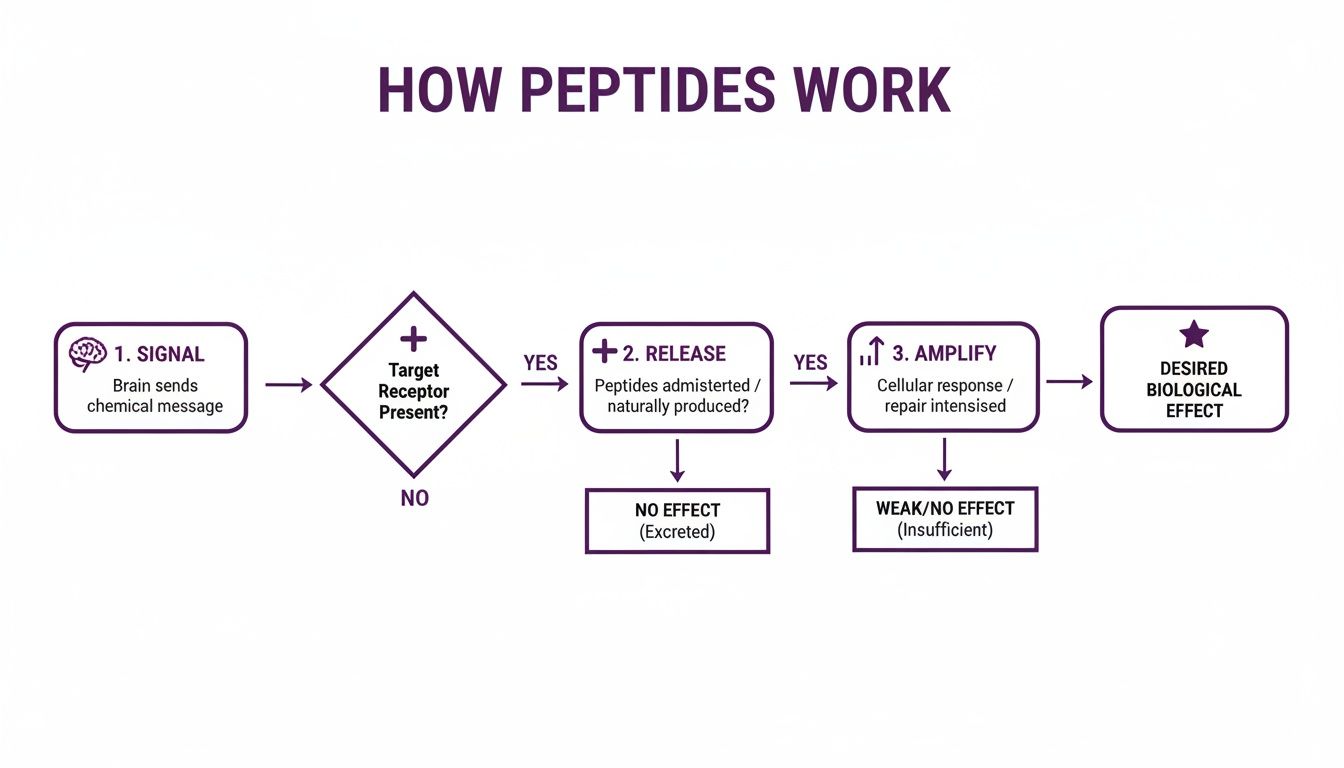
The real art lies in choosing how you want that signal delivered—as a sharp, quick pulse or a long, steady wave.
The Big Decision: Pulsatile vs. Sustained Release
Your first and most important decision point is selecting between CJC-1295 without DAC and CJC-1295 with DAC. This choice fundamentally dictates your entire dosing schedule and experimental design.
CJC-1295 without DAC (Mod GRF 1-29): This is the short-acting sprinter. With a half-life of only about 30 minutes, its entire purpose is to create a sharp, powerful pulse of GH that closely mimics the body's own natural rhythm. Because it clears out so quickly, it’s almost always administered alongside Ipamorelin to create a potent "one-two punch" on the pituitary.
CJC-1295 with DAC: This is the long-acting marathon runner. The Drug Affinity Complex (DAC) gives it a much longer half-life, lasting roughly 6-8 days. Instead of a pulse, it creates a sustained elevation of GH and IGF-1 levels—often called a "GH bleed"—which is ideal for long-term studies where a consistent baseline is the goal.
For Research Use Only: Please note that the protocols and dosage information discussed are sourced from preclinical and in vitro scientific studies. These compounds are intended strictly for laboratory research purposes and are not approved for human or veterinary use.
Common Dosing Models in Research
Across the scientific literature, certain dosage ranges have emerged as common starting points for experiments. The goal is often to identify the "saturation dose"—the precise amount that produces a maximal response from the pituitary without causing receptor desensitization over time.
For the most widely studied stack—CJC-1295 without DAC plus Ipamorelin—a 1:1 ratio is a frequently cited starting point. Many protocols begin with 100 mcg of CJC-1295 (no DAC) combined with 100 mcg of Ipamorelin, administered once or twice daily.
The table below summarizes some commonly reported dosage protocols from published research to provide a clearer picture of how these compounds are used in a laboratory setting.
Reported Research Dosage Protocols for CJC-1295/Ipamorelin Stack
Commonly cited dosage ranges from preclinical and in vitro studies for laboratory use. FOR RESEARCH USE ONLY.
| Research Goal | CJC-1295 (no DAC) Dose (mcg) | Ipamorelin Dose (mcg) | Frequency | Notes |
|---|---|---|---|---|
| Pulsatile GH Release | 100 mcg | 100 mcg | 1-2 times daily | Aims to mimic natural GH pulses for studies on metabolic rate and cellular recovery. |
| Body Composition Studies | 100 mcg | 200 mcg | 2 times daily | Frequently used in models examining lipolysis (fat breakdown) and lean mass accretion. |
| Cellular Senescence Models | 100 mcg | 100-150 mcg | 1 time daily (pre-sleep) | Timed to amplify the natural nocturnal GH peak to investigate anti-aging pathways. |
| Sustained IGF-1 Elevation | 1000-2000 mcg (with DAC) | 200-300 mcg (optional) | 1-2 times weekly | For long-term studies on tissue repair where stable, elevated IGF-1 is the primary target. |
These figures are observations from scientific literature, not prescriptive guidelines, and serve as a reference for protocol design.
Why Timing is Everything
When you administer these peptides is just as critical as how much you use. Proper timing allows you to sync the compound's action with the subject's natural hormonal cycles, which can dramatically increase the potency and predictability of the response.
Pre-Sleep Administration: The body's largest and most significant GH pulse happens naturally during deep sleep. Administering the stack 30-60 minutes before the sleep cycle can potentiate this natural peak, making it a powerful strategy for studies on recovery and cell repair.
Post-Stimulation (e.g., Exercise): In studies involving physical stress on animal models or cell cultures, dosing immediately after the stimulus can provide critical data on recovery mechanisms, protein synthesis, and tissue regeneration.
In a Fasted State: Insulin and growth hormone operate in an inverse relationship. Administering peptides in a fasted state, when insulin levels are naturally low, clears the way for a more robust and uninhibited GH release.
Ultimately, a well-designed CJC-1295 and Ipamorelin dosage protocol is born from a deep understanding of your research goals, the specific pharmacokinetics of the agents involved, and the biological rhythms you aim to influence.
Reconstitution and Handling for Accurate Research
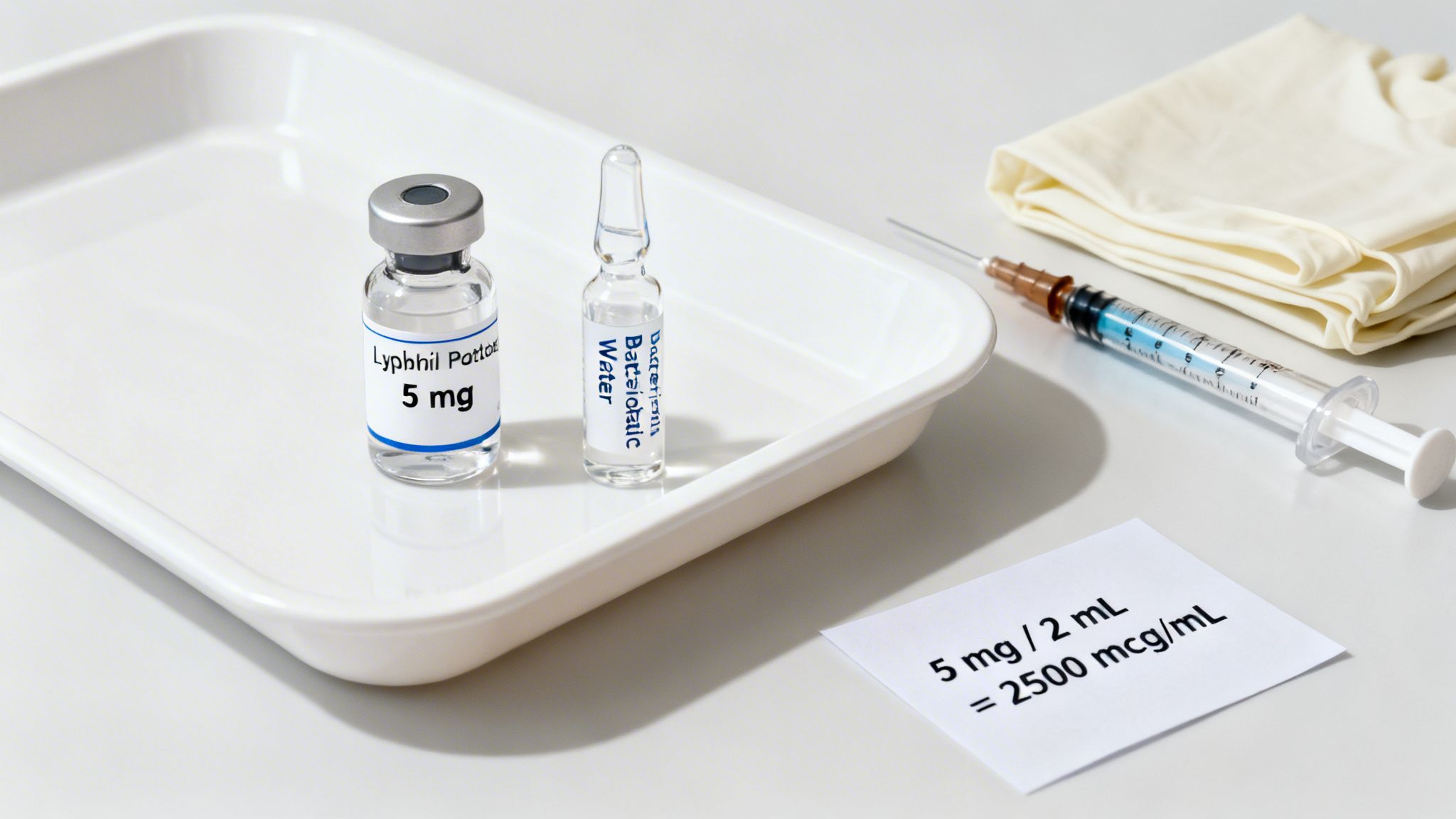
Figuring out the right cjc1295 ipamorelin dosage is just the start. The real success of your research often comes down to how you prepare the peptides themselves. Compounds like CJC-1295 and Ipamorelin almost always arrive as a lyophilized (freeze-dried) powder—a small, delicate white cake at the bottom of the vial. This state keeps them stable for shipping, but they need to be carefully brought back to life before you can use them.
Think of reconstitution as waking up the peptides. You're adding a liquid to the powder to create a usable solution, and getting this step right is absolutely crucial for reliable results. One small mistake here can degrade the compound, throwing off your entire experiment before it even begins.
The Right Tools for the Job
In the lab, precision and sterility are everything. Before you even think about touching a vial, you need to gather your supplies. Cutting corners here can introduce contaminants or mess with the final concentration, which will invalidate your data from day one.
Here’s what you absolutely need for a clean reconstitution:
- Bacteriostatic Water: This is the standard for a reason. It's sterile water containing 0.9% benzyl alcohol, which acts as a preservative to stop any bacteria from growing once you've punctured the vial's seal.
- Sterile Syringes: Plan on using at least two—one for drawing the bacteriostatic water and a fresh one for administration. Never reuse syringes; it's the easiest way to cause cross-contamination.
- Alcohol Wipes: Use them to vigorously wipe the rubber stoppers on both your peptide vial and the bacteriostatic water. This simple step is your first line of defense in maintaining a sterile field.
The single most important part of this process is maintaining sterility. Contamination can literally break down the peptide's amino acid chain, leading to unpredictable outcomes and completely compromised research. Treat every step with meticulous care.
Calculating Your Final Concentration
With your sterile supplies ready, it's time for some simple but critical math. You need to calculate the final concentration of your peptide solution to ensure you can draw an accurate cjc1295 ipamorelin dosage.
Let’s walk through a common scenario. Say you have a vial with 5mg of CJC-1295 and you plan to add 2mL of bacteriostatic water. Since most research protocols measure doses in micrograms (mcg), let's convert that first.
5mg = 5000mcg
Now, just divide the total amount of peptide by the total volume of your liquid:
5000mcg / 2mL = 2500mcg per mL
What this means is that every 1mL of fluid in your vial now contains 2500mcg of the peptide. From there, calculating the exact volume for any specific dose is straightforward. For a complete walkthrough, be sure to check out our detailed guide on how to reconstitute peptides.
This kind of careful preparation became standard practice after a landmark 2006 clinical study. In that trial, researchers administered single subcutaneous doses of CJC-1295 ranging from 30 to 60 mcg/kg. The peptide demonstrated a remarkable half-life of 5.8 to 8.1 days, proving its potential for long-lasting GH release. Those results, which you can read more about in this overview of the groundbreaking trial, underscore why precise handling is non-negotiable for anyone looking to build on this foundational work.
Proper handling doesn't stop once the powder is dissolved. Reconstituted peptides must be refrigerated (between 2-8°C or 36-46°F) and are generally stable for up to 30 days. This cold storage protects the fragile amino acid structures from degrading, ensuring the first and last administrations in your study are equally potent.
Nailing Your Dosing Strategy: Key Variables to Consider
Figuring out the right cjc1295 ipamorelin dosage for your research isn't about plucking a number off a chart. It’s about building a smart, adaptable strategy. If you just follow a one-size-fits-all approach, you're setting yourself up for inconclusive data, because even in the most controlled lab setting, several key variables can completely change your results.
Think of it like tuning a high-performance engine. The fuel mix and timing you’d use for a short drag race are completely different from what you’d need for a long-distance endurance event. In the same way, the dosage and frequency of your peptide administration have to be perfectly matched to the scientific question you’re trying to answer.
What's Your Primary Research Goal?
Your primary research objective is, by far, the biggest factor in your dosing strategy. What are you hoping to see? The answer doesn't just shape the dosage; it also dictates which version of CJC-1295 you'll use, how long the study will run, and when you'll administer the compounds.
For instance, an experiment looking at the immediate effects of GH on fat cell metabolism (lipolysis) will be designed very differently from a long-term study on muscle cell growth.
Short-Term Metabolic Studies: If you're focused on tracking rapid metabolic changes—like how quickly fat cells begin releasing energy—you’ll almost certainly want to use CJC-1295 without DAC. Its short half-life creates sharp, distinct GH pulses, which lets you measure a direct cause-and-effect relationship within a tight window.
Long-Term Growth and Repair Studies: On the flip side, if you're studying slower processes like muscle tissue regeneration or collagen synthesis, a sustained, elevated level of GH and IGF-1 is what you need. Here, CJC-1295 with DAC is the logical tool for the job, requiring a much less frequent dosing schedule.
The guiding principle is simple: mimic the biological process you want to study. To recreate the body's natural, daily GH pulses, go with the short-acting stack. To establish a prolonged anabolic state, the long-acting version is your best bet.
This kind of strategic thinking is non-negotiable. You have to pick the right tool for the job if you want to generate data that's both meaningful and reproducible. The choice between a sharp pulse and a sustained "bleed" of GH is the first and most critical decision you'll make.
The Power of Half-Life Synergy
You can't build a solid protocol without a deep understanding of the huge difference in half-life between these peptides. The synergy between a short-acting GHRP like Ipamorelin and a GHRH is really the foundation of modern peptide research in hormone modulation.
Ever since a 2013 human trial highlighted the effectiveness of low-dose CJC-1295, combined protocols have become the gold standard. We've seen from research that Ipamorelin’s quick 2-hour clearance time gives you an immediate, clean GH pulse. At the same time, CJC-1295 (with DAC) and its 6-8 day half-life provide a steady, elevated baseline of growth hormone. This one-two punch can dramatically boost the overall GH amplitude without messing with the body's natural pulsatile rhythm. You can read more about these synergistic effects and trial findings on innerbody.com.
This powerful dynamic lets researchers create a hormonal environment that is both amplified and precisely controlled—perfect for a wide range of experiments. The specific cjc1295 ipamorelin dosage you ultimately choose will come down to how much you want to turn up the dial on this natural synergy to meet your study's goals.
Sourcing Quality Peptides for Research Integrity
In the lab, we live by a simple truth: garbage in, garbage out. The integrity of your entire experiment hinges on the quality of your starting materials. When you’re dialing in a precise cjc1295 ipamorelin dosage for a study, this isn't just a best practice—it's everything. Your data is only as strong as the reagents you introduce, making peptide sourcing a critical checkpoint for valid research.
Think about it. Choosing a low-purity or unverified compound is like trying to conduct a sensitive experiment in a contaminated room. You're introducing a host of unknown variables that can skew your data, ruin reproducibility, and ultimately waste valuable time and resources. This is why the term "research-grade" has to mean more than just a label; it has to be a guarantee.
The Importance of Purity and Verification
When it comes to peptides like CJC-1295 and Ipamorelin, the benchmark for serious laboratory work is a purity level of >99%. Anything less is a red flag. A vial with lower purity could be contaminated with all sorts of things you don't want, like residual solvents from the synthesis process or, worse, failed peptide sequences that could produce confounding off-target effects.
So, how do you know you’re getting the real deal? Reputable suppliers don't just make claims; they prove them with independent, third-party testing. Two non-negotiable analyses are:
- High-Performance Liquid Chromatography (HPLC): This is the workhorse for determining purity. It separates every component in the sample, giving you a crystal-clear picture of what percentage is your target peptide and what percentage is something else.
- Mass Spectrometry (MS): This test acts as an identity check. It confirms the peptide’s molecular weight, verifying that the amino acid sequence is correct and you have the exact molecule you paid for.
Research Use Only Disclaimer: All information presented is for educational purposes. The compounds discussed are intended strictly for in vitro laboratory research and are not for human or veterinary use. They are not approved by the FDA to diagnose, treat, cure, or prevent any disease.
Choosing a Supplier Committed to Transparency
Sourcing research compounds shouldn't feel like a shot in the dark. A trustworthy supplier operates with complete transparency, readily providing the documentation that backs up their quality claims. This isn't just good customer service; it's a fundamental part of their commitment to the scientific process.
Before you purchase, you should always demand access to current, batch-specific testing results. Don't settle for a generic certificate of analysis from a year ago. Seeing those recent, third-party HPLC and MS reports is your single best assurance that the material you're using will yield clean, accurate, and reproducible data. If you want to dig deeper into what this looks like, our guide on the value of third-party tested peptides is a great resource.
At the end of the day, investing in verified, high-purity peptides isn't just an added cost. It’s a core requirement for any credible scientific project, protecting your work and ensuring the conclusions you draw are built on a foundation of certainty.
Your Top Questions About CJC-1295 + Ipamorelin, Answered
Even the most meticulously planned study can hit a few snags. When you're in the lab working out a cjc1295 ipamorelin dosage, practical questions always seem to pop up. Let's tackle some of the most common ones I hear from fellow researchers to help you get your protocol locked in.
What Is the Difference Between CJC-1295 With and Without DAC?
This is probably the most critical distinction to grasp, as it completely changes how the peptide behaves in your model. The secret lies in its half-life.
CJC-1295 without DAC (Mod GRF 1-29): Think of this as a quick, sharp signal. It has a very short half-life of only about 30 minutes. Its job is to create a distinct pulse of growth hormone, closely mimicking the body's own natural rhythm. This is the version you'll want for studies that require pulsatile dosing, usually administered several times a day alongside Ipamorelin.
CJC-1295 with DAC (Drug Affinity Complex): Adding the DAC is like strapping on a long-lasting battery pack. It extends the half-life dramatically to around 6-8 days. Instead of a pulse, you get a sustained, steady elevation of GH and IGF-1 levels. This makes it perfect for long-term experiments where you need a consistent baseline and want to minimize handling with less frequent administration (think once or twice a week).
Ultimately, your choice depends entirely on your research question: are you studying the effects of short, rhythmic bursts or a continuous, elevated presence of growth hormone?
Why Is Third-Party Testing So Important for Research?
Honestly, this one is non-negotiable. Third-party testing is your independent, unbiased proof that the peptide you're holding is what you think it is, at the purity you need. Without it, you're essentially flying blind, and your data could be worthless.
An HPLC (High-Performance Liquid Chromatography) report confirms the purity, showing that your sample is free from contaminants or byproducts that could throw off your results. At the same time, a Mass Spectrometry (MS) report verifies the molecular weight, proving you have the right molecule in the vial.
For any serious researcher, these certificates of analysis are the bedrock of good science. They’re the only way to ensure that the effects you observe are truly from the peptide itself. Skipping this step is a gamble that puts the validity and reproducibility of your entire study on the line.
Are There Contraindications for This Stack in Lab Models?
Yes, and they're directly tied to its biological function. Since CJC-1295 and Ipamorelin are designed to stimulate growth hormone and IGF-1—both powerful growth factors—you have to be thoughtful about the models you use.
For instance, if your protocol involves cell lines or animal models with active cancer or a known genetic predisposition to it, you must proceed with extreme caution. The very mechanism you're studying—cell growth and proliferation—could have unintended consequences in these specific contexts.
You also need to be mindful of metabolic effects. Growth hormone is well-known to influence glucose metabolism and insulin sensitivity. Any research on diabetic or pre-diabetic models demands close and consistent monitoring of blood glucose to ensure your work is both ethical and scientifically sound under established RUO guidelines.
For researchers who demand the highest standards, Bullit Peptides provides a full range of third-party tested research compounds, including CJC-1295 and Ipamorelin. Build your study on a foundation of verifiable quality by exploring our catalog at https://bullitpeptides.com.