
 Sermorelin (10mg)
  4X Blend GHRP-2 (5mg) / Tesamorelin (5mg) / MGF (500mcg) / Ipamorelin (2.5mg)
  Survodutide (10mg)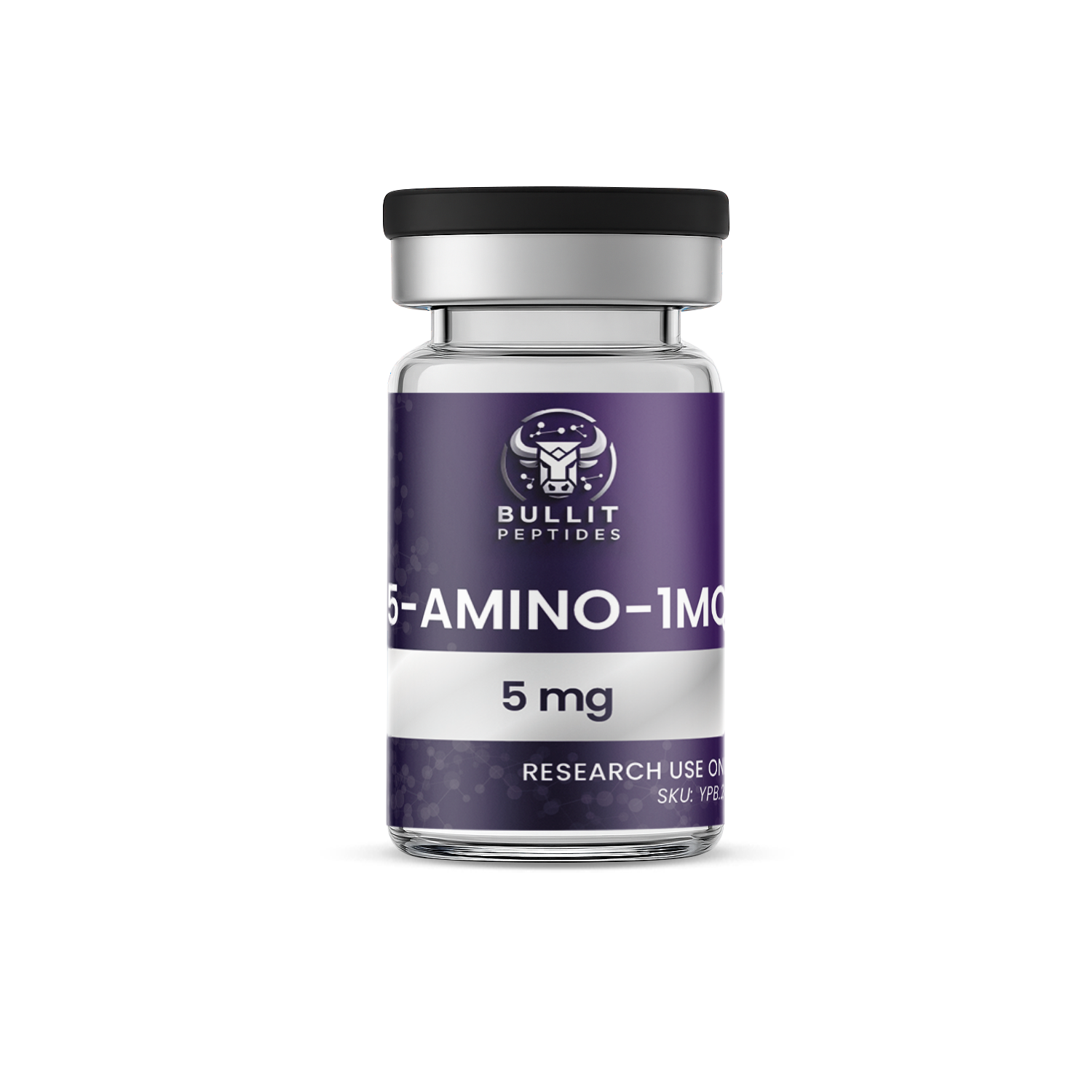
5-amino-1mq
Price range: $50.00 through $190.00
Description
A single-component research material supplied for controlled research environments. 5-amino-1MQ (5 mg) is a small-molecule compound studied for its role as a selective NNMT (nicotinamide N-methyltransferase) inhibitor in metabolic and cellular energy research.
Composition
• 5-amino-1MQ
• Appearance: Lyophilized powder in a sealed research vial
Research Focus (non-clinical)
• Investigation of NNMT inhibition and its downstream metabolic effects
• Studies on NAD+ metabolism and energy homeostasis in preclinical models
• Development of analytical methods (HPLC/LC-MS) for small-molecule quantitation
• Stability and solubility assessment of 5-amino-1MQ under laboratory storage conditions
For qualified research professionals and institutional laboratories. Not for human use.
Documentation & Quality Assurance
Each lot is sourced through our verified global supply chain with emphasis on traceability and quality control. We work diligently to obtain and maintain third-party analytical reports (HPLC/LC-MS) and Certificates of Analysis for each batch, as part of our ongoing quality process. These documents are reviewed internally and displayed as they become available. Independent third-party testing is also performed on select lots to confirm identity, purity, and alignment with our internal specifications.
Important Notice
This product is intended for laboratory research use only. It is not intended for human or veterinary use, and must not be used for diagnostic, therapeutic, or clinical purposes.
This material is not a drug, medical device, or dietary supplement, and has not been evaluated by the U.S. Food and Drug Administration.
Quality & Manufacturing
All materials are sourced from carefully vetted domestic and international manufacturing partners who follow quality systems consistent with ISO and cGMP principles. Each supplier is reviewed for reliability, documentation integrity, and transparency in testing.
We require a verified purity of 99% or higher and perform independent third-party spot testing to confirm that select lots meet our internal standards for identity, purity, and composition. Where available, endotoxin testing results are included on Certificates of Analysis to verify laboratory purity; their inclusion is for research quality assessment only and does not imply suitability for human or veterinary use.
All research materials are sealed for integrity and packaged for stability during storage and transport from manufacturing through final delivery.
Additional information
| Weight | 0.2 lbs |
|---|---|
| Dosage | 5mg, 50mg |
Storage Instructions
All our research peptides are manufactured using a lyophilization (freeze-drying) process. This method is designed to maintain product integrity and allows vials to remain stable during shipping for approximately 3–4 months.
Once a vial is reconstituted with bacteriostatic water, it should be stored in the refrigerator to help maintain stability. Under these conditions, reconstituted material is generally considered stable for up to 30 days.
Lyophilization is a dehydration technique in which compounds are frozen and then exposed to low pressure. This causes the water in the vial to sublimate directly from solid to gas, leaving behind a stable, crystalline white structure. This powder can be kept at room temperature until reconstitution.
Upon receipt, products should be stored away from heat and light. For short-term use, refrigeration at approximately 4°C (39°F) is suitable. For long-term storage (several months to years), vials may be placed in a freezer at approximately -80°C (-112°F). Freezing is the preferred method for preserving product stability over extended periods.
⚠️ Important Notice: These products are intended for research use only. Not for human consumption.
Certificate of Analysis
Every batch undergoes rigorous third-party laboratory testing to verify identity, purity (≥98%), and quality before release.
All Available COAs
Research Use Only
These studies reference research-grade peptides for laboratory and scientific investigation only. Not for human consumption. Not intended to diagnose, treat, cure, or prevent any disease.
Published Scientific Research
Peer-reviewed laboratory research investigating research peptides from leading scientific databases
Recent advances in peptide macrocyclization strategies.
Recently, owing to their special spatial structures, peptide-based macrocycles have shown tremendous promise and aroused great interest in multidisciplinary research ranging from potent antibiotics against resistant strains to functional biomaterials with novel properties. Besides traditional monocyclic peptides, many fascinating polycyclic and remarkable higher-order cyclic, spherical and cylindric peptidic systems have come into the limelight owing to breakthroughs in various chemical (, nativ
View Full StudyNanoassemblies designed for efficient nuclear targeting.
One of the key aspects of coping efficiently with complex pathological conditions is delivering the desired therapeutic compounds with precision in both space and time. Therefore, the focus on nuclear-targeted delivery systems has emerged as a promising strategy with high potential, particularly in gene therapy and cancer treatment. Here, we explore the design of supramolecular nanoassemblies as vehicles to deliver specific compounds to the nucleus, with the special focus on polymer and peptide-
View Full StudyPeptide-based covalent inhibitors of protein-protein interactions.
Protein-protein interactions (PPI) are involved in all cellular processes and many represent attractive therapeutic targets. However, the frequently rather flat and large interaction areas render the identification of small molecular PPI inhibitors very challenging. As an alternative, peptide interaction motifs derived from a PPI interface can serve as starting points for the development of inhibitors. However, certain proteins remain challenging targets when applying inhibitors with a competiti
View Full StudyDesigned Peptide Assemblies for Efficient Gene Delivery.
The de novo designed peptides not only can induce efficient condensation of nucleic acids into compacted nanoparticles and protect them from enzymatic digestion but also can effectively overcome biological barriers and improve gene delivery efficiency through targeted delivery, enhanced cellular uptake, improved endolysosomal escape, and nuclear importation.
View Full StudyPeptide-based coacervates as biomimetic protocells.
Coacervates are condensed liquid-like droplets formed by liquid-liquid phase separation of molecules through multiple weak associative interactions. In recent years it has emerged that not only long polymers, but also short peptides are capable of forming simple and complex coacervates. The coacervate droplets they form act as compartments that sequester and concentrate a wide range of solutes, and their spontaneous formation make coacervates attractive protocell models. The main advantage of pe
View Full StudyS-nitrosothiol formation.
Protein and peptide S-nitrosothiols (SNOs) are involved in guanylate cyclase-independent signaling associated with nitric oxide synthase (NOS) activation.
View Full StudyRelated products
-
-
Sale!
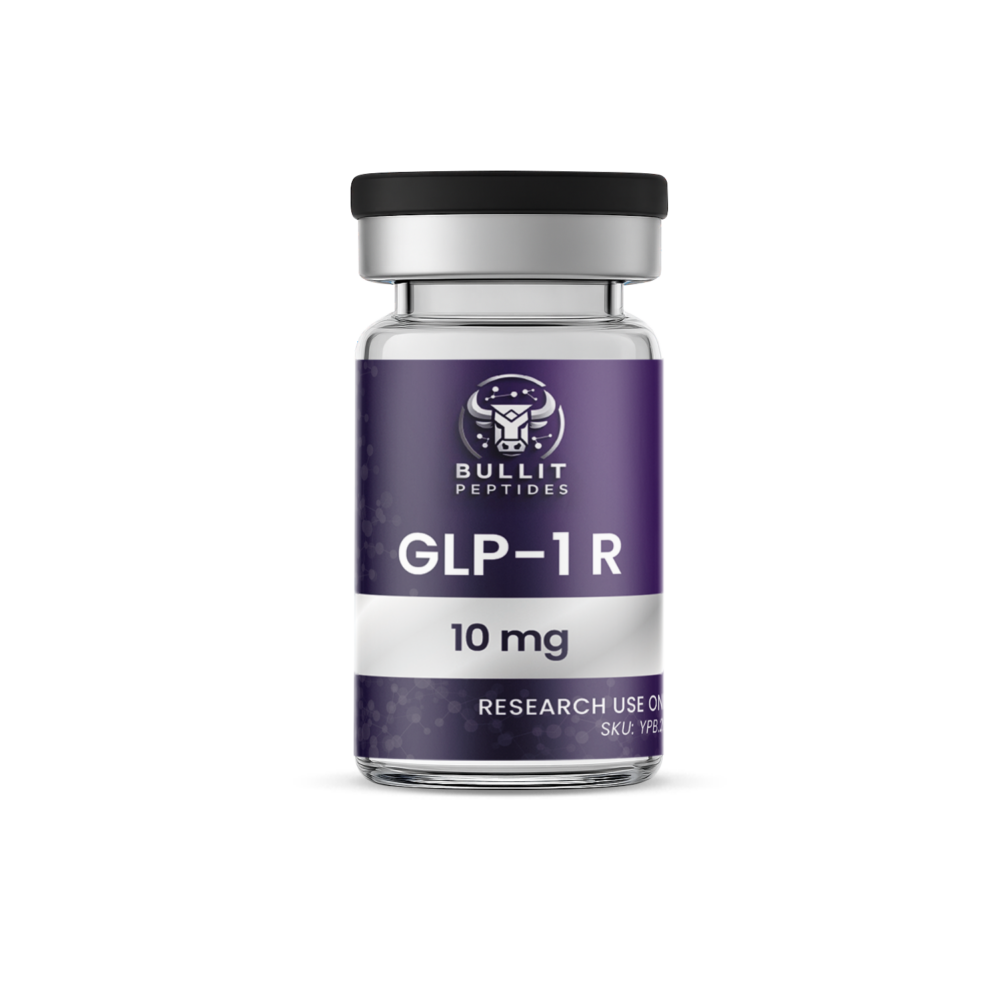
RT
Price range: $160.00 through $290.00Select options This product has multiple variants. The options may be chosen on the product page -
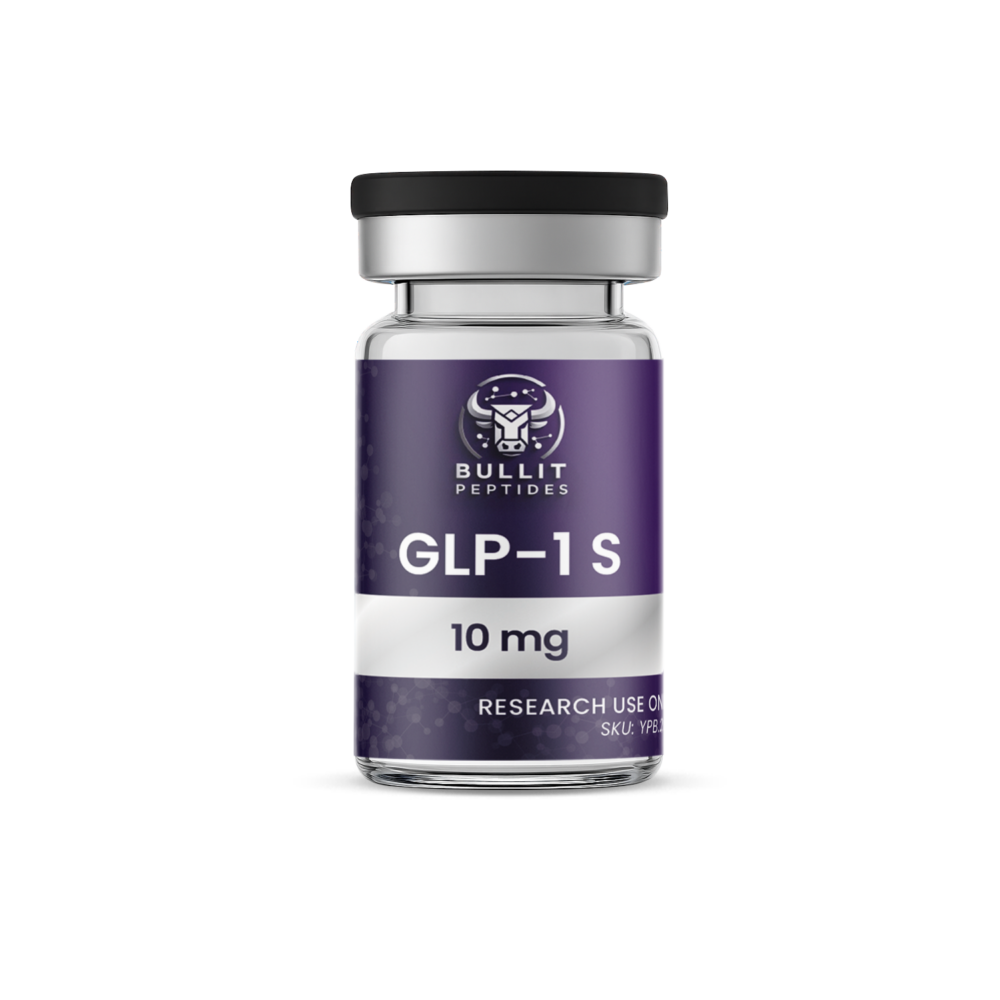
GLP-1 S
Price range: $240.00 through $360.00Select options This product has multiple variants. The options may be chosen on the product page