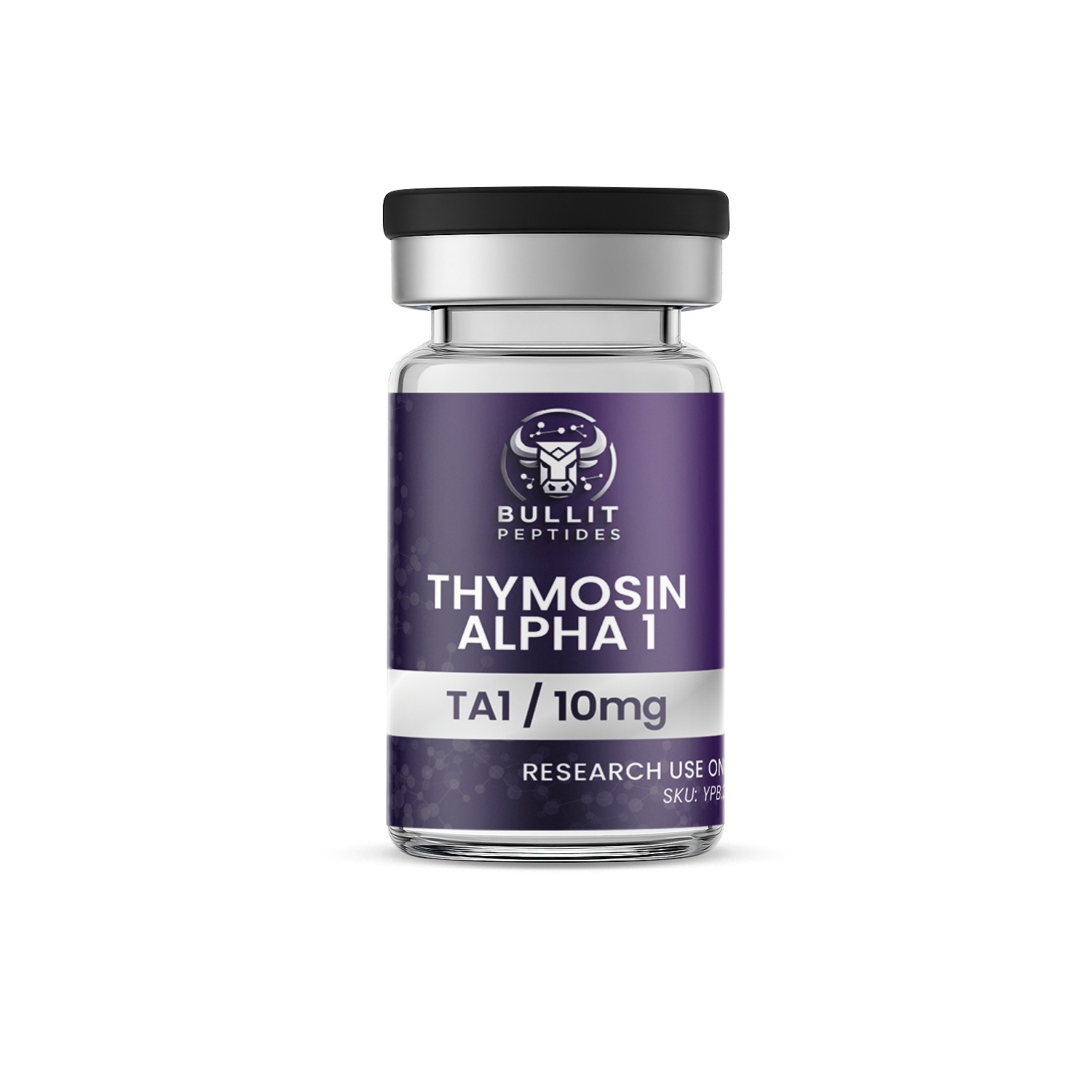
Thymosin Alpha 1 (TA1) (10mg)
$120.00
Description
A single-component research material supplied for controlled research environments. Suitable for studies involving peptide characterization and method development in model systems.
Composition
• Thymosin Alpha 1 (TA1)
• Appearance: Lyophilized powder in a sealed research vial
Research Focus (non-clinical)
• Peptide identity and purity assessment via HPLC/LC-MS
• Assay development and calibration for quantitative analysis
• Chromatographic method optimization for impurity profiling and peak resolution
• Stability characterization of a lyophilized peptide under laboratory storage conditions
For qualified research professionals and institutional laboratories. Not for human use.
Documentation & Quality Assurance
Each lot is sourced through our verified global supply chain with emphasis on traceability and quality control. We work diligently to obtain and maintain third-party analytical reports (HPLC/LC-MS) and Certificates of Analysis for each batch, as part of our ongoing quality process. These documents are reviewed internally and displayed as they become available. Independent third-party testing is also performed on select lots to confirm identity, purity, and alignment with our internal specifications.
Important Notice
This product is intended for laboratory research use only. It is not intended for human or veterinary use, and must not be used for diagnostic, therapeutic, or clinical purposes.
This material is not a drug, medical device, or dietary supplement, and has not been evaluated by the U.S. Food and Drug Administration.
Quality & Manufacturing
All materials are sourced from carefully vetted domestic and international manufacturing partners who follow quality systems consistent with ISO and cGMP principles. Each supplier is reviewed for reliability, documentation integrity, and transparency in testing.
We require a verified purity of 99% or higher and perform independent third-party spot testing to confirm that select lots meet our internal standards for identity, purity, and composition. Where available, endotoxin testing results are included on Certificates of Analysis to verify laboratory purity; their inclusion is for research quality assessment only and does not imply suitability for human or veterinary use.
All research materials are sealed for integrity and packaged for stability during storage and transport from manufacturing through final delivery.
Additional information
| Weight | 0.2 lbs |
|---|
Storage Instructions
All our research peptides are manufactured using a lyophilization (freeze-drying) process. This method is designed to maintain product integrity and allows vials to remain stable during shipping for approximately 3–4 months.
Once a vial is reconstituted with bacteriostatic water, it should be stored in the refrigerator to help maintain stability. Under these conditions, reconstituted material is generally considered stable for up to 30 days.
Lyophilization is a dehydration technique in which compounds are frozen and then exposed to low pressure. This causes the water in the vial to sublimate directly from solid to gas, leaving behind a stable, crystalline white structure. This powder can be kept at room temperature until reconstitution.
Upon receipt, products should be stored away from heat and light. For short-term use, refrigeration at approximately 4°C (39°F) is suitable. For long-term storage (several months to years), vials may be placed in a freezer at approximately -80°C (-112°F). Freezing is the preferred method for preserving product stability over extended periods.
⚠️ Important Notice: These products are intended for research use only. Not for human consumption.
Certificate of Analysis
Every batch undergoes rigorous third-party laboratory testing to verify identity, purity (≥98%), and quality before release.
View Certificate of AnalysisResearch Use Only
These studies reference research-grade peptides for laboratory and scientific investigation only. Not for human consumption. Not intended to diagnose, treat, cure, or prevent any disease.
Published Scientific Research
Peer-reviewed laboratory research investigating regenerative peptides from leading scientific databases
Aging and Thymosin Alpha-1.
Aging is characterized by immune decline, mainly due to thymic involution-the age-related shrinkage of the thymus gland. This leads to reduced T-cell production, chronic inflammation, and increased susceptibility to age-related diseases. Thymosin alpha-1 (Tα1), a peptide hormone produced by the thymus, exhibits potent immunomodulatory, anti-inflammatory, and antioxidant properties. It helps restore immune function by stimulating T-cell differentiation, enhancing thymic output, and modulating de
View Full StudyThe Effect of Ulinastatin on Sepsis Outcomes: An Umbrella Review of Meta-Analysis.
OBJECTIVES: Sepsis, a multifaceted disorder, emerges from dysregulated host response to infection, culminating in organ dysfunction and heightened risk of mortality. Present umbrella systematic review was conducted to impart accurate data regarding the effect of urinary trypsin inhibitor (UTI) alone, UTI in combination with thymosin α1, and UTI in combination with Xuebijing on sepsis and inflammation, 28-day mortality rate survival day, time of mechanical ventilation, length of intensive care u
View Full StudyExploiting the potential of forming liquid crystals: development and performance of long-acting depots for peptide drug thymosin alpha 1 subcutaneous administration.
The fast-growing filed of long-acting depots for subcutaneous (SC) administration holds significant potential to enhance patient adherence to treatment regimens, particularly in the context of chronic diseases. Among them, injectable forming lyotropic liquid crystals (LCCs) consisting of hexagonal mesophases represent an attractive platform due to their remarkable highly ordered microstructure enabling the sustained drug release. These systems are especially relevant for peptide drugs, as their
View Full StudyEnhanced Immunomodulatory Effects of Thymosin-Alpha-1 in Combination with Polyanionic Carbosilane Dendrimers against HCMV Infection.
Resistance and toxicity associated with current treatments for human cytomegalovirus (HCMV) infection highlight the need for alternatives and immunotherapy has emerged as a promising strategy. This study examined the in vitro immunological effects of co-administration of Thymosin-alpha-1 (Tα1) and polyanionic carbosilane dendrimers (PCDs) on peripheral blood mononuclear cells (PBMCs) during HCMV infection. The biocompatibility of PCDs was assessed via MTT and LDH assays. PBMCs were pre-treated
View Full StudyThymosin α1 interacts with Galectin-1 modulating the β-galactosides affinity and inducing alteration in the biological activity.
The study of mechanism of action of Thymosin alpha 1 (Tα1) and the basis of the pleiotropic effect in health and disease, is one of the main focus of our ongoing research. However, few are the information about mechanisms of action mediated by specific Tα1-target protein interaction that could explain its pleiotropic effect.
View Full StudyThymosin alpha-1; a natural peptide inhibits cellular proliferation, cell migration, the level of reactive oxygen species and promotes the activity of antioxidant enzymes in human lung epithelial adenocarcinoma cell line (A549).
Our results showed that Thα1 inhibits the migration of A549 cells in a concentration-dependent manner after 24 and 48 h. Results demonstrated no significant effect on the induction of apoptosis in A549 cells.
View Full StudyRelated products
-
Sale!
RT
Price range: $160.00 through $290.00Select options This product has multiple variants. The options may be chosen on the product page -
-
DSIP
$80.00Select options This product has multiple variants. The options may be chosen on the product page